









Differences Between Jumbotrons and LED Video Walls
Manufacturing and Maintenance Cost
Apart from the modules and circuit boards, Jumbotrons’ assembly requires steel frameworks, protective enclosures, and cooling systems due to their large size, and this results in higher manufacturing costs. In terms of maintenance costs, when a Jumbotron fails, you need to repair it as a whole or replace the module, which requires higher maintenance costs and more complex procedures.
In contrast, for the same total area, LED video walls have lower manufacturing costs, because it only of basic LED modules, power supplies, control boards, and mounting frames. Its technical cost is also low, and it can be mass-produced. When a module in an LED video wall fails, you only need to remove it for repair or replace it with a new one, rather than repairing the entire screen.
Shipping and Installation
A Jumbotron requires hoisting equipment and large trucks for loading, unloading, and transportation in whole pieces, and the transportation risk is high. During installation, Jumbotrons need high-altitude hoisting, which involves high-altitude operations and poses a significant risk. Therefore, Jumbotrons are quite expensive in terms of transportation and installation.
The LED video wall is not only small in size and light in weight, but also can be loaded, unloaded, and transported as a single piece, and this greatly reduces the freight charges and risks incurred during transportation. In addition, when you need to install an LED video wall, its installation difficulty is also very low, the labor cost is very low, and the installation time required is very short.
Resolution and Brightness
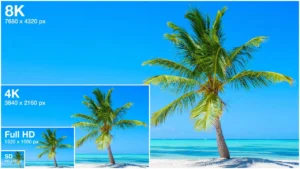
To ensure high brightness, Jumbotrons generally have relatively large pixel pitches, usually P10 or higher. This results in a lot of graininess and blurry image quality when you look at it from a close distance.
While LED video walls have smaller pixel pitches, with the minimum to P0.6, ensuring a high-definition display even at a very close viewing distance. Its brightness is also very high, reaching over 5,000 nits.
Flexibility of The Screen
Jumbotrons have almost no flexibility—they are only a large block of tens or hundreds of square meters and can only display a single image. Once the video size does not match the screen size, the video needs to be cut to fit.
In comparison, the video walls are composed of small modules, support flexible splicing, and can also be expanded horizontally and vertically. Moreover, video walls can also be made into various shapes, such as spherical displays, flexible screens, and foldable screens.
Energy Consumption
Generally speaking, Jumbotrons use high-power modules; their bulbs have low electrical efficiency, and their brightness adjustment performance is limited. In contrast, LED video walls support local dimming functions, and the bulbs have high luminous efficiency, saving energy consumption. Therefore, under the same brightness and screen size, LED video walls are more power-efficient than Jumbotrons.
Lifespan of the Display
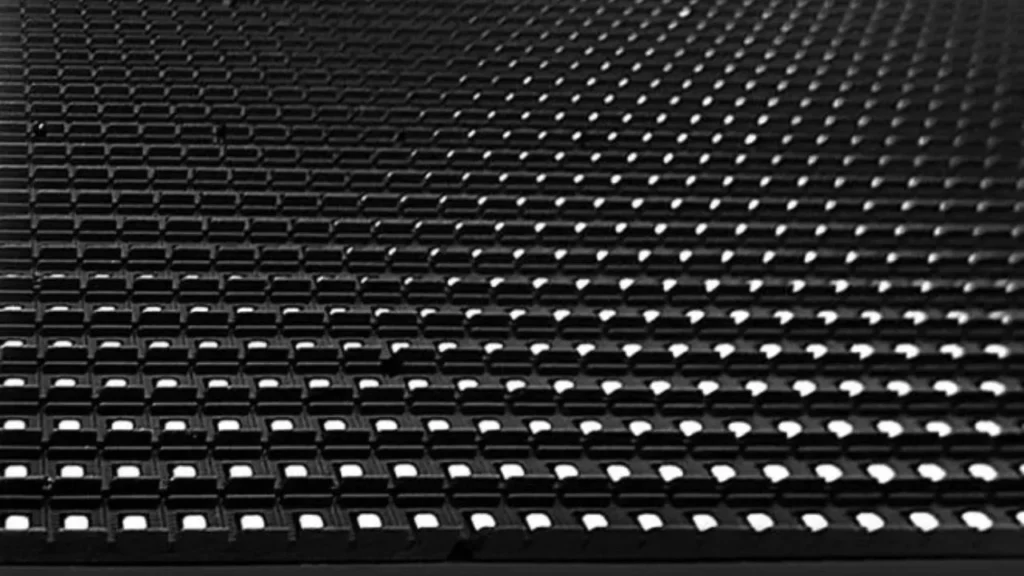
In terms of rated lifespan, there is little difference between Jumbotrons and LED video walls; they both have a lifespan of around 50,000 hours. However, during using, the LED beads in Jumbotrons usually operate at high power for a long time, which greatly accelerates luminous decay, and their actual lifespan is much shorter than the rated lifespan, and the actual lifespan of a Jumbotron in use is approximately only five years.
Conversely, in most cases, LED video walls work at lower power while maintaining high brightness. Moreover, they support local dimming, which not only improves visual performance but also reduces unnecessary brightness, thereby slowing lumen depreciation and extending the lifespan of LED video walls. Typically, the actual life of LED video walls is around ten years, and some projects last even longer.
| Terms | Jumbotrons | LED Video Walls |
| Manufacture cost | High | Medium |
| Fault frequency | High | Seldom |
| Maintenance cost | High | Low (individual screens can be replaced) |
| Shipping cost | High (both the shipping cost and insurance) | Low |
| Installation risk | Very high (high-altitude work) | Low risk |
| Resolution | Low (P10-P20) | High (P0.9 or more) |
| Brightness | High (about 5,000 nits) | High and adjustable |
| Flexibility | Low | High |
| Energy Consumption | HIgh | Low |
| Lifespan | Short (actual 5-7 years) | Long (actually more than 10 years) |
Drawbacks of LED Video Walls Need to be Solved
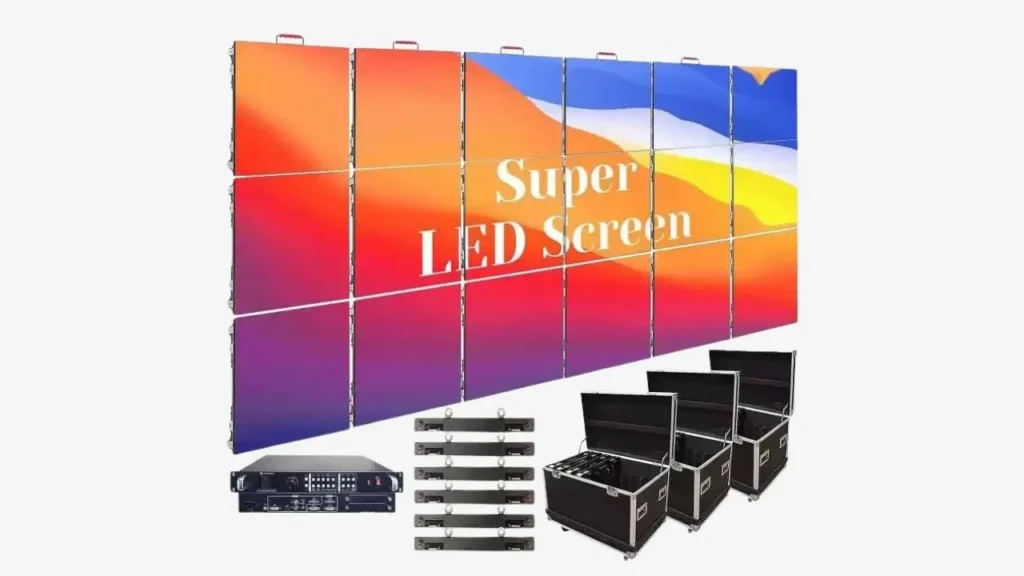
Though LED video walls have obvious advantages in almost every aspect compared with Jumbotrons, in some areas, they still have certain drawbacks that remain to be addressed:
Obvious Seams
The LED video wall is composed of multiple small modules spliced together. The edges of these modules will inevitably have tiny physical gaps, forming the seams that you can see with your eyes. Visible seams can also negatively affect the viewing experience.
Currently, various measures are being applied to address the seam issue in LED video walls, such as using ultra-thin bezel modules and flexible splicing modules, which have shown significant results.
Brightness and Color Uniformity
There are certain differences in the LED chips among each module of the LED video wall, especially among modules of different batches, and these differences can lead to problems such as uneven brightness and color deviation between modules.
To solve this, you should choose high-consistency LED chips and conduct color verification after installation. Also, regularly check the consistency of the screen in terms of brightness and color after it is put into use.
Complex Installation Steps
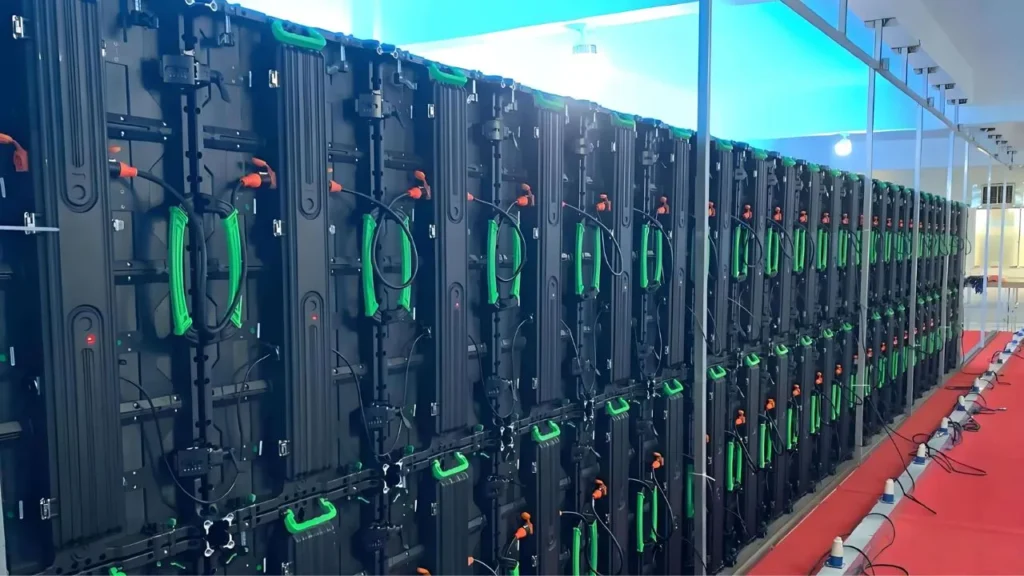
Due to the large number of small modules, when installing an LED video wall, you should precisely align and secure each module. It is also necessary to connect the corresponding power lines and signal lines to each module. Furthermore, after installation, brightness, color, and grayscale between modules need to be repeatedly calibrated for consistency.
To resolve this, you can have the manufacturer carry out calibration and pre-wiring design for the module, which refers to designing the power and signal lines in grooves or pre-embedded brackets, in order to reduce the difficulty of on-site wiring.
High System Integration Difficulty
Multiple modules also imply a great difficulty in integration. Each module of an LED video wall requires independent power and signal transmission, and the control system needs to handle multiple signals simultaneously, especially in the case of a split-screen display. If the integration operation is improper, it is easy to encounter issues such as functional incompatibility, lack of module coordination, and control system failure.
Future Trend of the LED Display Industry
The Overall Future Trend of Large-Screen Display
The LED display industry has been constantly achieving technological breakthroughs. For large-screen displays, whether indoor or outdoor, the suppliers will adopt increasingly higher resolutions and smaller pixel pitches. The brightness performance is getting better and better, capable of achieving high brightness and continuous display.
Also, the LED displays will be integrated with technologies such as touch, VR, and AI to see a more outstanding performance effect. With technological progress, the demand for LED screens will significantly increase in various industries, including retail, education, and entertainment.
The Future Trend of LED Video Walls
For LED video walls, there is still a lot of room for improvement and competitive advantages. In the future, due to its convenience, expandability, ease of disassembly and assembly, LED video walls will gradually replace some LED and LCD screens.
Its technology will not only become increasingly mature, but also its application scenarios will become more and more extensive. It can be used as stage screens, conference screens, large screens in shopping malls, and monitoring screens, covering various fields.
The Future Trend of Jumbotrons
Jumbotrons have the advantages of high brightness, high weather resistance, and long-distance visibility, and they also have the potential to achieve lower power consumption and maintenance costs. Therefore, in the short term, it will not be completely replaced, but in the long run, the market for large-screen displays will eventually be occupied by LED video walls.
FAQs
What is the maximum number of panels that can be combined in a video wall?
In theory, LED video walls can be infinitely spliced. However, in practical applications, you need to consider:
- Whether the installation site is large enough
- Whether there are reliable steel structures to support these modules
- Whether there are sufficient signal line lengths and bandwidth
- Whether the control system can handle all signals simultaneously
If all these practical conditions can be met, you can build an LED screen of the size you expect.
Can a video wall combine screens with different pixel pitches?
If modules with different Pixel pitches are directly spliced, simple physical splicing is feasible, but the image display will show inconsistent resolution and differences in brightness or color. They require more detailed splicing, and normal images can only be displayed through the control system’s partition output or content adaptation.
Is there a limit to the viewing Angle of the LED video wall?
The light-emitting Angle of conventional SMD packaged LEDs is generally above 120°. Therefore, to a certain extent, there are limitations on the viewing angles of LED video walls. But for indoor viewing, such a perspective is already sufficient for most people to watch. There’s no need to worry.
What is the proper way to clean an LED video wall?
First, power off the screen and wait for the module to cool down completely. Then, wipe the screen with the special LED screen cleaning liquid with a fiber cloth, and finally let it air dry naturally. It is worth noting that alcohol, high-pressure water guns, etc., should not be used to clean the screen.
Final Thought: Keep Up With New Technologies
When you want to customize an LED video wall, IvanLED will meet your expectations. IvanLED has a unique modular design, and we offer a variety of customizable sizes and shapes of LED video walls, ranging from ultra-thin designs to giant displays. Moreover, the pixel pitches we can achieve range from 0.6mm to 20mm, which can meet the needs of various viewing distances.
Connect with IvanLED and send an inquiry now!