







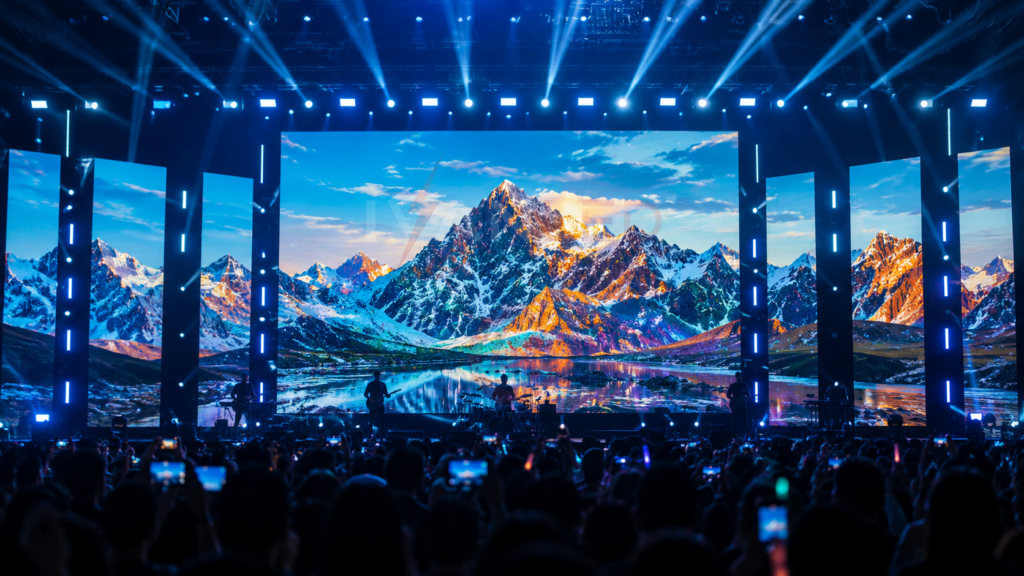
What Are LED Stage Screens and Video Walls?
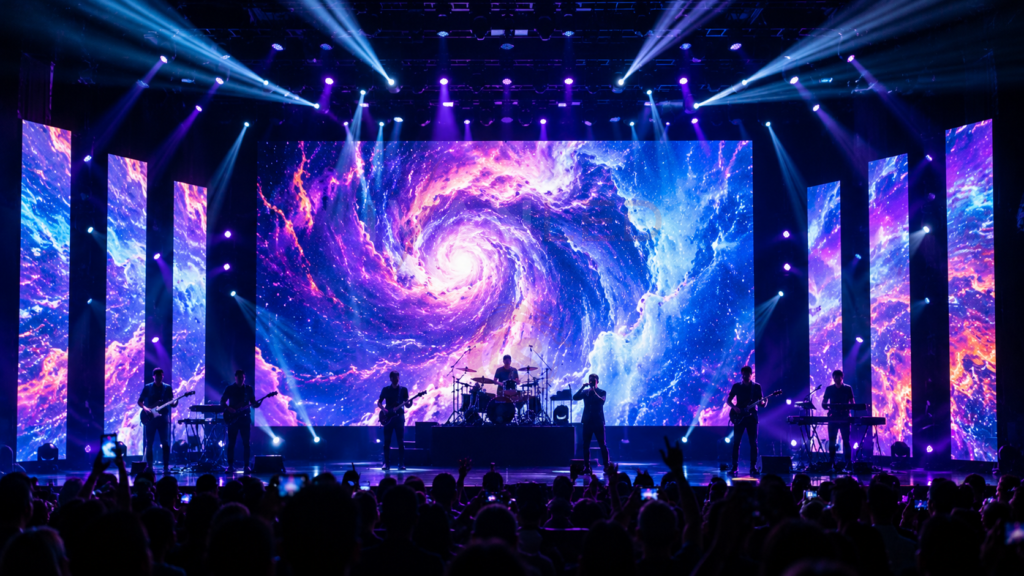
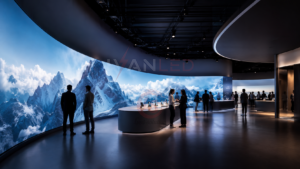
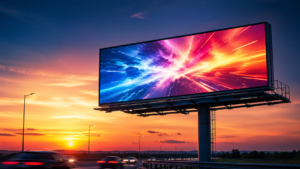
LED stage screens and video walls are large-scale digital displays made up of multiple LED panels that form a seamless display surface. They can show videos, graphics, animations, and live feeds in stunning detail and vibrant colors. Stage screens are typically used for live performances; video walls are used in corporate, retail, and public spaces.
Both technologies share the same fundamentals: high brightness, flexibility, and exceptional visual quality. The difference lies in application — stage screens are optimized for live events with quick setup and high refresh rates; video walls are designed for permanent or semi-permanent installations.
For more on display types, see our LED display types guide.
Key Features of LED Stage Screens and Video Walls
LED stage screens and video walls offer seven key features: high brightness and contrast, seamless modular design, customizable pixel pitch, flexibility in shapes and sizes, real-time content management, durability and longevity, and energy efficiency.
High brightness and contrast: 5,000-10,000+ nits brightness ensures visibility even in direct sunlight. High contrast ratios enhance color depth and vibrancy, making visuals compelling and attention-grabbing.
Seamless modular design: Made up of modular panels that fit together seamlessly. Allows displays of any size or shape. Individual panels can be replaced without disrupting the entire display.
Customizable pixel pitch: Smaller pixel pitch (P2.5–P3) for close viewing; larger pitch (P10–P16) for long-distance viewing. Match pitch to the viewing distance for optimal image quality.
Flexibility in shapes and sizes: Can be curved, folded, or made transparent. Enables creative installations that wrap around structures or form unique shapes.
Real-time content management: Switch between live video feeds, pre-recorded videos, animations, and graphics instantly. Critical for live events where content needs to adapt to the pace of the show.
Durability and longevity: Built to withstand dust, heat, and moisture. Lifespan of 50,000–100,000 hours — 5-10+ years of normal use.
Energy efficiency: Consumes significantly less power than projection or plasma screens. Reduces operational costs and environmental impact.
For more on display features, see our LED display functions guide.
Applications of LED Stage Screens and Video Walls
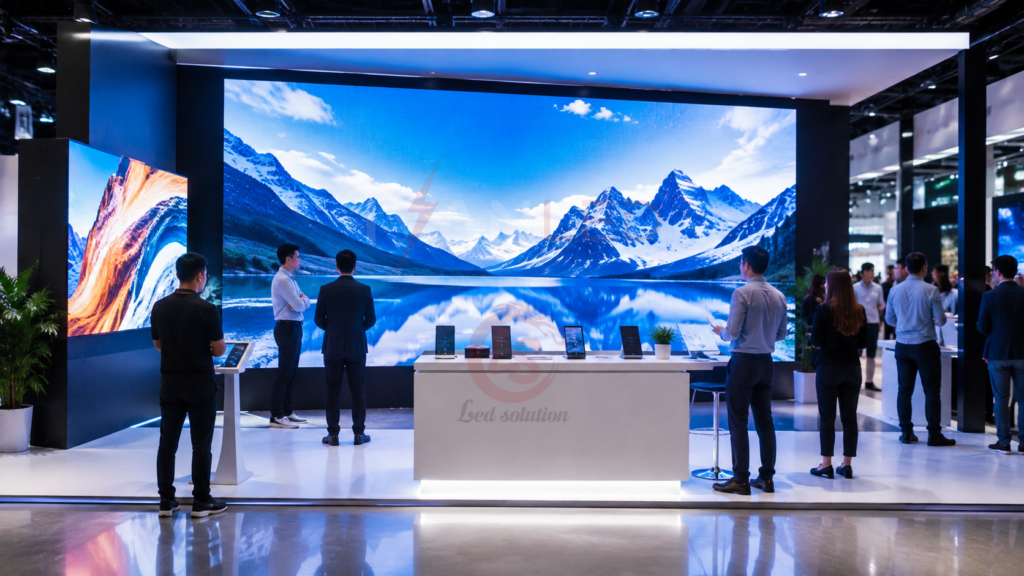
LED stage screens and video walls are used across concerts, corporate events, trade shows, sports stadiums, broadcast studios, retail spaces, and worship facilities. Each application benefits from high-impact visuals, real-time content, and audience engagement.
| Application | Primary Use | Key Benefit |
| Concerts and live performances | Stage backdrops, visual effects, performer close-ups | Immersive audience experience |
| Corporate events and conferences | Branding, keynotes, presentations, interactive content | Professional communication, audience engagement |
| Trade shows and exhibitions | Product videos, demos, live presentations | Brand visibility, foot traffic attraction |
| Sports stadiums | Scoreboards, replays, sponsor promotions | Fan engagement, revenue generation |
| Broadcast and film production | Virtual backgrounds, realistic lighting, live feeds | Authentic visuals, reduced post-production |
| Retail and shopping centers | Promotions, product launches, immersive shopping | Customer engagement, brand experience |
| Worship facilities | Lyrics, sermon notes, live feeds of speaker | Enhanced worship experience, congregation engagement |
For more on event applications, see our stage rental LED screen guide.
Advantages of LED Stage Screens and Video Walls
LED stage screens and video walls offer six key advantages: enhanced visual impact, scalability and versatility, real-time adaptability, cost-effective operation, weather resistance for outdoor use, and seamless immersive experiences.
Enhanced visual impact: Distinct colors, deep contrasts, and high brightness make visuals more engaging than traditional screens or projectors. Ideal for events where visual impact is key to audience engagement.
Scalability and versatility: Modular design allows customization to fit any size — from small display units to massive video walls. Suitable for venues of all sizes, from small clubs to large stadiums.
Real-time adaptability: Content can be updated instantly. This flexibility is invaluable during live performances and events where content needs to synchronize with what is happening on stage.
Cost-effective operation: Long lifespan and energy efficiency make them cost-effective in the long run. Reduced maintenance and lower power consumption offset initial costs.
Weather resistance for outdoor use: Built to withstand rain, dust, and temperature extremes. Makes them suitable for outdoor events where traditional displays would be challenging.
Seamless immersive experiences: No visible bezels — multiple panels form one continuous display. Creates a fully immersive visual experience critical for live performances and digital art installations.
Challenges and Considerations
While LED stage screens and video walls offer immense benefits, they come with challenges: high initial costs, power requirements, content generation demands, maintenance needs, and pixel pitch selection. Planning addresses these challenges effectively.
High initial costs: LED video walls can be expensive to install, especially for large screens with small pixel pitches. Costs include screens, mounting systems, cabling, and control systems.
Power requirements: Large-scale displays require considerable power, especially at high brightness levels. Power requirements should be considered, particularly for outdoor events.
Content generation: High-resolution content is needed for optimal display quality. Creating such content can be expensive and time-consuming. Managing content across multiple panels requires a sophisticated control system.
Maintenance: LED screens require periodic maintenance. Dust, dirt, and weather can affect lifespan, especially in outdoor environments. Regular cleaning and prompt repairs are essential.
Pixel pitch selection: The wrong pixel pitch can result in blurred or pixelated visuals. Screens for close-up viewing need smaller pixel pitch; screens viewed from a distance can use larger pitch.
For more on maintenance, see our LED screen cleaning guide.
Future Trends in LED Stage Screens and Video Walls
Emerging trends include MiniLED and MicroLED technology (smaller pixels, higher brightness), flexible and curved screens, transparent LED screens, AI-enhanced content, and eco-friendly energy-saving technology.
MiniLED and MicroLED: Smaller pixel sizes, higher brightness, and greater energy efficiency. Expected to improve resolution, reduce power consumption, and create even more vibrant displays.
Flexible and curved screens: Gaining popularity for creative installations — curved video walls in stadiums, 360-degree displays at exhibitions.
Transparent LED screens: Modern aesthetic for retail, museums, and corporate settings. Allow light and visibility through the display, creating a unique see-through effect.
AI-enhanced content: AI used to analyze audience demographics and deliver personalized content. Can adapt visuals based on audience responses for more interactive experiences.
Eco-friendly technology: Manufacturers developing screens that use less energy and incorporate recyclable materials. Solar-powered LED displays becoming more common for outdoor installations.
For more on future trends, see our MicroLED technology guide.
Common Mistakes When Using LED Stage Screens
The most common mistake is choosing the wrong pixel pitch for the viewing distance. A P2.5 screen viewed from 20 meters away wastes budget; a P10 screen viewed from 3 meters looks pixelated. Match pixel pitch to the closest viewer distance.
Other frequent errors:
- Insufficient brightness for outdoor events: Outdoor screens need 4,500+ nits for sunlight visibility
- No backup plan: A single failed processor can shut down an entire show
- Poor content design: Text too small, low contrast, or cluttered layouts
- Underestimating power requirements: Large screens require significant power — confirm venue capacity
- No spare modules: Without spares, a single failed module can ruin the display
Expert Tips for Stage Screen Buyers
Tip 1: Match pixel pitch to viewing distance.
Use the formula: pixel pitch (mm) = closest viewing distance (meters). For a stage where the front row is 3 meters away, P3 is ideal.
Tip 2: Plan for redundancy.
For live events, rent both the video wall and a backup processor. One failed processor can shut down your entire show. Bring spare modules and cables.
Tip 3: Choose rental-grade screens for events.
Rental screens are designed for frequent assembly and disassembly. They are lightweight, have quick-lock systems, and are more durable.
Tip 4: Verify brightness for outdoor events.
Outdoor screens need 4,500+ nits. 5,000-6,000+ nits is recommended for direct sunlight.
Tip 5: Order spare modules.
Order 5-10% spare modules with your initial purchase to ensure color match for future repairs.
For more on pricing, see our LED display price guide 2026.
Frequently Asked Questions (FAQ)
What is the difference between LED stage screens and LED video walls?
LED stage screens are typically used for live performances, concerts, and stage backdrops. LED video walls are broader in application, including corporate events, control rooms, retail spaces, and advertising. Both use the same LED technology but are optimized for different use cases.
What pixel pitch do I need for a stage screen?
For a stage where the front row is 3-5 meters away, P2.5–P3.9 is ideal. For larger venues where the closest viewer is over 5 meters away, P4–P6 is sufficient. Match pixel pitch to your closest viewing distance.
How much does an LED stage screen cost?
Indoor stage screens range from $500-$1,200 per square meter. Outdoor screens range from $700-$1,500 per square meter. Installation, controllers, and content creation add 20-40% to the total project cost. Contact suppliers for current quotes.
How long does an LED stage screen last?
Quality LED stage screens last 50,000–100,000 hours — approximately 5-10 years of normal use. With proper operation (70-80% brightness) and adequate cooling, they can last even longer.
Does IvanLED offer LED stage screens and video walls?
Yes. IvanLED manufactures LED stage screens and video walls for concerts, corporate events, trade shows, sports stadiums, and worship facilities.
Conclusion: Elevate Your Events with LED Stage Screens
LED stage screens and video walls have revolutionized live events, corporate presentations, and entertainment. Their versatility, scalability, and ability to deliver high-quality visuals make them essential tools for engaging audiences and creating memorable experiences.
Our straightforward advice:
– For concerts and live events: Choose rental-grade screens with P2.5–P3.9 and quick setup.
– For outdoor events: Choose 4,500+ nits brightness and IP65+ weatherproofing.
– Match pixel pitch to viewing distance — do not over-specify.
– Plan for redundancy — backup processors and spare modules are essential.
– Order spare modules (5-10%) with your initial purchase.
At IvanLED, we manufacture LED stage screens and video walls for concerts, corporate events, trade shows, and worship facilities. Browse our LED display products or contact us to discuss your project requirements.