









Emission Technology: How Does an LED Emit Light?
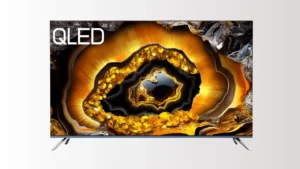
Emission technology refers to displays that do not require a backlight, using their pixels to emit light, and can adjust brightness and color. With the advancement of technology, self-emissive LED technology has developed beyond traditional LEDs to include Micro LED and OLED.
Traditional LED
In a traditional LED screen, every pixel consists of red, green, and blue LEDs. The combination of these colors can produce various colors. Traditional LED screens have three packaging types: DIP, SMD, and COB.
As common packaging methods, DIP (Dual In-Line Package) is always used for outdoor displays, such as advertising billboards and stadium screens, while SMD (Surface-mount Device) refers to mounting the LED chips onto the screen surface, and is mostly used for indoor displays, such as stage backdrop screens.
Micro LED
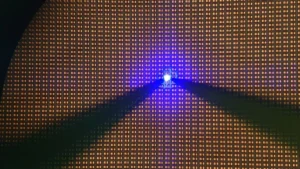
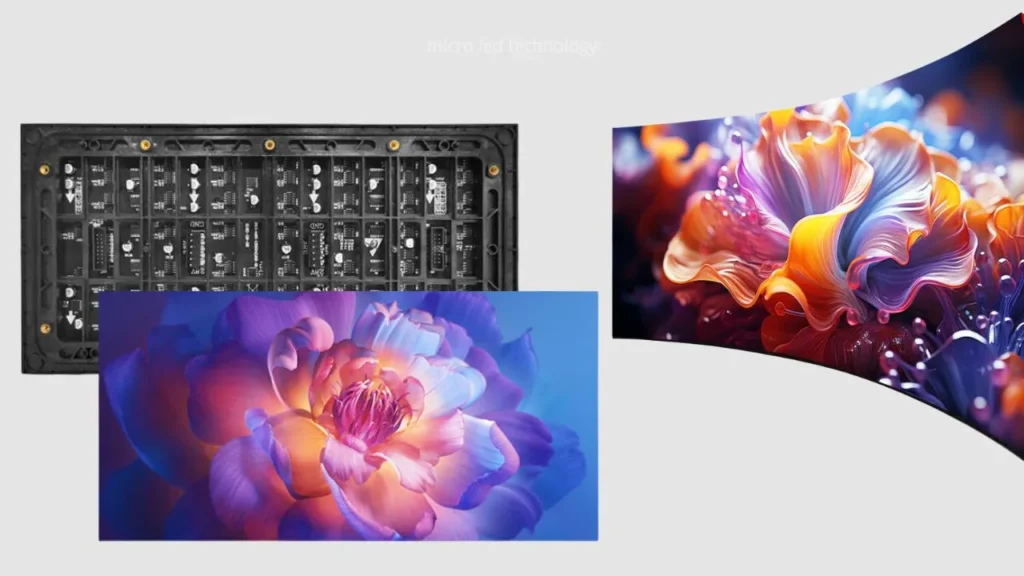
Unlike traditional LED screens, Micro LED screens are mounted with tiny RGB LED chips, with a pixel pitch of less than 0.5 mm, whereas outdoor displays usually have a pixel pitch of 3–10 mm. As a result, Micro LED offers extremely high resolution, such as 4K and 8K resolution, and is generally used in high-end televisions.
Micro LED screens usually use the more advanced MIP packaging method, where each pixel is individually packaged in a tiny module. This method supports a very small pixel pitch and individual LED repairs, but it also greatly increases manufacturing expenses.
OLED and QD-OLED
In OLED (Organic Light Emitting Diode) screens, every pixel is made up of organic materials in red, blue, and green. They compound together and emit light of different colors. The pixel pitch of OLED displays typically ranges from 0.1 to 0.3 mm, and their resolution can usually reach 4K.
The key difference between QD-OLED and standard OLED is the addition of quantum dot technology, which can take on a wider color gamut, higher brightness, and more accurate colors. It is generally used in televisions, such as Samsung’s QD-OLED series.
LED Backlight Technology: How Does an LED Deliver Even Lighting?
LED Backlight refers to the technology used in LCD screens, which does not emit light. Instead, LED lights at the back provide brightness, which, together with liquid crystal pixels and color filters, create the colored image. Here are the main types of LED Backlight Technology:
Edge LED Technology
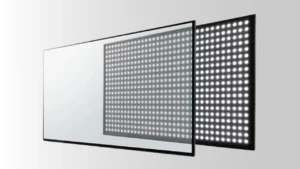
In Edge LED technology, LED bulbs are installed along the edges of the screen, and a Light Guide Plate (LGP) distributes the light evenly across the entire display panel.
Due to the lower usage of the LED bulbs, edge LED can reduce cost and power consumption. Additionally, since the LEDs are positioned at the edges, screens using Edge LED technology can be thinner, so it is commonly used in laptops and tablet displays.
Full LED Technology
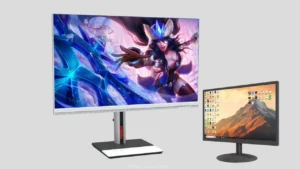
Full LED is also called Direct LED, which means that the LED bulbs are positioned behind the entire screen. Full LED technology can make the screen brightness more uniform, which also offers better color and contrast than edge LED, and is commonly used in TVs and monitors.
The drawbacks of full LED are also quite obvious. With more LED bulbs behind the screen, it is more expensive and consumes more power, and the screen is thicker compared to Edge LED screens.
FALD Technology
FALD is the abbreviation of Full Array Local Dimming. It divides the screen into several zones, controlling the brightness of each area independently. This allows each zone to adjust its brightness dynamically, taking on a better visual effect for you.
FALD offers higher contrast and more uniform lighting. However, due to its more complex circuitry, it is significantly more expensive than full LED screens and may also cause local halo effects. FALD technology is usually used in mid-end TVs and some professional monitors.
Mini LED Technology
Similar to full LED, Mini LED also places small LED bulbs behind the LCD panel. It divides the LED backlights behind the LCD panel into multiple zones, and its backlight diodes are smaller, allowing for higher local dimming precision.
Because of the smaller LED bulbs, screens using Mini LED technology can be made thinner than Full LED screens, and they also provide better color performance and more precise local dimming. However, the cost of Mini LED screens is also quite high.
LED Screen Related Technologies
HDR
HDR means High Dynamic Range, which is a technology that increases the brightness range and keeps more detail in both bright and dark areas of an image. The traditional SDR technology has a limited brightness range, while HDR displays can achieve 600, 1,000, 2,000, or even more than 5,000 nits.
Currently, the main HDR standards include HDR10, HDR10+, and the most advanced Dolby Vision. If you want to sell screens to consumers, HDR is a nice selling point.
High Refresh Rate
Refresh rate refers to the number of times a screen refreshes its image per second. The higher the refresh rate the screens have, the smoother the motion appears when you view the screen. Normal TVs or monitors have a refresh rate of 60Hz, which means the screen refreshes 60 frames per second.
Currently, higher refresh rates have been developed, with 120Hz, 144Hz, and even 240Hz screens gradually becoming more common. Some high-end TVs and mobile phones usually use 120Hz to achieve smoother motion, while computer monitors usually require even higher refresh rates. If you want to purchase screens with better performance for viewing or selling to customers, a 120Hz refresh rate is an effective choice.
PWM/ DC Dimming
LED screens have two methods to adjust their brightness: PWM (Pulse-Width Modulation) and DC (Direct Current) dimming. LED screens emit light continuously. When brightness is adjusted by PWM, the LED bulbs will flicker at a frequency higher than what your eyes can perceive, and the screens show different brightness levels by varying the frequency of flickering.
On the other hand, the principle of DC dimming is that varying the current passing through the LED: the higher the current, the brighter the LED; the lower the current, the dimmer it becomes. Because of the fewer flickers, dimming via DC is smoother than PWM, and you will feel more comfortable for your eyes.
Heat Dissipation Technology
LED bulbs generate heat during operation. If the heat cannot be dissipated in time, the lifespan of the LED bulbs and the screen will be reduced. The typical methods to dissipate heat include installing heatsinks, using high-conductivity PCBs, adding fans, and convective airflow.
During the manufacturing of TVs or other small screens, producers usually only use PCBs to ensure LEDs can dissipate heat. For some outdoor large displays, such as stage displays, or some high-end Micro LED monitors, fans need to be installed behind the screen to ensure proper heat dissipation.
Other Innovative Technologies
Flexible LED Screen
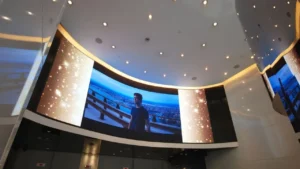
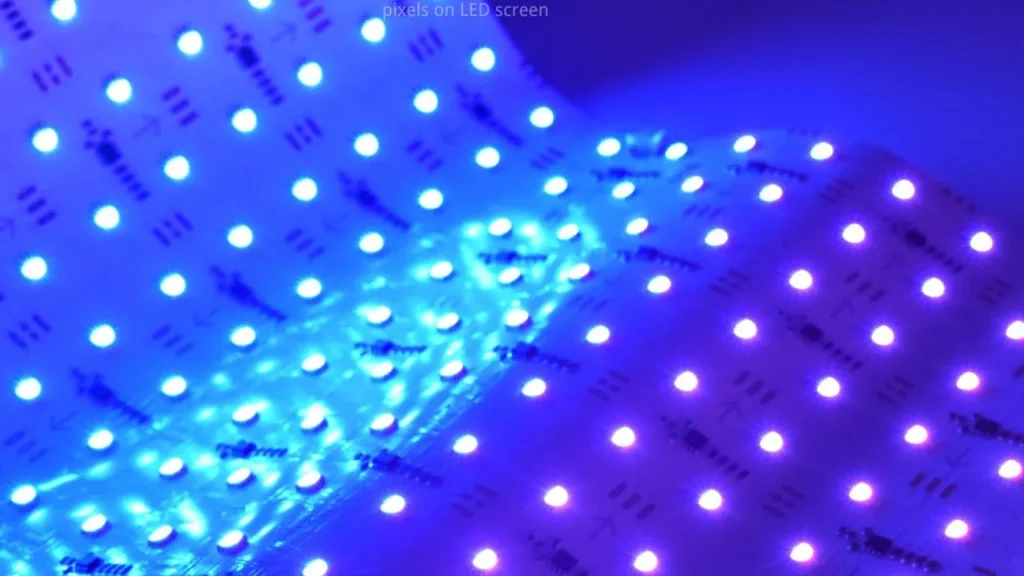
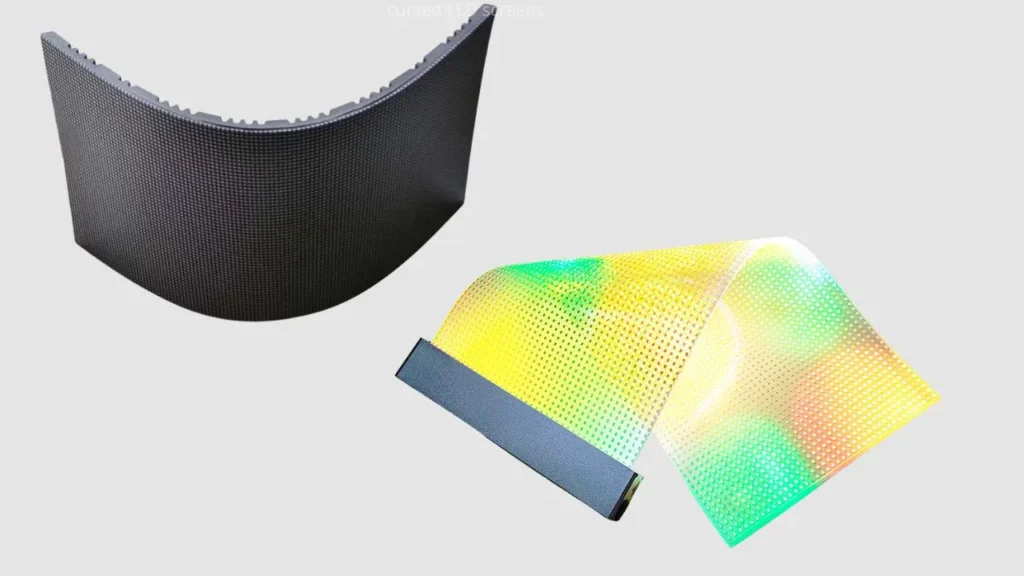
Flexible LED screens are those screens can be bent, rolled, or folded. They always adopt OLED, Micro LED, or MiniLED technology to emit light and use FPCB (Flexible Printed Circuit Board) to package. Flexible LED screens are generally thinner and lighter than rigid ones, and their cost is relatively higher.
Transparent LED Screen
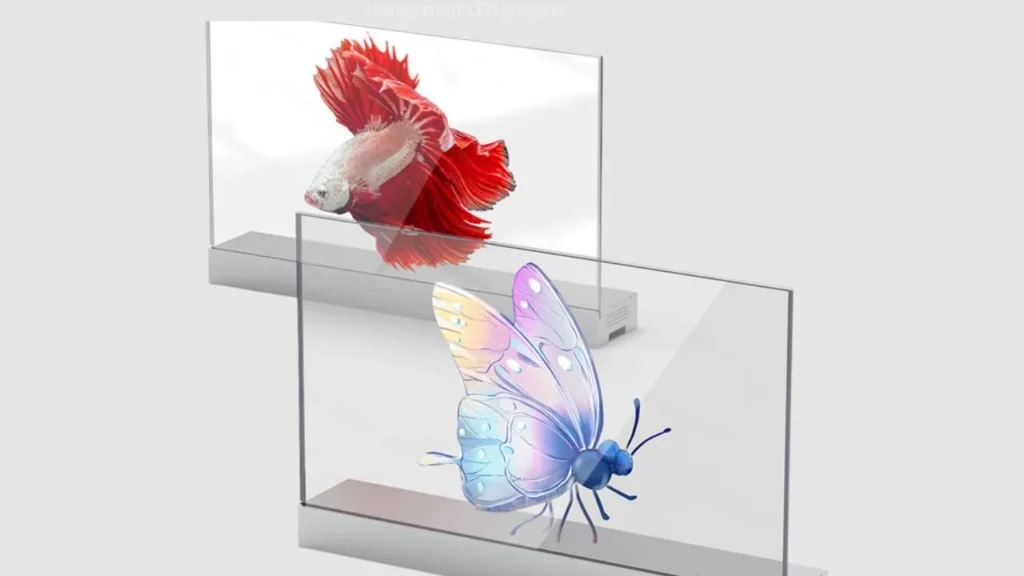
Some shopping mall windows or exhibition halls use transparent LED screens to avoid blocking the objects behind the screen, and their transparency is generally above 30%. They are composed of self-luminous LED bulbs and have transparent gaps left between the pixels.
Compared to normal LED screens, transparent LED screens are much more expensive, and they are also harder to install, so they are not commonly adopted now.
Touch Technology
Touch technology enables the screen to sense input from fingers or a stylus and provide feedback accordingly. The most common touchscreen technology used in smartphones and tablets is capacitive touch. It works by detecting changes in capacitance when a finger alters the electric field on the screen surface.
Except for this, other common types of touch technologies include resistive touch, infrared touch, surface acoustic wave, and so on.
Intelligent Control
Intelligent control is a technology that allows LED screens to be operated remotely through specific network technologies, including turning on and off, switching the content, adjusting brightness, and more. Nowadays, smart control has been widely used in screens of shopping malls, bus stops, and stages.
Benefits of LED Technological Innovation
More Realistic Scenes
With the developing technologies, such as the higher resolution, the faster refresh rates, and the better color performance, the content you could see becomes more and more lifelike, making you feel as if you are actually there.
The Thinner Screen
Smaller LED bulbs and backlight zones allow smartphones, monitors, and TVs to become thinner and lighter, easier to handle, and take up less space.
More Energy-efficient and More Affordable Prices
Advances in emission technology allow screens to adjust brightness by zones, which can reduce unnecessary energy. Besides, the dimming technologies, especially DC dimming, can reduce power consumption and also alleviate visual fatigue.
Adaptable to More Scenarios
More and more advanced technologies allow LED displays to be used in more scenarios. For example, the appearance of HDR allows outdoor billboards and LED bus stop displays can stay readable even in strong daylight; with the intelligent control, LED screens could be used in all corners of the city.
Suggestions for Choosing LED Screens
If You are A System Integrator
First, when you are customizing LED displays, the size, thickness, and installation method of them should fit your specific needs.
Second, choose the appropriate refresh rate, pixel pitch, and resolution according to different usage scenarios. For example, outdoor large screens can use a larger pixel pitch, while TVs or conference displays require smaller pixel pitches.
Third, pay attention to the heat dissipation device and the LED bulbs’ lifespan. You should check if there are heatsinks, cooling fans, or other thermal management devices on the back, and whether the LED bulbs last over 50,000 hours.
If You are a Brand Owner
As a brand owner, you should first find out what kind of screen suits your customers best. For example, if you want to position as a high-end brand, it’s better to customize displays with advanced emission or backlight technology, high resolution, and high brightness.
In addition, you should purchase products based on your budget. If you don’t have a sufficient budget, display technologies with lower production costs and moderate resolution still appear to some users.
If you are A Distributor
For profit, the low-cost screens have a low profit per unit, but the market is larger and the risk is lower. While the screens used advanced technologies have a higher profit per unit, they have higher risks. You need to find out the specifications and costs of each type of screen, and after assessing your customers’ needs, flexibly wholesale or customize your products.
If You Need to Purchase Displays for the Company
First of all, confirm your requirements and budgets. Customize the size, resolution, brightness, thickness, and other specifications based on your specific needs. Besides, install the screens in the right way. If you’re not sure about the installation method, you can work with a manufacturer who can handle the installation for you.
FAQs
How to evaluate the lifespan of LED devices?
The LED manufacturers usually provide the rated lifespan of the bulbs when they leave the factory, such as 50,000 hours or 100,000 hours. However, the lifespan of LED bulbs is also influenced by their operating environment and usage conditions, including ambient temperature, humidity, cooling conditions, operating current, and voltage. In addition, frequent switching and PWM dimming can also reduce the lifespan of LEDs.
What components make up the cost of an LED display?
The cost of an LED display includes:
- Hardware costs: Include the LED chip, the light-emitting diode, PCB board, control chip, power supplies, and connection cables.
- Manufacturing and processing costs: Include welding, calibration, testing, etc.
- R&D costs: R&D refers to research and development, which involves overall structural design, circuit design, and the development of other projects.
- Some additional expenses: It covers logistics, transportation, packaging, and sales costs.
What are the installation methods for LED screens?
The installation methods of LED screens vary depending on the usage scenarios. The specific installation methods include fixed installation, suspended installation, mobile installation, and special installation for non-standard screens, etc.
IvanLED—Customize Your Screen
IvanLED is a professional manufacturer that can provide nearly all types of LED displays. We can customize many shapes of LED screens, such as curved screens, round screens, folding screens, and so on. IvanLED also provides a variety of pixel pitches, ranging from 0.6mm to 20mm. Whether for indoor or outdoor use, we have an appropriate option for you.