









What Is LED Screen Brightness?
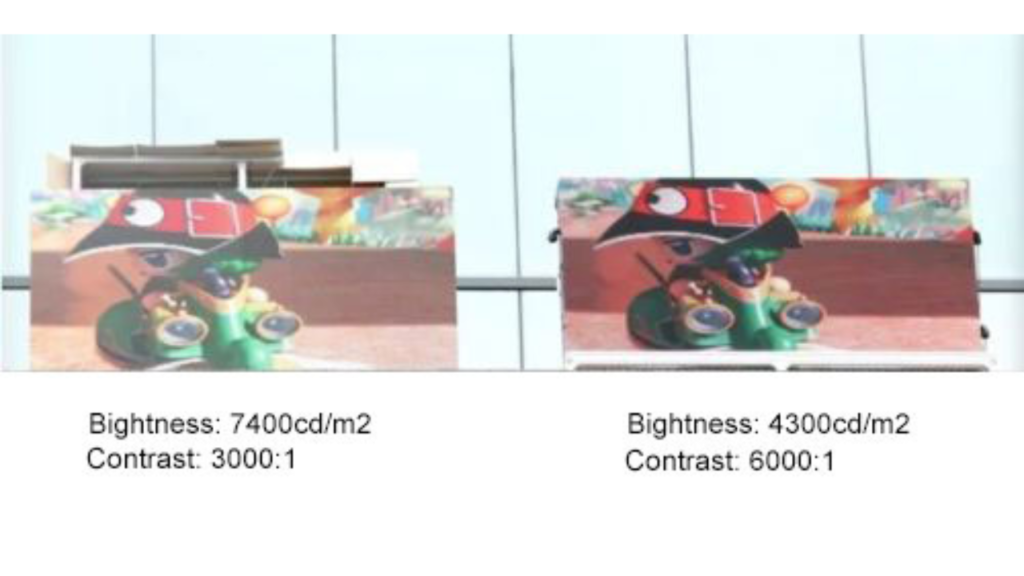
Brightness is a measure of how much light an LED screen emits. It is measured in nits (also called candelas per square meter, or cd/m²).
Simple analogy: A candle produces about 1 nit of brightness. Your smartphone screen is around 500-800 nits. A sunny day is over 10,000 nits.
For LED displays, brightness determines:
Whether your screen is visible in direct sunlight
How far away the screen can be seen
How vivid and impactful the colors appear
How much power the screen consumes
Quick Answer: How Many Nits Do You Need?
| Environment | Recommended Brightness | Example applications |
| Indoor (dark room) | 300 – 800 nits | Theaters, control rooms, indoor events |
| Indoor (bright room) | 800 – 1,500 nits | Shopping malls, lobbies, conference rooms |
| Semi-outdoor (shaded) | 1,500 – 2,500 nits | Covered walkways, bus shelters, under awnings |
| Outdoor (shaded) | 2,500 – 4,000 nits | Outdoor areas without direct sun |
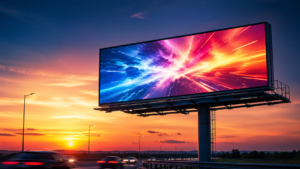
| Outdoor (direct sunlight) | 4,000 – 6,000+ nits | Highway billboards, stadiums, gas station signs |
The simple rule: If the sun hits your screen, you need 5,000+ nits.
Part 1: Understanding Nits
What Is a Nit?
One nit equals one candela per square meter.
| Everyday brightness reference | Approximate nits |
| Candle flame | 1 nit |
| Standard computer monitor | 200-300 nits |
| Smartphone screen | 500-800 nits |
| Indoor LED display | 800-1,500 nits |
| Outdoor LED display | 4,000-6,000+ nits |
| Direct sunlight | 10,000+ nits |
Why High Brightness Matters
| Brightness level | What you can see |
| Under 1,000 nits | Visible in dark or dimly lit rooms only |
| 1,000-2,500 nits | Visible in bright indoor lighting |
| 2,500-4,000 nits | Visible in shaded outdoor areas |
| 4,000-6,000+ nits | Visible in direct sunlight |
The takeaway: If your screen is outdoors during the day, 4,000 nits is the minimum. For sunny locations, aim for 5,000-6,000+ nits.
Part 2: Brightness by Application
Indoor LED Displays
| Application | Recommended brightness | Why |
| Control room | 300-800 nits | Dim lighting, operators sit close |
| Theater / auditorium | 500-1,000 nits | Controlled dark environment |
| Conference room | 800-1,200 nits | Room lights on, presentations |
| Retail store | 800-1,500 nits | Competes with store lighting |
| Shopping mall lobby | 1,000-1,500 nits | Bright ambient light, large space |
| TV studio | 1,000-1,500 nits | Camera-friendly, consistent lighting |
Indoor summary: Most indoor screens need 800-1,500 nits. Higher is better for bright spaces, but too high causes glare and eye strain.
Outdoor LED Displays
| Application | Recommended brightness | Why |
| Shaded outdoor (under awning) | 2,500-3,500 nits | No direct sun, but still bright ambient |
| Covered walkway / bus shelter | 2,500-4,000 nits | Semi-outdoor, needs good visibility |
| Gas station price sign | 4,000-5,000 nits | Direct sun, daytime reading required |
| Highway billboard | 5,000-6,000+ nits | Direct sun, long viewing distance |
| Stadium scoreboard | 5,000-6,000+ nits | Direct sun, far viewing distance |
| Rooftop sign | 5,000-6,000+ nits | Direct sun, high ambient light |
Outdoor summary: For direct sunlight, never go below 4,000 nits – 5,000-6,000+ is the safe zone.
Semi-Outdoor / Covered Areas
| Application | Recommended brightness |
| Drive-through menu | 2,500-3,500 nits |
| Outdoor kiosk (covered) | 2,500-3,500 nits |
| Stadium concourse | 2,500-4,000 nits |
| Covered parking entrance | 2,500-3,500 nits |
Part 3: Brightness and Viewing Distance
Brightness and viewing distance work together.
Rule of thumb: The farther the viewing distance, the more brightness you need. Light scatters over distance.
| Viewing distance | Minimum brightness needed |
| Under 5 meters | 1,000-1,500 nits |
| 5-15 meters | 1,500-3,000 nits |
| 15-30 meters | 3,000-5,000 nits |
| 30-100 meters | 5,000-6,000+ nits |
Example: A highway billboard viewed from 50 meters away needs 5,000 nits or more. A storefront sign viewed from 3 meters away needs only 1,000-1,500 nits.
Part 4: Brightness vs. Power Consumption
Higher brightness requires more power.
| Brightness level | Relative power consumption |
| 1,000 nits | 1x (baseline) |
| 2,000 nits | ~1.5x |
| 3,000 nits | ~2x |
| 4,000 nits | ~2.5x |
| 5,000 nits | ~3x |
| 6,000 nits | ~3.5x |
Pro tip: Outdoor screens with auto-brightness sensors can save significant power. They run at full brightness during the day and dim automatically at night.
Part 5: Auto Brightness Adjustment
Most quality outdoor LED displays include an auto-brightness sensor (also called photosensor).
How it works:
Sensor measures ambient light
Controller adjusts screen brightness accordingly
Screen is bright during the day, dim at night
| Time of day | Typical brightness setting |
| Midday (direct sun) | 100% (5,000-6,000 nits) |
| Overcast day | 60-80% (3,000-4,000 nits) |
| Dawn / dusk | 30-50% (1,500-2,500 nits) |
| Night | 10-20% (500-1,000 nits) |
Benefits:
Saves energy (up to 50% reduction in power costs)
Extends screen lifespan (LEDs run cooler)
Prevents light pollution (not blinding at night)
Improves viewer comfort
Part 6: Common Brightness Mistakes

| Mistake | Consequence | Fix |
| Under-brightness outdoors | Screen invisible in sunlight | Choose 5,000+ nits for direct sun |
| Over-brightness indoors | Eye strain, glare, washed-out image | Use 800-1,500 nits for most indoor |
| Fixed brightness | Wastes energy at night | Install auto-brightness sensor |
| Ignoring viewing distance | Text unreadable from far away | Match brightness to distance |
| Cheaping out on outdoor screens | Screen fails in daylight | Invest in proper brightness |
Part 7: How Brightness Relates to Other Specs
Brightness vs. Pixel Pitch
| Pixel pitch | Typical brightness application |
| P1.2 – P2.5 (fine pitch) | Indoor, 800-1,500 nits |
| P2.5 – P4 | Indoor or semi-outdoor, 1,000-2,500 nits |
| P4 – P6 | Outdoor (shaded), 2,500-4,000 nits |
| P6 – P10 | Outdoor (direct sun), 4,000-6,000+ nits |
Brightness vs. IP Rating
| IP rating | Typical brightness use |
| IP20-IP40 | Indoor only (any brightness) |
| IP54 | Semi-outdoor (2,500-4,000 nits) |
| IP65 | Full outdoor (4,000-6,000+ nits) |
Summary: Brightness Selection Guide
| Step | Question | Action |
| 1 | Where is the screen located? | Indoor → 800-1,500 nits Outdoor shaded → 2,500-4,000 nits Outdoor direct sun → 5,000+ nits |
| 2 | How far is the viewer? | Under 15m → lower brightness OK Over 15m → need higher brightness |
| 3 | Does it need auto-brightness? | If outdoor → YES |
| 4 | What is the minimum acceptable? | Never go below the recommended range |
Ivan’s LED Displays
At IvanLED, we manufacture LED displays with the right brightness for every application:
Indoor displays – 800-1,500 nits
Outdoor displays – 4,000-6,000+ nits with auto-brightness
High-brightness options – up to 6,500 nits for extreme sunlight
Energy-efficient designs – auto-dimming saves power
Frequently Asked Questions
Q: What is the difference between nits and lumens?
Nits measure the brightness of a screen (light emitted from the surface). Lumens measure the brightness of a projector or light bulb (total light output). For LED displays, use nits – not lumens.
Q: Can an indoor LED screen be used outdoors?
No. Indoor screens have lower brightness (800-1,500 nits) and will be invisible in direct sunlight. They also lack weatherproofing. Outdoor screens have 4,000-6,000+ nits and IP65 waterproofing.
Q: How much brightness do I need for a highway billboard?
For a highway billboard in direct sunlight with viewing distances of 30-100 meters, you need 5,000-6,000+ nits. Never go below 4,000 nits.
Q: Does higher brightness reduce LED lifespan?
Running LEDs at maximum brightness continuously will shorten lifespan. However, quality outdoor screens use auto-brightness sensors – they run at full brightness only during daylight hours and dim at night, balancing visibility and longevity.
Q: What is auto brightness and do I need it?
Auto-brightness uses a photosensor to automatically adjust screen brightness based on ambient light. For outdoor screens, YES – it saves energy, extends lifespan, and prevents light pollution at night.
Q: What brightness do I need for a church sanctuary?
For a church sanctuary with normal indoor lighting, 1,000-1,500 nits is sufficient. You do not need outdoor brightness levels.