








What Is LED Screen Calibration?
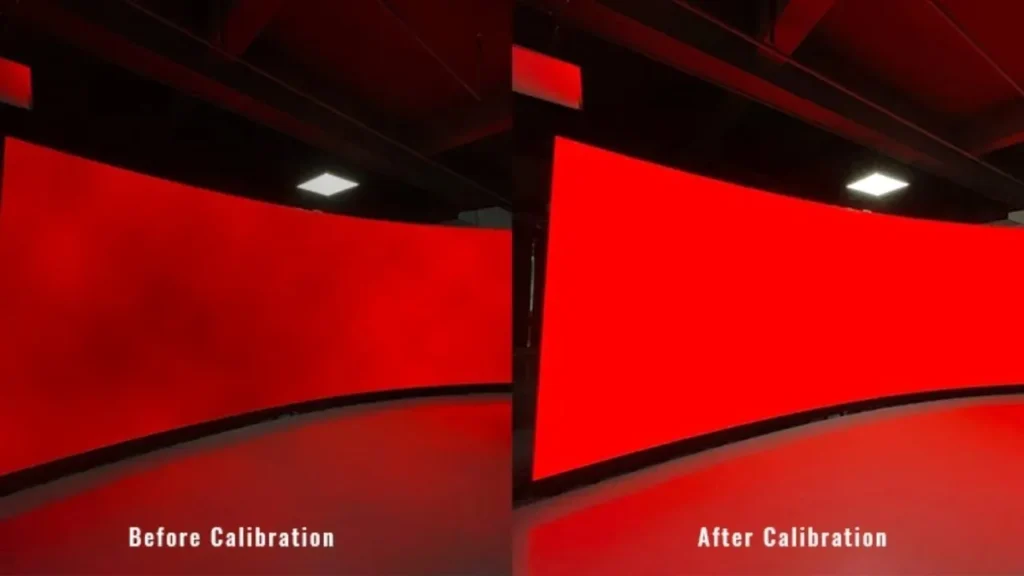
LED screen calibration is the process of adjusting brightness, color accuracy, gamma, contrast, and image uniformity to ensure consistent visual performance across an LED display system.
Because LED modules may vary slightly during manufacturing and long-term operation, calibration helps eliminate color differences, brightness inconsistencies, and uneven display performance.
Professional calibration improves:
- Color consistency
- Brightness uniformity
- Image clarity
- Viewing experience
- Long-term display stability
Why LED Screen Calibration Matters
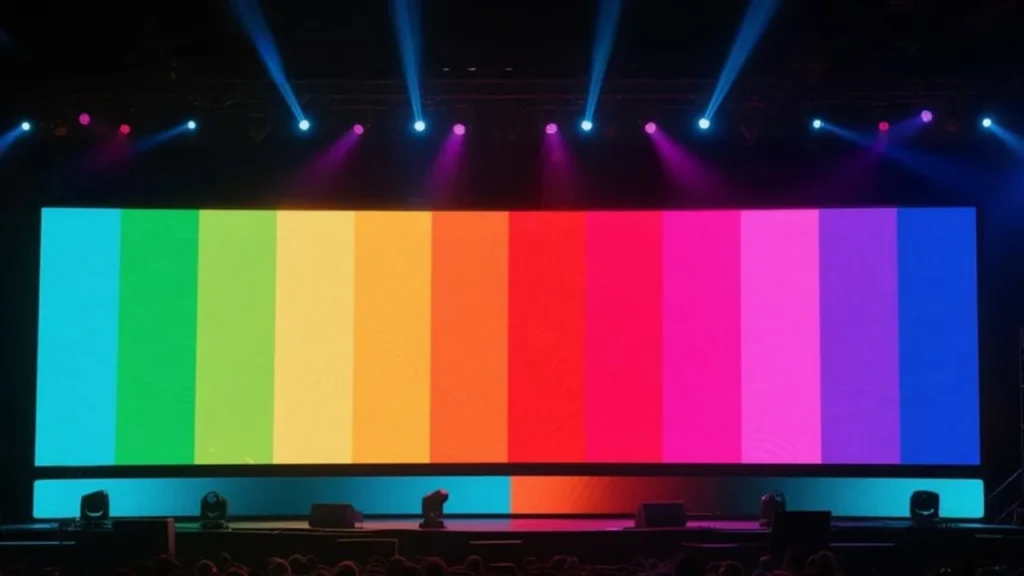
Proper LED display calibration is critical for commercial projects where image quality and visual consistency directly impact audience experience and brand presentation.
A well-calibrated LED screen can provide:
- More accurate and vivid colors
- Better image uniformity
- Improved viewing comfort
- Reduced visual distortion
- Lower maintenance costs
- Longer display lifespan
For advertising LED screens, sports displays, concerts, conferences, and broadcast environments, calibration plays a key role in maintaining professional image quality.
Common Types of LED Screen Calibration
Brightness Calibration
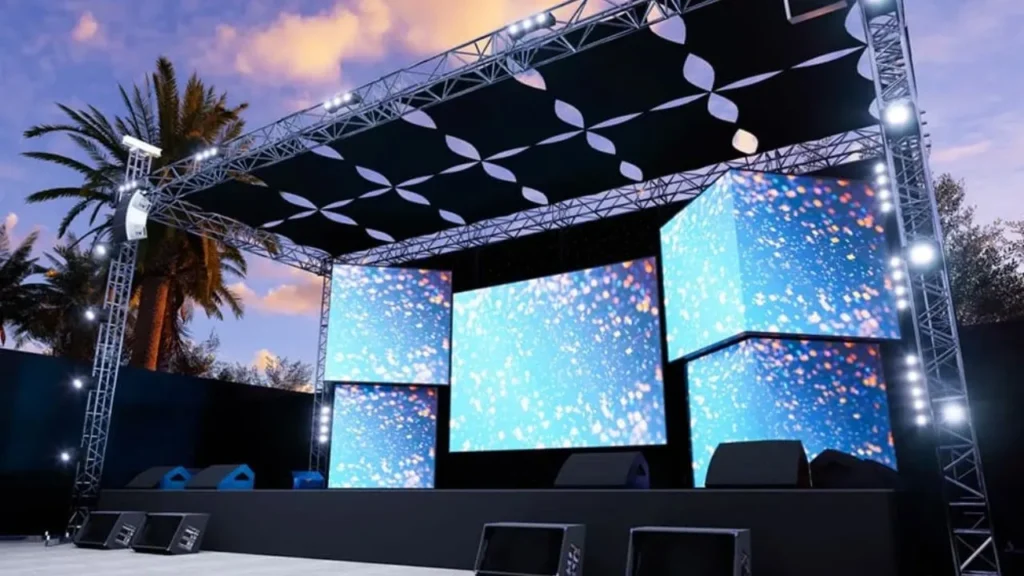
Brightness calibration adjusts the luminance of LED modules to ensure uniform brightness across the entire display.
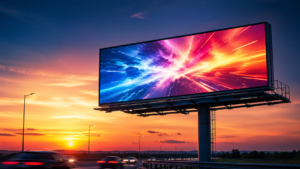
Outdoor LED displays typically require high brightness levels above 5,000 nits for clear daylight visibility, while indoor LED displays focus more on visual comfort and balanced brightness.
Color Calibration
Color calibration corrects differences in RGB performance between LED modules to ensure accurate color reproduction and natural-looking images.
This process is especially important for:
- Broadcast studios
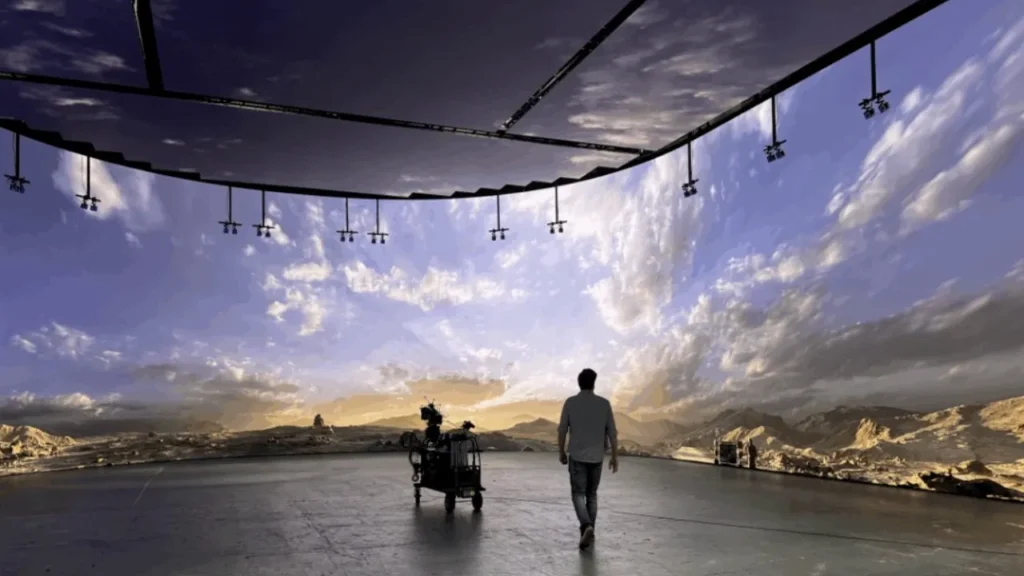
- Virtual production
- Indoor fine-pitch LED displays
- High-end commercial video walls
Gamma Calibration
Gamma calibration adjusts the relationship between brightness and grayscale performance, improving image depth, contrast, and shadow detail.
Proper gamma settings help create smoother image transitions and better visual realism.
Uniformity Calibration
Uniformity calibration reduces visible differences between LED modules caused by manufacturing tolerances, aging, or transportation.
This process helps maintain a seamless viewing experience across large LED video walls.
Manual vs Automatic LED Calibration
| Calibration Method | Advantages | Best Applications |
| Manual Calibration | More precise image adjustment | High-end LED walls and broadcast applications |
| Automatic Calibration | Faster and more efficient | Large commercial LED displays and rental screens |
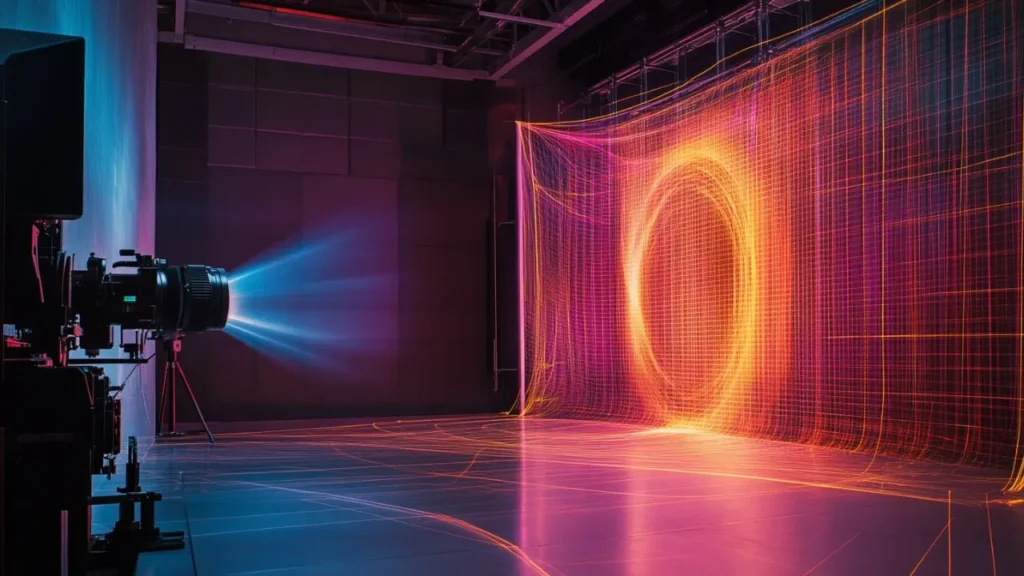
Automatic calibration systems are widely used in modern LED display projects because they improve efficiency and reduce maintenance time.
What Tools Are Used for LED Screen Calibration?
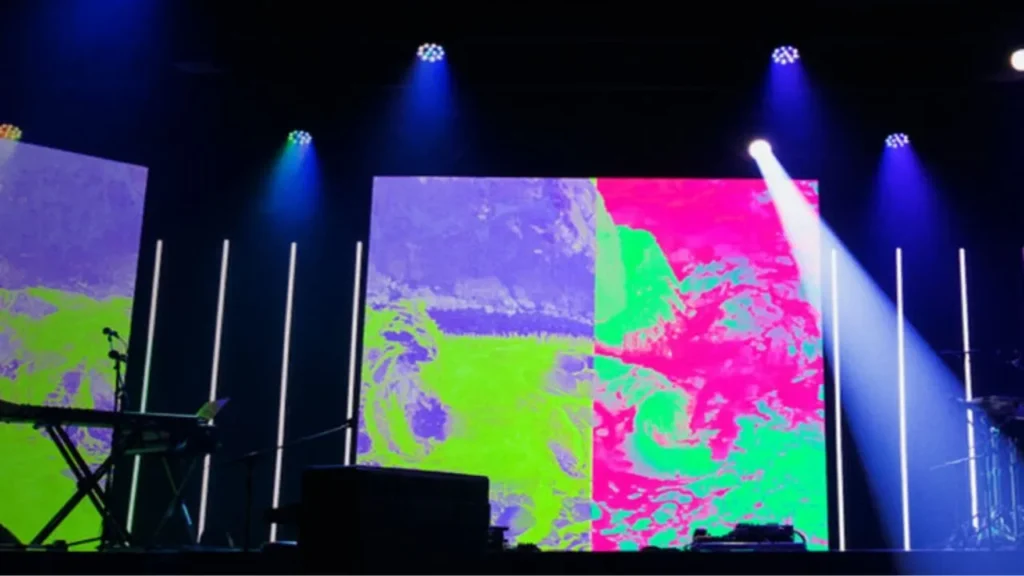
Professional LED calibration typically uses specialized hardware and software tools to measure and optimize display performance.
Common LED calibration software includes:
- NovaLCT
- SmartLCT
- Colorlight
- Brompton
- LEDStudio
Calibration equipment may include:
- Light sensors
- Colorimeters
- Calibration cameras
- Signal processors
These tools help technicians achieve accurate brightness, color balance, and grayscale performance.
Common LED Calibration Problems
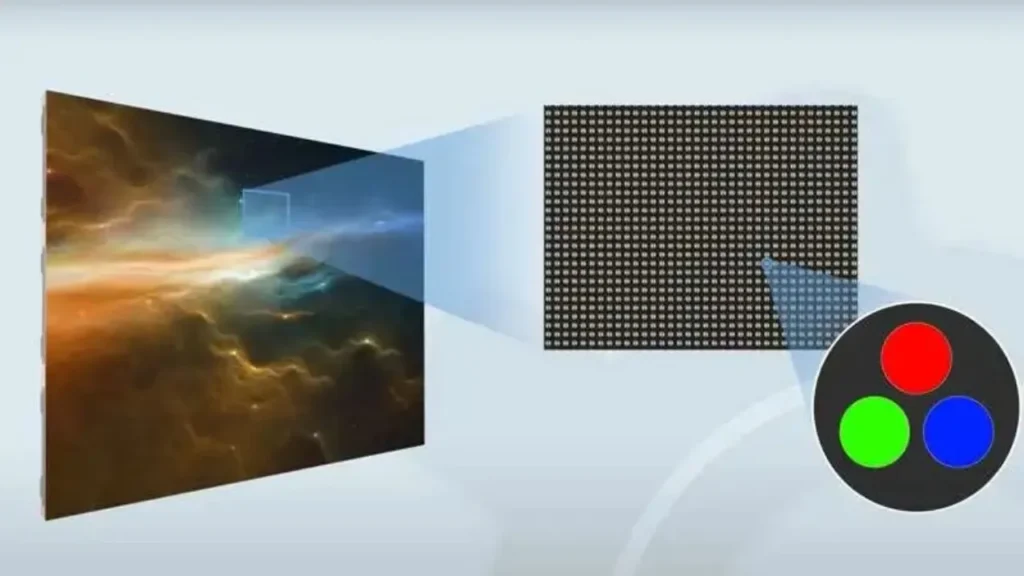
During LED display projects, several common calibration issues may appear over time:
Brightness Inconsistency
Different LED modules may show uneven brightness due to aging or manufacturing variations.
Color Difference Between Modules
Transportation, long-term use, or environmental conditions can cause noticeable color shifts across the display.
Outdoor Reflection Issues
Strong sunlight and outdoor environments may affect image visibility and color perception.
Image Non-Uniformity
Large LED video walls sometimes develop visible lines or uneven image transitions between cabinets.
Regular calibration helps reduce these problems and maintain professional display quality.
How Often Should LED Screens Be Calibrated?
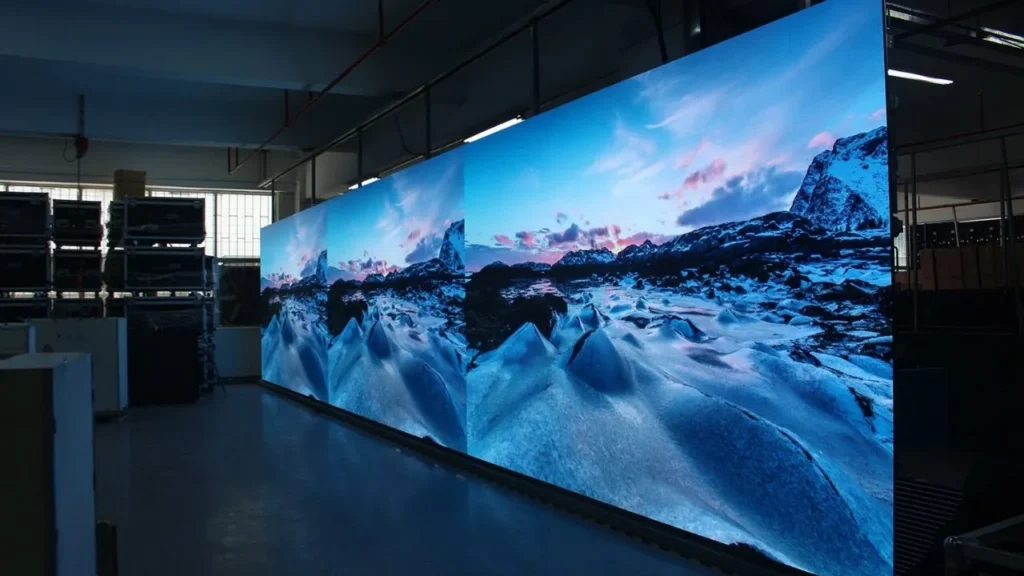
The calibration frequency depends on the application environment and screen usage.
For commercial LED displays, calibration is commonly recommended every 3–6 months to maintain stable image quality and optimal performance.
Rental LED displays and outdoor LED screens may require more frequent calibration because of transportation, environmental exposure, and intensive usage.
Best Practices for LED Screen Calibration
To achieve the best calibration results, consider the following practices:
- Use professional calibration software
- Perform regular maintenance inspections
- Calibrate under stable environmental conditions
- Maintain consistent signal sources
- Replace damaged LED modules promptly
- Conduct periodic brightness and color testing
A proper calibration process helps improve display performance and reduce long-term operational issues.
Conclusion
LED screen calibration is an important process for maintaining accurate colors, consistent brightness, and professional image quality in commercial LED display systems.
Whether for advertising, sports venues, concerts, conferences, or indoor video walls, proper calibration helps improve viewing experience, reduce maintenance costs, and extend the lifespan of LED displays.
At IvanLED, we support global clients with professional LED display solutions, advanced control systems, and long-term technical support for commercial LED projects worldwide.