











1910s: Luminescence of Semiconductor Materials
If you want to trace the origins of LED, you have to go back to the early 20th century. In 1907, scientist H. J. Round observed that when a current passed through a SiC diode, a faint yellow-green light was emitted. This is the earliest recorded phenomenon based on the principles of LEDs.
In the 1920s, Russian scientist Oleg Losev discovered that SiC and ZnO diodes could emit more noticeable light. However, at that time, the material purity was extremely low, and the existing technology could not support their use as a light source.
1950s: the First Batch of Infrared LEDs
In 1947, the p–n junction was invented, providing the technological foundation for light-emitting diode (LED) technology. By the 1950s, high-purity single-crystal semiconductors such as silicon carbide (SiC) and zinc oxide (ZnO) had been developed, and at the same time, metal electrode fabrication processes began to mature.
Until 1962, scientist Nick Holonyak Jr. fabricated the first visible red LED using gallium arsenide phosphide (GaAsP). This achievement is widely regarded as the starting point of modern LED technology. However, the LEDs developed during this period exhibited extremely low brightness and luminous efficiency, had limited lifespans, and were very expensive.
1970s: LEDs Began to be Formally Adopted
By the 1970s, LEDs had become electronic devices suitable for mass production. The manufacturing process for GaAsP-based red LEDs had gradually matured, and green and yellow LEDs based on gallium phosphide (GaP) also began to enter production. At the same time, LEDs began to adopt DIP (Dual In-line Package) through-hole packaging, which extended LED lifetimes and reduced costs to some extent.
However, during this period, LEDs were only beginning to be used for lighting and had not yet achieved true commercialization. This was because LED technology had not yet reached maturity; brightness levels remained low, and unit costs were still relatively high.
1990s: High-brightness Blue LED was Invented
The Invention of the Blue LED
By 1990, LEDs had matured in red and green colors, but blue LEDs were still lacking. This made it impossible to synthesize white light and, consequently, prevented LEDs from truly entering the lighting market. Finally, in 1993, Shuji Nakamura achieved a technological breakthrough using gallium nitride (GaN) and produced a high-brightness blue LED.
The Emergence of White LED
After the advent of blue LEDs, the issue of white light was also resolved. In 1996–1997, white LEDs were developed. This is achieved by coating a blue LED chip with YAG: Ce phosphor, which converts a portion of the blue light into yellow. The combination of blue and yellow light is perceived by the human eye as white light.
At this stage, white LEDs had already surpassed incandescent lamps in brightness, with luminous efficacy reaching 20–40 lm/W and lifetimes exceeding tens of thousands of hours, although the cost of use remained high.
The Expansion Into Other Application Areas
With the advent of blue and white LEDs, they began to be applied in a wide range of fields, including indicator lights in appliances, digital displays such as calculators and clocks, as well as backlighting for the earliest LCD displays.
2000s: Widely Used for LED Lighting
High-power Chip
By the early 21st century, blue LED technology had gradually matured, and the performance of LEDs had improved in all aspects. The luminous efficacy of white LEDs reached up to 70 lm/W, providing higher brightness, lower power consumption, and performance far exceeding that of traditional incandescent and halogen lamps.
Accurate Evaluation Metrics and Longer Lifespan
The method for measuring LED lifetime has also advanced. Instead of simply calculating the time until device failure, lifetime was now defined as the time it takes for luminous flux to drop to 70% or 80% of its initial value, denoted as L70 or L80. This lifespan evaluation metric has been used ever since, which allows your LED products to more accuracy assess their lifespan.
At that time, LED lifetimes had been greatly extended, reaching up to 50,000 hours under the L70 standard.
Heat Dissipation Technology
LED chips are very sensitive to high temperatures. For LED lamps, high temperatures will accelerate lumen depreciation, shorten chip lifespan, and reduce current efficiency, while effective heat dissipation can extend your LED’s lifespan, keeping it performing well even after long-term use.
Early DIP and SMD packages did not provide adequate heat dissipation. By the 2000s, LEDs had gradually adopted more efficient thermal management designs, including high-thermal-conductivity ceramic and metal substrates, aluminum heat sinks, fan cooling, and reflector cup designs. At the same time, more efficient COB packaging was developed. These measures significantly extended LED lifetimes.
LED Replaces Traditional Light Sources
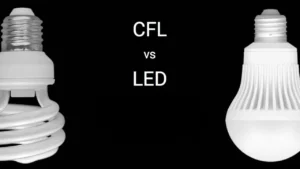
Incandescent and fluorescent lamps are large in size, have low luminous efficacy, and short lifespans, and fluorescent lamps contain substances such as mercury that can be harmful to humans. LEDs not only have long lifespans, better color rendering index (CRI), lower replacement costs, but also offer higher luminous efficacy.
Furthermore, more importantly, LED chips are small, and packaging is flexible, allowing them to be made into various types, such as bulbs, downlights, panel lights, and backlight modules.
2010s: Great Development in LED Display Technology
Further Performance Improvement
LEDs have continued to develop rapidly in the 21st century. By around 2015, high-efficiency LEDs achieved luminous efficacies of approximately 150–220 lm/W, L70 lifetimes of nearly 100,000 hours, and color rendering indices (CRI) of 90 or higher, meeting the requirements of most high-end applications.
Small Pixel Pitch LED
Generally speaking, a smaller pixel pitch makes your LED screen clearer. Since 2009, indoor LED displays have begun using SMD-packaged LEDs, which allow pixel pitches to be reduced to P2–P3 mm, achieving higher resolution. By 2012, pixel pitches reached P1.5–P2 mm and were used in many high-end indoor displays.
The Rise of Mini LED
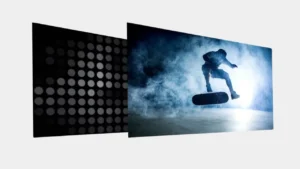
In the 2010s, more advanced Mini LED technology emerged. Mini LEDs are an advanced dimming technology used in LCD displays, with tens of thousands of backlight LEDs behind the screen, each with a diameter of less than 200 microns. These LEDs are divided into thousands of zones, each of which can be individually dimmed, greatly enhancing the color performance of the display.
Even today, Mini LED is still relatively expensive, but it is an excellent choice if you want to buy an LCD display.
Rapid Growth of the Global LED Market
During the 2010s, the global LED market expanded rapidly. In 2010, the global LED market was valued at approximately USD 15 billion, growing to USD 38 billion by 2015. By the end of the decade, LEDs had gradually become widespread in lighting, displays, and automotive lighting, while demand for backlit LCDs, laptops, and TVs increased. LED-backlit TVs had almost completely replaced traditional CCFLs.
At the same time, regions and countries, including Europe, China, and the United States, introduced energy-saving and emission-reduction standards, phasing out incandescent and fluorescent lamps. These policies mean that you will see more products incorporating LED technology in the future.
2020s: High-end Display Technology
A Greatly Expanded Market
Compared with the 2010s, LEDs have captured a larger share of the market in the 2020s. You will also find that LEDs are becoming increasingly common and have penetrated various industries. According to market reports from authoritative sources such as Fortune Business Insights and Grand View Research, the global LED market was valued at approximately USD 55 billion in 2020 and is expected to exceed USD 70 billion by 2025.
Micro LED: A New Breakthrough
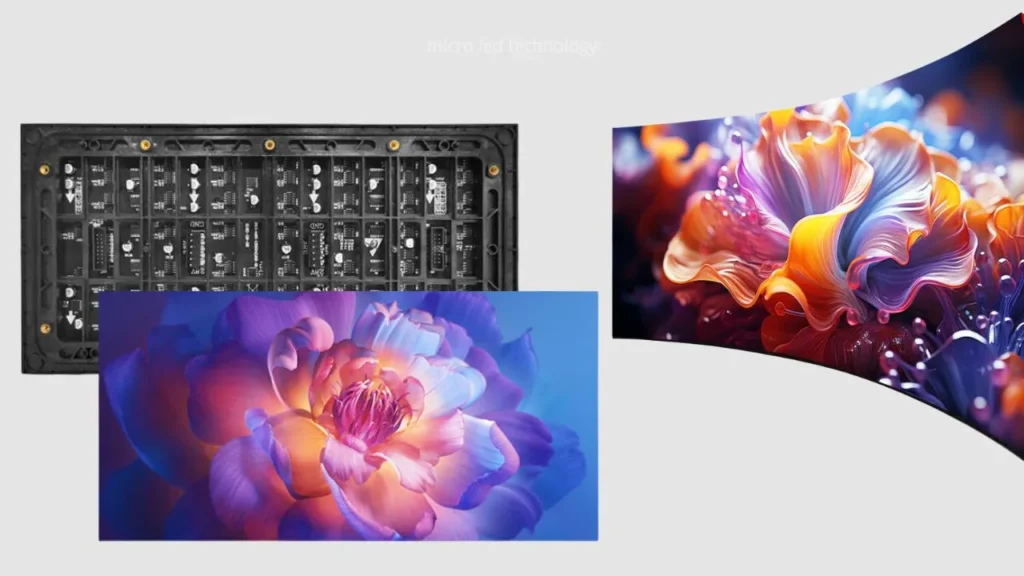
Compared with traditional LED displays, Micro LED features much smaller LED chips, finer pixel pitch, and a significantly higher number of LEDs. An 8K resolution display can contain on the order of 100 million pixels.
However, the commercialization of Micro LED by manufacturers remains at an early stage. Micro LED technology requires extremely complex manufacturing processes, and challenges such as low yield rates and high repair costs remain difficult to overcome. Also, Micro LED is the most advanced LED display technology you can purchase. At present, only leading manufacturers such as Samsung have commercialized Micro LED technology.
The Combination of LED and AI
In the 2020s, AI technologies have gradually matured and been adopted across multiple industries. At the same time, the AI and LED industries began to intersect at an early stage.
For LED displays, AI can be embedded into the display algorithms of the LED screen, enabling automatic image enhancement, including resolution upscaling, noise reduction, and optimized local dimming.
For LED lighting, AI can adjust brightness and color temperature according to different environments, follow natural daylight rhythms, and even improve energy efficiency, which can provide you with a better lighting experience.
The Prospects of LED Technology
By the mid-2020s, LED technology had become highly mature. Regardless of the industry, LEDs were among the best in terms of luminous efficiency, power consumption, and cost.
In the future, with technological advancements in related fields, the luminous efficiency and manufacturing processes of LEDs can be further improved, LED display technologies will become more mature, and prices will become more affordable. At the same time, LEDs will integrate with more advanced smart products, such as AR/VR displays, intelligent lighting, and therapeutic LED applications.

Traditional Lighting Technology
Incandescent Lamp
The incandescent lamp is the most traditional electric light source. When an electric current passes through the tungsten filament, the filament resists the current, heats up, and produces visible light. Although incandescent lamps can provide high-brightness illumination, they have a short lifespan and low luminous efficiency, and have been largely replaced by LEDs and fluorescent lamps.
Halogen Lamp
The halogen lamp is an improved version of the incandescent lamp, which adds halogen gases such as iodine or bromine inside the bulb, enhancing the luminous efficiency and lifespan compared to traditional incandescent lamps. However, its energy consumption remains high, and it is gradually being replaced by LEDs.
Compact Fluorescent Lamp (CFL)
The compact fluorescent lamp(CFL) is a type of fluorescent lamp. It is small in size, energy-efficient, and has a longer lifespan than an incandescent lamp, which is widely used in residential and office lighting. However, because it contains mercury, improper disposal can harm the environment and human health, and it has gradually been phased out.
Xenon Lamp
The xenon lamp is a high-intensity gas-discharge light source, consisting of two tungsten high-temperature electrodes, a quartz glass tube, and filled with high-pressure xenon gas. The xenon gas is ionized by high-voltage discharge, forming an electric arc that produces high-brightness white light.
In the lighting field, xenon lamps have been largely replaced by LEDs. However, in applications such as optical simulation and large projectors, where LEDs cannot meet the requirements for ultra-high brightness and continuous spectra, xenon lamps remain irreplaceable for the time being.
FAQs
Can LED screens be made touch-sensitive?
Yes. Although LED screens are inherently light-emitting display devices, a touch-detection layer can be added to enable touch functionality. There are two main methods: infrared touch and capacitive touch. The basic concept of capacitive touch was proposed as early as the 1960s, and by the 2000s, touch technology was widely applied in smartphones and touch displays.
How do large screens achieve color and brightness uniformity?
For large LED displays, achieving uniform color and brightness requires ensuring high quality at both the hardware and color-calibration levels. On the hardware side, this includes LED chip quality, optical design, and precise soldering. On the color-calibration side, techniques such as local dimming and factory calibration are used to maintain high-quality performance.
How are LED displays becoming increasingly thinner?
LED displays are becoming increasingly thin, mainly due to smaller LED chip sizes, reduced PCB thickness, more advanced packaging methods, and more rational module designs. At the same time, packaging materials have improved, with aluminum alloys or carbon fiber often replacing steel frames, making LED displays lighter and slimmer.
IvanLED: Professional LED Displays Manufacturer
If you are looking to customize an LED display, IvanLED is an excellent choice. We are a professional LED manufacturer in China, with our products sold to over 50 countries and regions. IvanLED also has advanced production technology and a strict quality control team, and provides a 3-year after-sales service, making us the best choice for your customization needs.
If you have any questions, feel free to contact us!