










Step 1: Examine where to Install LED Screen
Before you begin the whole process of installation, completely check the location you will be placing the LED Screen. Some main considerations you must note down include:
- Indoor or outdoor: If you will be installing it outdoors, you must consider getting weatherproof or weather-resistant screens.
- Distance of viewing and angle: Ensure the resolution you are sticking with and the screen size will match the viewing distance of the audience.
- Lighting: If you will be installing indoors, try to avoid direct sunlight. For outdoor environments, on the other hand, stick to high-brightness screens.
- Structural support: You must ensure the ceiling, wall, or stand has the capacity to carry the weight of your screen.
- Available space: Make sure you have enough space created around the screen to make it easier for ventilation and heat dissipation.
Step 2: Get the Necessary LED Screen Installation Equipment
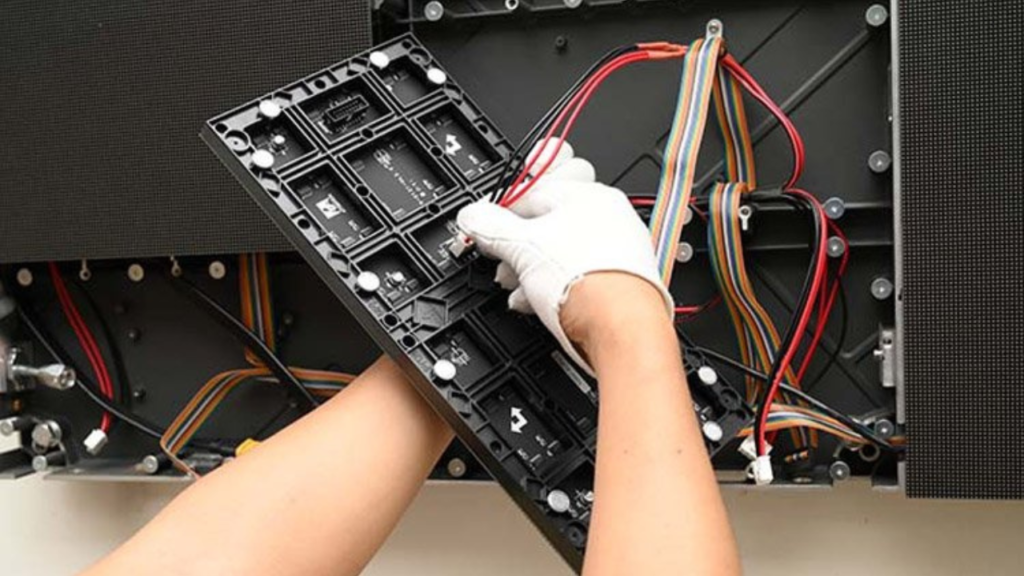
Here, you need to gather the required tools and equipment to make sure the installation process is easier and safe.
Usually, the tools and equipment you need to install LED screen may vary depending on location and screen type. Some common accessories you may need include heavy-duty fasteners, bolts, screws, anchors, mounting bracket, frames, LED screen panel, data cable, power cable, wire cutter, drill, level, measuring tool, and control system, just to mention a few.
At the same time, you cannot ignore safety. For your safety, you need gloves, helmet and ladder.
Step 3: Mount the LED Screen
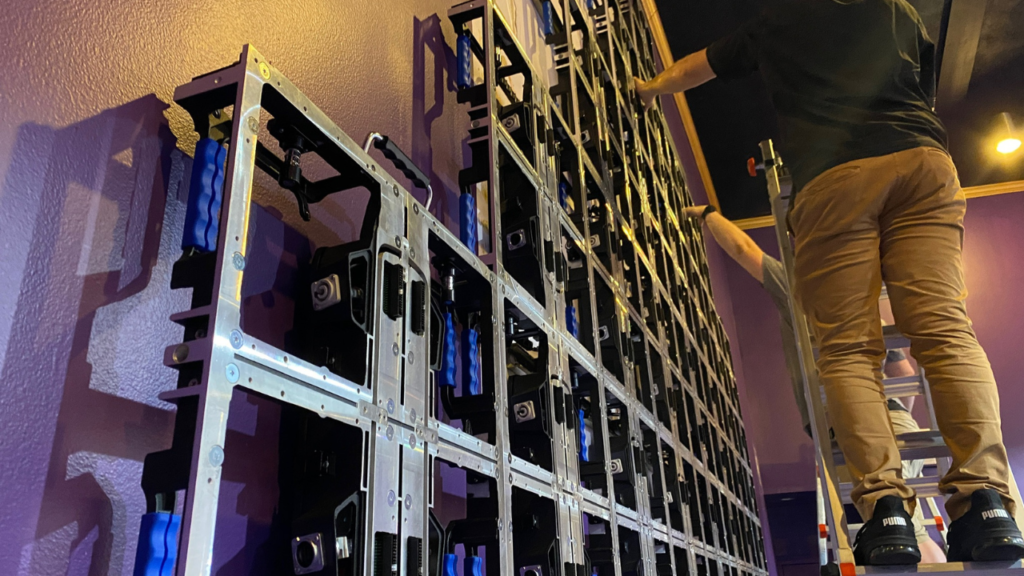
You can choose from three different ways to mount your LED screen. This will depend on your screen size and location of installation.
Mounting LED Screen on Ceiling
- Step 1: Use ceiling-mount brackets mainly designed for the weight of your screen is best.
- Step 2: Mark your ceiling.
- Step 3 – Install anchor bolts.
- Step 4- Attach your screen frame to the ceiling securely.
- Step 5- Check to ensure all panels are tightly fixed and aligned. This will prevent sagging.
Wall Mounting LED Screen
- Step 1- Begin by installing a solid aluminum or iron mounting frame on your wall.
- Step 2 – Check with the level to prevent alignment issues.
- Step 3- Bolt your screen frame to the wall with your heavy-duty fasteners.
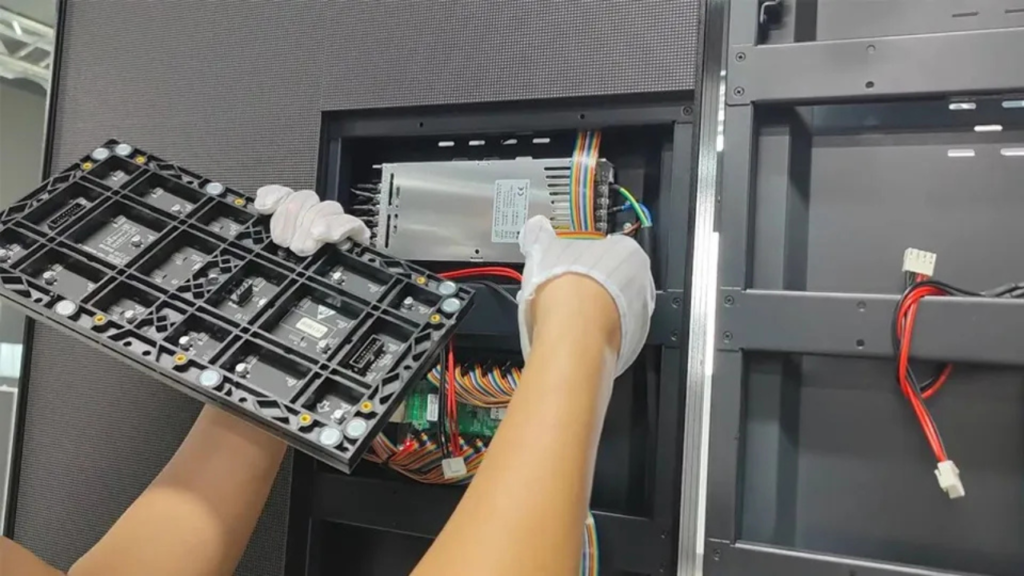
- Step 4 – Connect LED modules or cabinets in the right order, one by one.
Freestanding LED Screen Installation
- Step 1- Start by using a strong freestanding frame or truss system. This is mostly perfect for outdoor or event setups.
- Step 2- You will now have to secure its base with bolts, sandbags, or screws to prevent it from tipping.
- Step 3- Bring the screen structure together and mount your LED panels from the bottom to the top.
Step 4: Wiring Setting Up & Testing
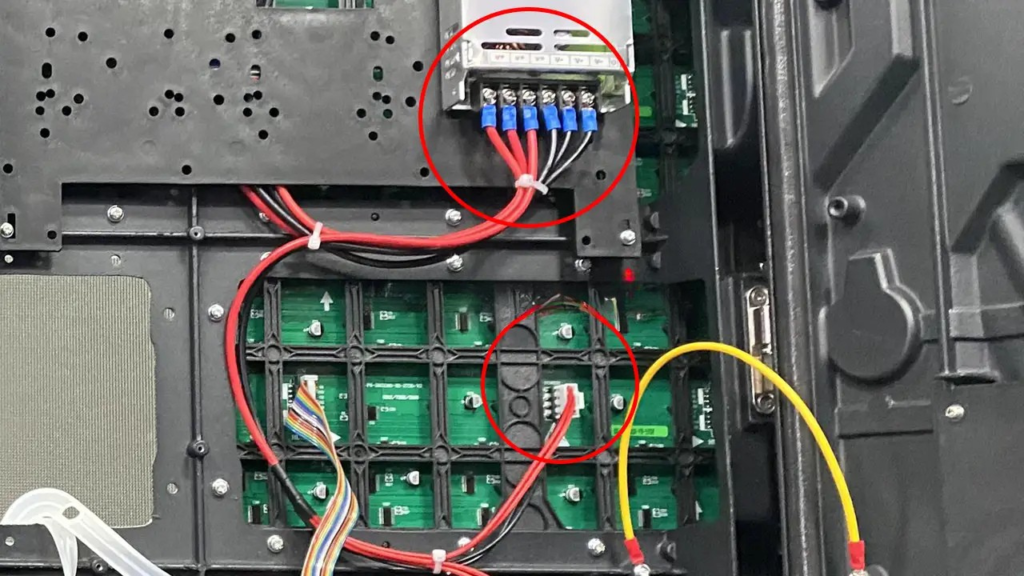
When you are done with installing the screen physically, you need to move to the phase of configuring and wiring your system.
Add Wires and Cables
- Step 1 – Adjoin power cables from your main power supply source to each LED module.
- Step 2 – Here, you will have to connect data cables mostly the CAT5 or CAT6 from the sending card to the receiving cards in your LED screen.
- Step 3 – Make sure you do a clean and secure cable routing job.
Test Integrity of the Signal
- Step 1 – Begin by powering on the control system and the screen too.
- Step 2 – Run a signal test from your laptop or controller.
- Step 3 – You must now check to be sure if all the LED modules are displaying content.
- Step 4 – Go on to troubleshoot any panels that are dark or flickering.
Adjust Color Brightness
- Step 1 – Calibrate your screen using the app to manufacturer provided you.
- Step 2 – Now, adjust the brightness, color, and contrast balance to get the best display quality.
- Step 3 – To meet your outdoor screen needs, set your brightness to auto-adjust depending on the light levels you have.
Conclusion
For you to install an LED screen, there is the need to plan carefully. When your plans are put right from the beginning, it becomes easier for you to have this installation done. No matter where you want to set your screen, put the right plans in place first.