









1. What Are LED Floor Tile Screens?
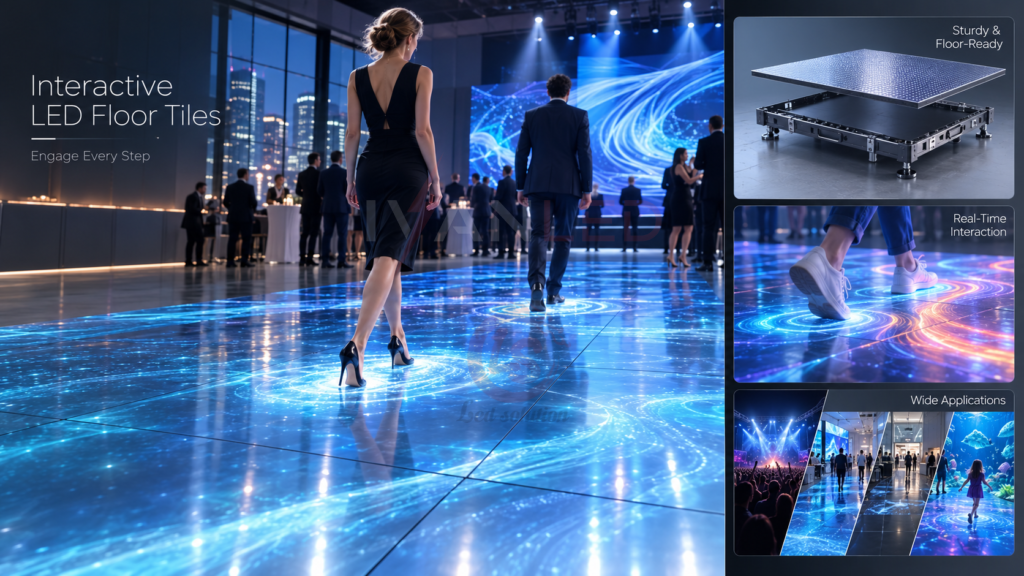
LED floor tile screens are durable, load-bearing LED displays designed to be installed on the floor. They combine high-brightness LEDs with protective coatings to withstand foot traffic, impact, and environmental stress while delivering stunning visuals.
Key characteristics:
- High brightness – Visible even in well-lit environments
- Load-bearing capacity – Withstands heavy foot traffic and equipment
- Interactive capabilities – Pressure, motion, and touch sensors for engagement
- Durable construction – Impact-resistant, waterproof (IP65+), and scratch-resistant
- Modular design – Easy to install, reconfigure, and maintain
LED floor tiles are widely used in retail displays, exhibitions, concerts, museums, nightclubs, and corporate events.
2. How LED Floor Tile Screens Work
2.1. Core Components
| Component | Function |
| LED modules | Grid of high-brightness RGB LEDs for full-color display |
| Control system | Manages content playback, scheduling, and synchronization |
| Interactive sensors | Pressure, motion, or touch sensors for user engagement |
| Protective coating | Toughened glass or polycarbonate for durability and slip resistance |
| Weatherproofing | IP65+ rating for outdoor applications |
2.2. Interactive Technology
Interactive LED floors use pressure sensors or motion sensors to detect user presence. When someone steps on the tiles, the sensors trigger visual feedback — changing colors, displaying animations, or activating games. This creates immersive, participatory experiences that are highly effective for engaging audiences.
For more on LED display control systems, see our LED display functions guide.
3. Types of LED Floor Tile Screens
| Type | Description | Best For |
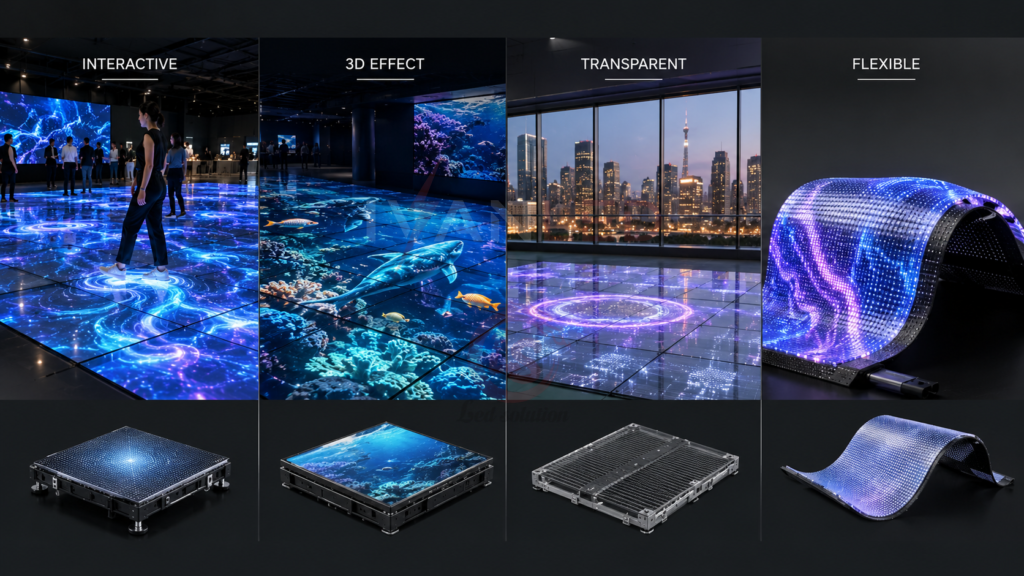
| Interactive LED floors | Pressure or motion sensors trigger dynamic visual responses | Museums, retail, entertainment venues, brand activations |
| 3D LED floors | Creates illusion of depth for dramatic visual effects | Nightclubs, art installations, high-impact events |
| Transparent LED tiles | Partially see-through for creative layering effects | High-end retail, art installations, architectural features |
| Flexible LED tiles | Bendable material for irregular or curved floor shapes | Stages with non-standard layouts, creative installations |
| LED dance floors | Colorful panels synchronized with music and movement | Nightclubs, weddings, events, entertainment venues |
| Outdoor LED tiles | Weatherproof (IP65+), high brightness for outdoor use | Public squares, outdoor events, festivals |
4. Key Applications Across Industries
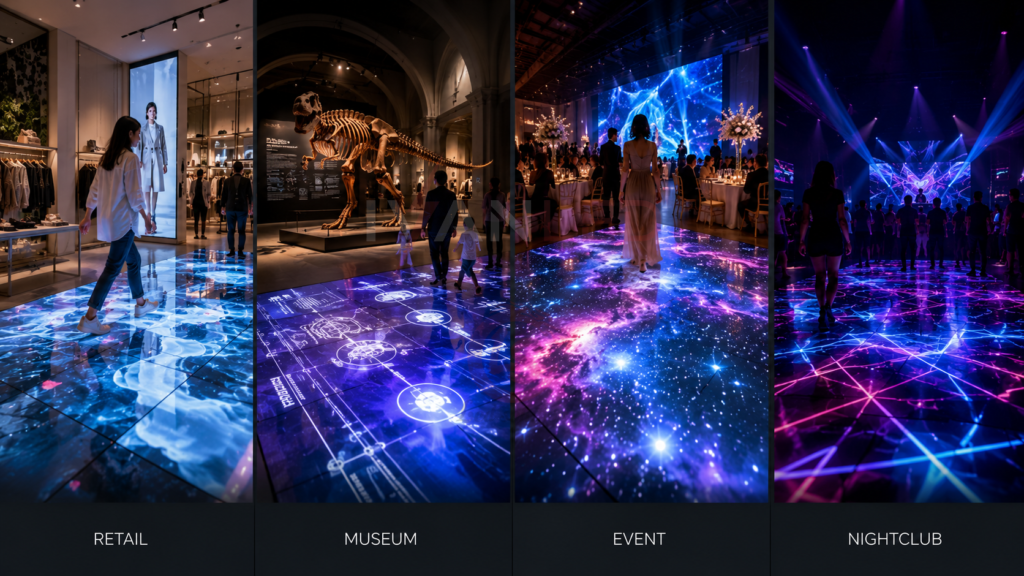
| Industry | Application | Key Benefit |
| Retail and brand environments | Interactive product displays, brand activations, window installations | Increased dwell time, memorable customer experiences |
| Events and exhibitions | Immersive floors, wayfinding, interactive booths | Enhanced engagement, social media shareability |
| Museums and cultural spaces | Interactive exhibits, educational displays, immersive environments | Visitor engagement, storytelling, memorable experiences |
| Nightlife and entertainment | LED dance floors, stage flooring, interactive club installations | Atmosphere creation, enhanced guest experience |
| Corporate and public spaces | Lobby installations, wayfinding, brand storytelling | Modernization, brand impression, visitor engagement |
| Sports and stadiums | Pre-game shows, interactive fan experiences, perimeter displays | Enhanced fan engagement, sponsorship activation |
5. Key Factors to Consider When Choosing LED Floor Tiles
5.1. Pixel Pitch and Resolution
Pixel pitch determines image clarity. For indoor applications where viewers are close (under 3 meters), choose P2.6–P3.9. For outdoor or long-distance viewing, P4.8–P6.9 is more cost-effective.
5.2. IP Rating (Weatherproofing)
For outdoor installations, choose IP65 or higher to protect against dust and water. Indoor installations may only require IP20–IP40.
5.3. Interactive Features
Consider the type of interactivity your application requires:
- Pressure-sensitive – Reacts to weight and footsteps
- Motion-sensitive – Detects movement and gestures
- Touch-sensitive – Responds to direct contact
5.4. Installation and Maintenance
Choose modular LED tiles for easy installation, reconfiguration, and maintenance. Modular designs allow quick replacement of individual panels in case of damage or failure.
For more on maintenance, see our front vs rear maintenance guide.
5.5. Budget and Total Cost of Ownership
LED floor tiles vary widely in price. Consider not only the initial purchase cost but also installation, maintenance, and energy consumption over the product’s lifespan.
6. Cost and Budget Reference
Prices for LED floor tiles vary significantly based on type, resolution, brightness, and interactivity. The following are general market reference prices for planning purposes:
| System Type | Price Range (per m²) | Typical Applications |
| Basic interactive floor | $200 – $500 | Simple pressure-sensitive tiles, entry-level installations |
| Mid-range interactive floor | $500 – $1,000 | Moderate resolution, durability, basic motion detection |
| High-end interactive floor | $1,000 – $2,500+ | High resolution, advanced interactivity, custom designs |
Additional costs to consider:
- Installation: $50–150 per m²
- Annual maintenance: 5–10% of initial installation cost
- Control system and software
For a custom quote, contact our sales team with your specific requirements.
7. Choosing a Reliable LED Floor Tile Supplier
Selecting the right manufacturing partner is critical for a successful LED floor installation. Look for a supplier with:
- Proven experience in LED floor tile manufacturing — ideally 10+ years
- High-quality, durable products with verified load-bearing and weatherproof ratings
- Comprehensive warranties and responsive technical support
- Customization capabilities for size, shape, and interactive features
- Global shipping and logistics support
IvanLED is a professional LED display manufacturer with over a decade of experience. We offer a wide range of LED floor tile screens — interactive, 3D, transparent, flexible, and outdoor — all designed for durability and visual impact. Our tiles feature high-quality LEDs, robust protective coatings, and advanced control systems for seamless integration.
We provide competitive wholesale pricing, custom design support, and comprehensive technical documentation. Browse our commercial LED display solutions or contact our sales team to discuss your project requirements.
8. Frequently Asked Questions (FAQ)
What is the difference between interactive and non-interactive LED floor tiles?
Interactive LED floor tiles use pressure, motion, or touch sensors to respond to user presence — changing colors, displaying animations, or triggering effects. Non-interactive tiles display pre-programmed content without responding to user interaction. Interactive tiles are ideal for engagement-focused applications like retail, museums, and events.
Can LED floor tiles be used outdoors?
Yes, but they must be specifically designed for outdoor use. Outdoor LED floor tiles require IP65+ weatherproofing, UV-resistant materials, and high brightness (2,500–4,500+ nits) to overcome sunlight. Always verify the IP rating and specifications for your environment. See our indoor vs outdoor comparison for more details.
How much weight can LED floor tiles support?
Quality LED floor tiles are designed to support heavy foot traffic and typical event loads. Most tiles can withstand 500–1,000 kg per square meter, depending on the model and construction. Always check the load-bearing specifications with your supplier for your specific application.
What pixel pitch is best for LED floor tiles?
For indoor applications with close viewing (under 3 meters), choose P2.6–P3.9. For outdoor or long-distance viewing, P4.8–P6.9 is more cost-effective. Match pixel pitch to your typical viewing distance to avoid overpaying.
Does IvanLED offer LED floor tile solutions for projects?
Yes. IvanLED provides custom LED floor tile solutions for events, retail, museums, nightlife, and corporate installations. Our range includes interactive, 3D, transparent, flexible, and outdoor tiles. Contact our sales team to discuss your project requirements and request a wholesale quote.
9. Conclusion: Elevate Your Space with LED Floor Tiles
LED floor tile screens are powerful tools for creating immersive, interactive visual experiences. Whether you are designing a retail installation, a museum exhibit, an event stage, or a nightclub dance floor, the right LED floor solution can transform any space and captivate audiences.
IvanLED’s straightforward advice for 2026:
– For indoor engagement, choose interactive LED tiles with P2.6–P3.9 and pressure/motion sensors.
– For outdoor installations, prioritize IP65+ weatherproofing and 2,500+ nits brightness.
– For high-impact events, consider 3D or transparent tiles for dramatic visual effects.
– Plan for modular installation and spare tiles to ensure long-term reliability.
At IvanLED, we manufacture high-quality LED floor tile screens designed for the demands of commercial use. Contact our sales team to discuss your project requirements and request a wholesale quote.
Ready to bring dynamic flooring to your next project?
👉 Contact IvanLED’s sales team for a free consultation and customized quote.