










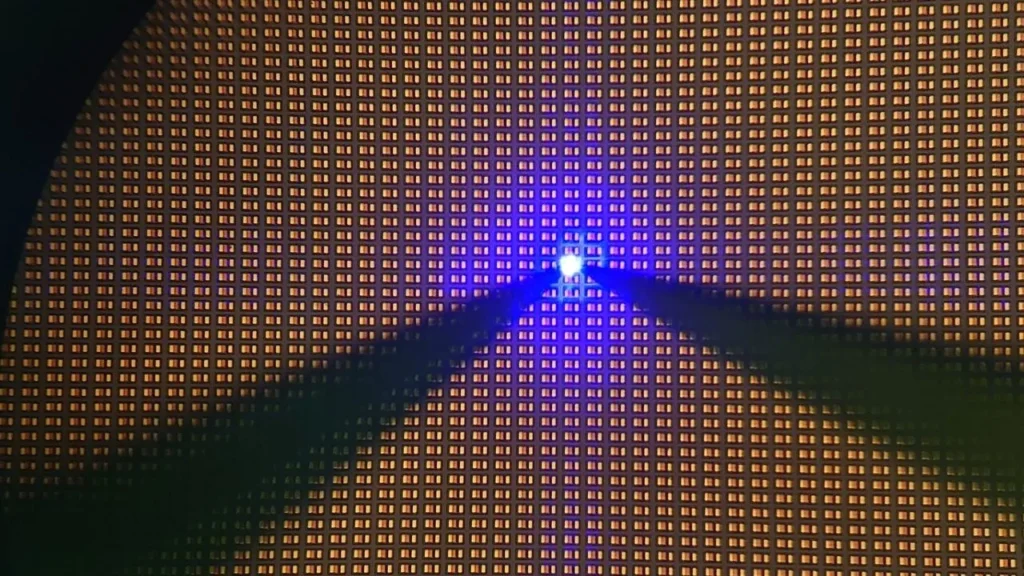
What is COB Packaging?
COB is short for Chip On Board, which refers to the LED chips being mounted directly on the PCB and then encapsulated in a single process. Without individual housings, COB packaging allows for a smaller pixel pitch and better detail performance.
What Does CSP Packaging Refer to?
CSP, or Chip Scale Package, means that each LED chip uses an individual package in a size close to the chip itself. Each LED bulb in a CSP package is independent, allowing for individual replacement and repair.
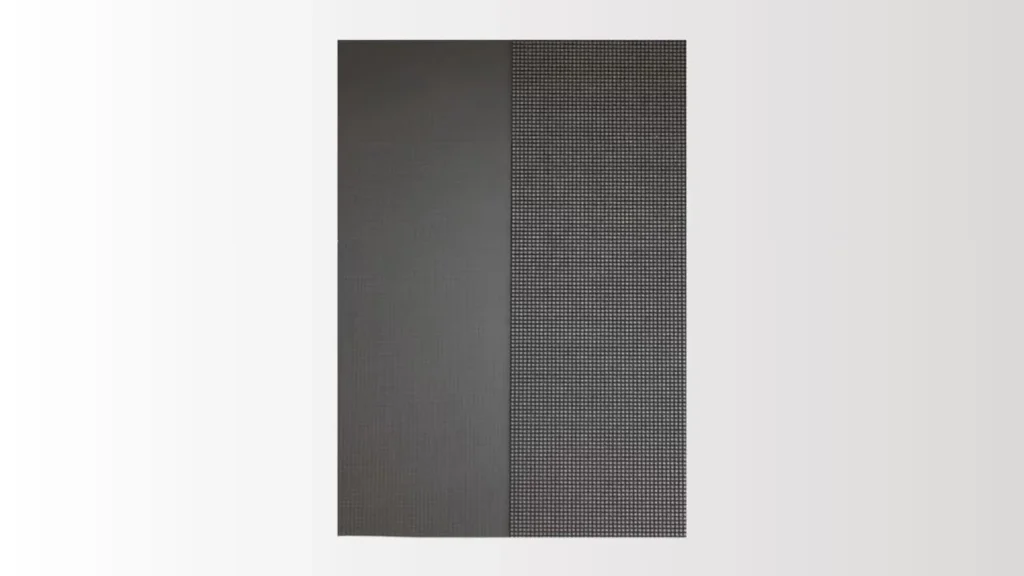
Difference Between COB and CSP Packaging
Pixel Pitch of COB and CSP
Since the LEDs are encapsulated in a single step without separate casings, COB packaging can achieve a smaller pixel pitch and take on a sharper display for you. Generally, COB LEDs have a pixel pitch of 0.7 mm or larger, and it can go as low as 0.4 mm.
Due to the individual mounting, CSP LED modules generally have larger pixel pitches, typically around 0.9–2 mm.
Brightness of COB and CSP
On one hand, the packaging material used in COB will absorb part of the light. On the other hand, the dense arrangement of LED bulbs concentrates heat, which can reduce lifespan if the operating temperature is too high. Therefore, the brightness of COB is usually lower, typically below 1500 nits, and it is more suitable for indoor viewing.
For the CSP package method, individual LED packaging allows each LED bulb to dissipate heat effectively, and the transparent encapsulation materials can be used. As a result, CSP allows for higher brightness without reducing lifespan. LED display made using this packaging method can reach 2,000 nits, 4000 nits or even higher.
Thickness of COB and CSP
COB modules have no individual housings, and the encapsulation materials are usually epoxy resin or silicone, so the displays are generally thinner. While CSP LED modules are individually packaged, the LEDs have a certain distance from the PCB board, making the display slightly thicker.
Heat Dissipation of COB and CSP
Separate housings generally reduce heat dissipation. In COB packaging, LEDs are attached directly to the PCB, and the PCB, usually made of copper foil, helps with heat dissipation. In contrast, with CSP packaging, the LEDS are fixed away from the PCB, resulting in poorer heat dissipation, and sometimes additional airflow channels are even required.
Color Consistency of COB and CSP
Color consistency refers to the uniformity of color displayed by different pixels when showing the same color on a screen. Inconsistent colors can lead to patches on the screen, which can impair your viewing experience.
CSP packaging often has poorer color consistency compared to COB, because different batches in LED bulbs and packaging can both make the pixels show slightly differently.
Cost of Production
For the materials, COB always uses multi-layer PCBs that can dissipate heat efficiently, and also uses epoxy or silicone packages that are resistant to high temperatures. In addition, COB requires higher technical precision in processes such as soldering, die bonding, and optical/electrical testing, which leads to higher costs.
Although CSP packaging requires encapsulating each LED individually, the material cost is still lower than that of COB. Besides, it only needs a one-layer or two-layer PCB for mounting and dissipating heat. Therefore, it costs much less than COB in several aspects.
Protection Level of COB and CSP
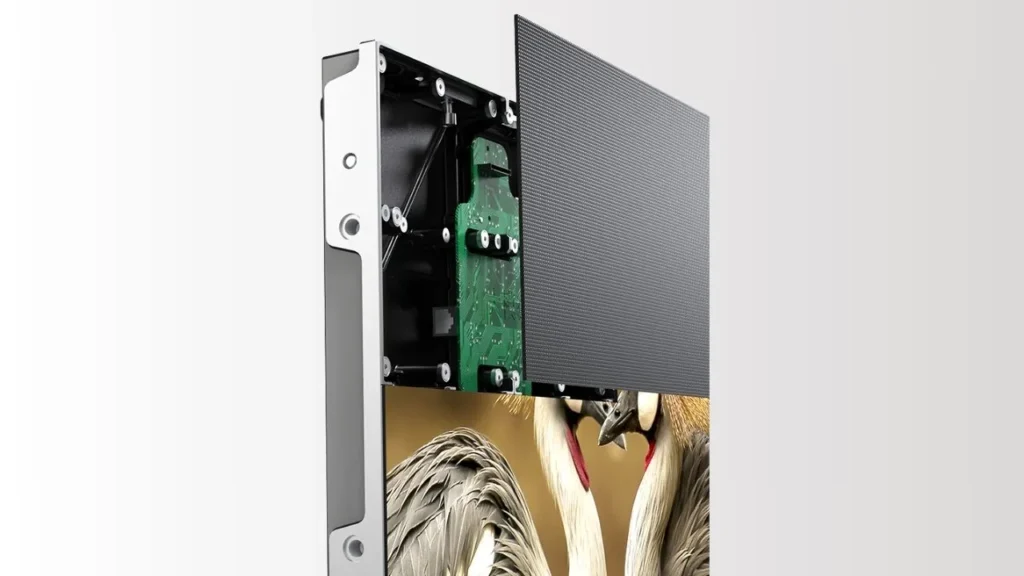
The complete encapsulation of the module can naturally enhance the COB’s resistance to water and dust. Moreover, since the surface of LEDs is made of epoxy or silicone, which can resist scratches and impacts, you don’t have to worry about it getting damaged. The protection level of the COB packaging usually ranges from IP54 to IP67.
CSP lacks overall protection, leaving the electrodes and LEDs exposed. If you want to use it outdoors, you should add additional encapsulation and a protective cover to reach a protection level of around IP67.
Pros of COB and CSP
Pros of COB
Low Defect Rate
Because the solder joints and LED chips are protected from external environmental factors, COB-packaged LEDs exhibit a lower failure rate. It also has a longer lifespan.
Better Content Performance
Due to the smaller pixel pitch, COB packaging can make the image clearer. In addition, LED screens with COB packaging provide broader grayscale, higher color consistency, and higher contrast levels. It is suitable for content with high resolution and fine details.
Better Protection Capability
The modules that are packaged by COB come with excellent protection when leaving the factory. They are almost fully sealed, which can resist both moisture and dust, as well as impact and scratch protection, and can operate stably even under extreme weather conditions.
Pros of CSP
Lower Cost
Whether in terms of materials or manufacturing costs, CSP is undoubtedly less expensive than COB. It can also achieve automated production, which reduces labour costs.
Excellent Performance Outdoors
As we all know, under sunlight, the brightness of a screen you can see is significantly lower than in indoor environments. When the displays are used outdoors, the COB-packaging ones only offer low brightness, which is not suitable. However, because of the higher brightness, CSP packaging is well-suited for outdoor applications.
More Suitable for Curved and Irregular LED Screens
Because each LED bulb is separately packaged, CSP can be mounted on flexible PCB boards, enabling content display on flexible or uniquely shaped screens. With high flexibility, it can also be used in transparent LED screens.
Easy to Maintain
Modules with CSP packaging can also be repaired individually if there is a fault. You can also remove any single LED bulb from the module without impacting the other LEDs.
Cons of COB and CSP
Cons of COB
High Price and Complex Process
Screens that use the COB package can offer you a more immersive experience, and their cost is also higher. It needs specialised equipment such as die-bonders and encapsulation machines, some steps also require manual operations, and the production even demands a clean environment.
Complex to Repair
Although COB-packaged LEDs have an extremely low failure rate, once the LED bulbs break down, the entire module must be replaced, resulting in higher maintenance costs.
Poor Outdoor Performance
As mentioned, those screens packaged by COB can only take on a maximum brightness of 1500 nits. Therefore, when applying this technology outdoors, it performs poorly, failing to deliver its high resolution and high color quality, and is suitable only for indoor use.
Cons of CSP
Risk of Water and Dust Ingress
Because of its older joints exposed to the air, CSP-packaged PCBs may oxidise, absorb moisture, or short-circuit. In addition, the surface of the LED is also exposed, allowing dust and moisture to enter the LED casing, potentially causing dampness and damage.
Potential Differences in Solder Joint Height
When packaging the module under CSP technology, differences in PCB thickness, changes in soldering temperature, nd operator errors can create uneven solder joint height, which may reduce image quality and sometimes cause LED bulbs to detach.
How to Choose Between COB and CSP?
For Distributors and Brand Owners:
- If you have a limited budget, CSP is a good option. If you have a sufficient budget and want to position your product as high-end, COB is the better choice.
- If you want products with a low failure rate and avoid frequent after-sales issues, COB is the ideal choice.
- If you want your product to target a larger market, CSP has higher sales volume and can help you achieve faster turnover.
For Integrators and Project Managers:
- For LED displays used indoors where need is to be durable, such as conference screens and metro station advertising displays, COB is more suitable. When you need to place them outdoors, choose COB.
- If your customers want to avoid frequent maintenance, the COB screens, which have an extremely low failure rate, will be more suitable.
- If you want to purchase or customise at a lower price, choose CSP.
FAQs
What is flip-chip?
Flip-chip is often used in COB, which is a method to invert the LED chip, so that its electrode surface makes direct contact with the PCB. It can accelerate the LED chip to dissipate heat and also improve light efficiency.
Is COB always more durable than CSP?
COB modules generally have a longer lifespan than CSP modules. However, the CSP modules can also be durable. If a few LEDs fail, just replacing them and the module’s overall lifespan can be maintained. Moreover, if you protect the display in the right way, you can also greatly decrease the frequency of maintenance required for CSP modules.
Do CSP and COB require frequent cleaning during usage?
Yes. Dust, oil, and moisture can accumulate on the surface of LED modules when they are exposed to the air. In particular, static electricity will be generated during use that can attract dust, and if it enters the module, it may reduce performance or even cause failure. Therefore, they all require regular cleaning, especially CSP modules.
IvanLED – Your Reliable Partner
IvanLED is a professional manufacturer that has over ten years of experience in LED displays. We can customise LED displays for various applications, in different sizes and with different pixel pitches. IvanLED also sell worldwide, and can provide installation and technical support. If you need to customise an LED display, regardless of the type, feel free to contact us!