







1. What Is a Transparent LED Screen?
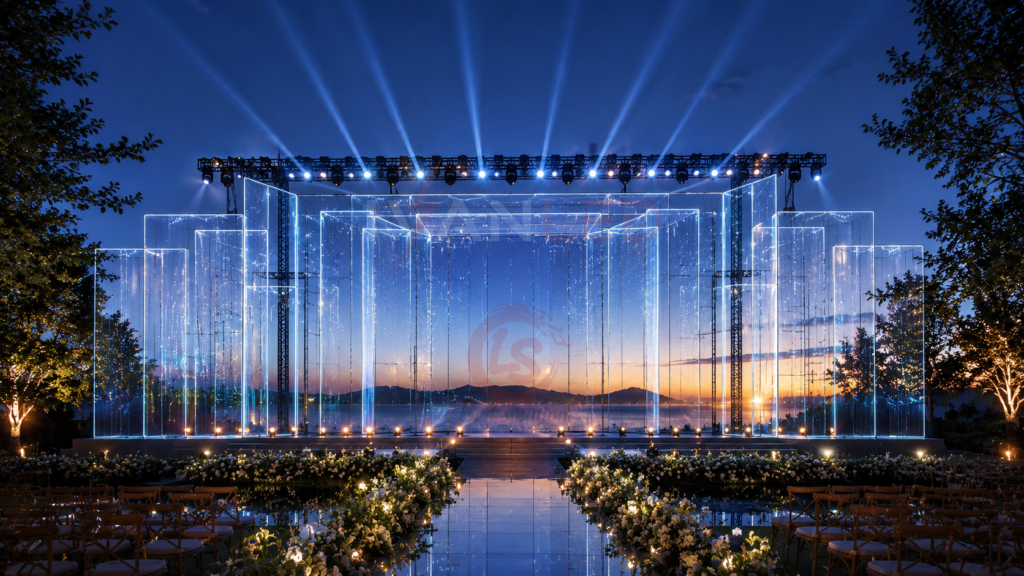
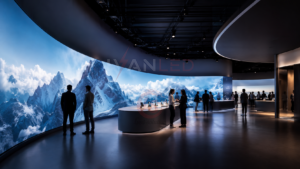
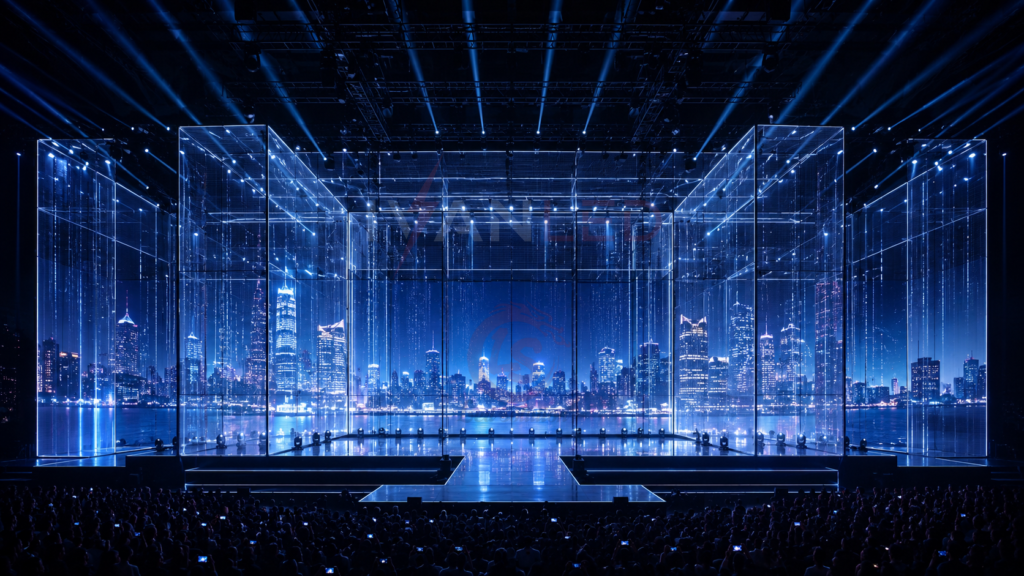
A transparent LED screen (also called see-through LED display or mesh LED screen) is a display technology that combines high transparency with full-color video capabilities. Unlike traditional opaque LED walls, transparent LED screens allow light to pass through, creating a “see-through” effect that makes visuals appear to float in space.
Key technical characteristics:
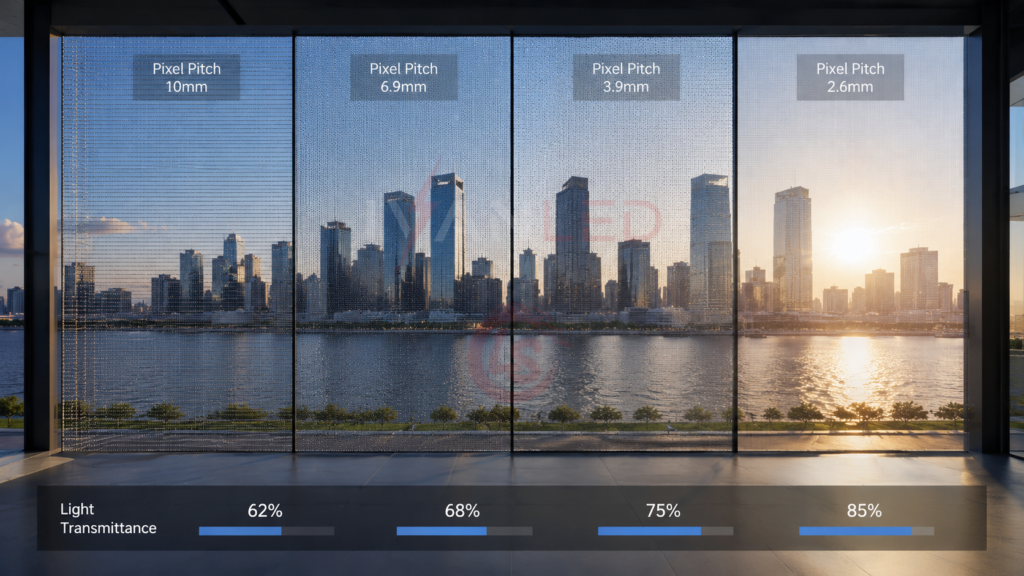
- Light transmittance: 60%–90% (depending on pixel pitch and design)
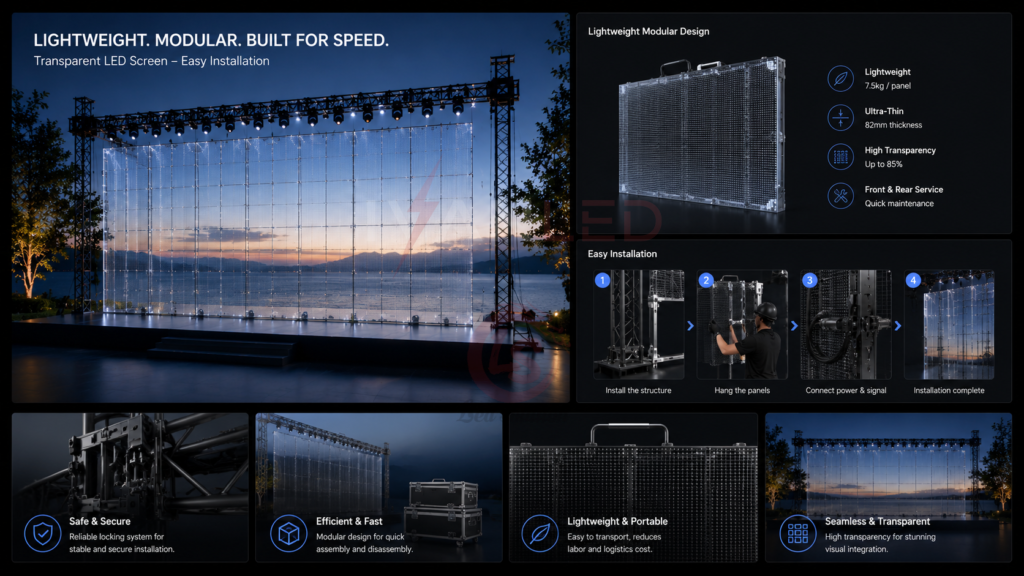
- Ultra-thin, lightweight design: Easy to transport and install
- Modular construction: Allows for custom shapes and sizes
- High brightness: Visible in both indoor and outdoor environments
- Seamless integration: Combines with stage lighting and set design
Transparent LED screens are widely used in concerts, stage productions, weddings, retail displays, and architectural installations.
2. Why Transparent LED Screens Are Transforming Stage Design
2.1. High Light Transmittance
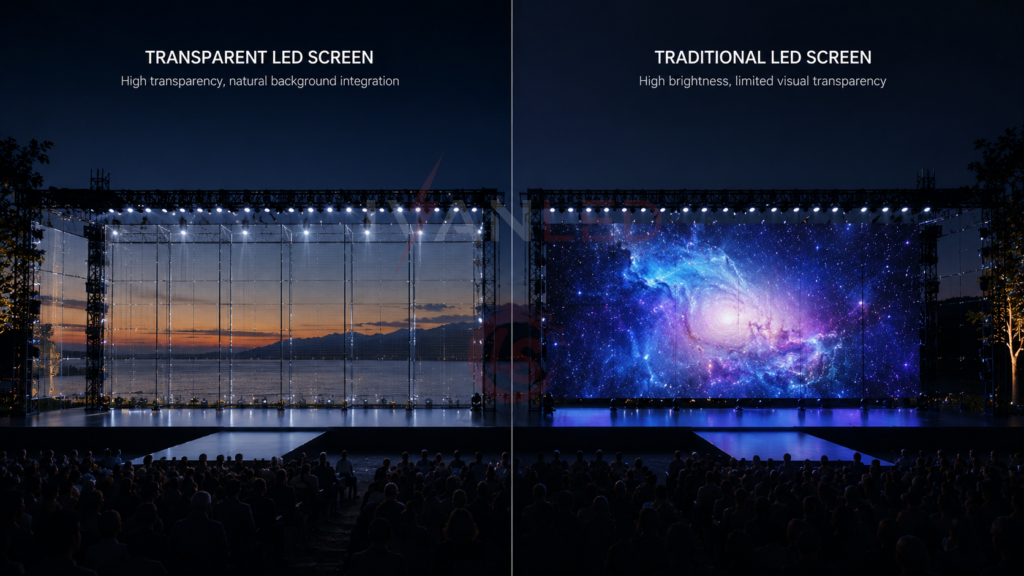
With transmittance rates of 60%–90%, transparent LED screens allow stage lighting to shine through without obstruction. This creates a seamless blend of digital content and physical stage elements — performers, set pieces, and lighting effects coexist in perfect harmony.
2.2. Ultra-Lightweight and Flexible Installation
Traditional LED screens are heavy and require substantial structural support. Transparent LED screens are significantly lighter and thinner, enabling installation on complex stage structures, suspended ceilings, and even glass surfaces. This flexibility expands creative possibilities for stage designers.
2.3. Superior Visual Impact
Transparent LED screens deliver high-resolution, vivid images with excellent color reproduction. The combination of transparency and high-quality visuals creates a striking “holographic” illusion that captivates audiences and enhances the overall production value.
2.4. Immersive Audience Experience
The see-through nature of transparent LED screens allows the audience to feel more connected to the performance. Visuals appear to emerge from the space itself, creating a sense of depth and immersion that traditional screens cannot achieve.
2.5. Versatility and Customization
Modular design allows transparent LED screens to be configured in various shapes and sizes — curved, angled, or custom geometries. This adaptability makes them suitable for everything from intimate theatrical productions to large-scale stadium concerts.
3. Applications of Transparent LED Screens in Live Events
| Application | Description | Key Benefit |
| Concerts and music festivals | Stage backdrops and overhead displays | Combines high-definition visuals with stage lighting penetration |
| Weddings and corporate events | Romantic backdrops, photo displays, and branding | Creates dreamy, immersive atmosphere without blocking view |
| Theatrical productions | Dynamic scenery and projected backgrounds | Blends digital content with physical set pieces |
| Outdoor music festivals | Main stage screens and secondary displays | High brightness and weather resistance |
| Corporate events and product launches | Brand activations and immersive presentations | High-tech, innovative brand image |
4. Advantages of Transparent LED Screens for Stage Performances
| Advantage | Description | Why It Matters |
| High light transmittance | 60%–90% transparency | Lighting effects penetrate the screen, creating depth and layering |
| Thin and lightweight design | Ultra-slim cabinets, easy to handle | Faster installation, lower structural requirements, easier transport |
| Flexible shape design | Modular, customizable configurations | Adapts to any stage layout — curved, angled, or custom shapes |
| High-resolution visuals | Full-color, high-definition video | Vivid, clear images enhance the overall stage effect |
| Immersive experience | See-through design connects performers and audience | Creates a more engaging, captivating performance environment |
5. How to Choose a Transparent LED Screen for Your Stage
5.1. Determine Stage Requirements
Size and shape: Transparent LED screens are modular. Determine the required dimensions and whether you need curved, angled, or custom configurations.
Installation location: Will the screen be used as a stage backdrop, side screen, ceiling-mounted display, or freestanding element? Each location has different structural and visual requirements.
5.2. Evaluate Light Transmittance
Light transmittance typically ranges from 60% to 90%. Higher transparency allows more stage lighting to pass through, creating a lighter, more ethereal effect. Lower transparency (60–70%) provides denser pixel coverage for sharper images. Choose based on your visual priorities.
5.3. Check Image Quality and Brightness
Resolution and pixel pitch: For close viewing (under 3 meters), choose P3–P4. For medium distances (3–8 meters), P4–P6 is suitable. For long distances (over 8 meters), P6–P8 is cost-effective.
Brightness: Indoor events require 1,000–2,500 nits. Outdoor events require 4,500+ nits for sunlight visibility.
5.4. Consider Durability and Environmental Adaptability
IP rating: For outdoor use, choose IP65+ weatherproofing. Indoor screens can use IP20–IP40.
Material quality: High-quality materials ensure longer lifespan and lower maintenance costs. Check for UV resistance and thermal management for outdoor applications.
5.5. Budget and Total Cost of Ownership
Transparent LED screens typically cost 30–60% more than traditional LED screens of similar size and pixel pitch. However, the visual impact and creative flexibility often justify the premium.
6. Expert Tips for Transparent LED Screen Buyers
Tip 1: Match transparency to your lighting design.
Higher transparency (80–90%) works best with complex lighting rigs where lights must shine through the screen. Lower transparency (60–70%) is better for content that requires denser pixel coverage.
Tip 2: Consider the viewing angle.
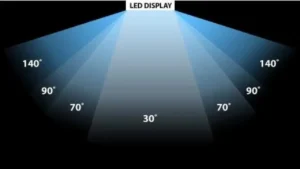
Transparent LED screens have narrower optimal viewing angles than traditional screens. Position the screen where the majority of the audience will view it head-on.
Tip 3: Plan for content creation.
The unique characteristics of transparent screens require specially designed content — dark backgrounds, high contrast, and simple compositions work best. Work with experienced content creators.
Tip 4: Test brightness in your venue.
What looks bright in a showroom may appear dim on stage. Test the screen at your venue’s actual lighting levels before finalizing your purchase.
Tip 5: Order spare modules (5–10%) with your initial purchase.
Color and brightness vary between production batches. Spare modules purchased with your order ensure a perfect match for future repairs.
7. Frequently Asked Questions (FAQ)
Q1: What is the difference between a transparent LED screen and a standard LED screen?
A transparent LED screen allows light to pass through (60–90% transparency) while displaying full-color video content. Standard LED screens are opaque and block background lighting. Transparent screens are lighter, thinner, and ideal for stage designs where lighting penetration is important.
Q2: Can transparent LED screens be used outdoors?
Yes, but they must be rated for outdoor use. Outdoor transparent LED screens require IP65+ weatherproofing, high brightness (4,500+ nits), and UV-resistant materials. Always verify the IP rating and brightness specifications for your environment.
Q3: What pixel pitch is best for a transparent LED screen?
For events where the audience is close (under 3 meters), choose P3–P4. For medium distances (3–8 meters), P4–P6 is suitable. For large venues with distant audiences (over 8 meters), P6–P8 is cost-effective. Always match pixel pitch to your viewing distance.
Q4: How much does a transparent LED screen cost?
Transparent LED screens typically cost 30–60% more than traditional LED screens of similar size and pixel pitch. Exact pricing depends on pixel pitch, transparency level, brightness, and customization. Contact us for a custom quote.
Q5: Does IvanLED offer transparent LED screen solutions?
Yes. IvanLED provides custom transparent LED screen solutions for stage events, retail displays, and architectural installations. Our screens feature high transparency, lightweight design, and excellent visual performance. Contact us to discuss your project requirements.
8. Conclusion: Elevate Your Stage with Transparent LED Technology
Transparent LED screens are redefining what is possible in stage design. Their ability to combine stunning visuals with transparency, lighting integration, and creative flexibility makes them an essential tool for modern event production.
IvanLED’s straightforward advice for 2026:
– For stage and concert applications, choose high-transparency (80%+), lightweight, modular transparent LED screens.
– For outdoor events, prioritize IP65+ weatherproofing and 4,500+ nits brightness.
– Work with experienced content creators to maximize the visual impact of transparency.
– Always plan for future expansion and spares to protect your investment.
At IvanLED, we manufacture high-quality transparent LED screens designed for the rigors of live events and stage production. Our solutions combine high transparency, superior image quality, and flexible installation options to bring your creative vision to life.
Ready to elevate your stage with transparent LED technology?
👉 Contact IvanLED for a free consultation and customized transparent LED screen quote.