








1. What Is an Advertising LED Display?
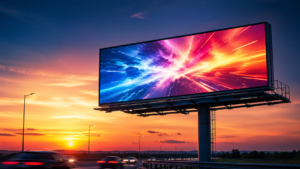
An advertising LED display (also called commercial LED display, LED advertising wall, or digital signage) is a large-format LED screen used primarily for commercial advertising and brand promotion. Unlike standard displays, advertising LED screens are designed to attract attention, convey marketing messages, and drive consumer action.
They are typically installed in high-traffic locations such as:
- City center buildings and billboards
- Shopping malls and retail stores
- Airports, train stations, and transit hubs
- Stadiums and sports venues
- Corporate lobbies and event spaces
Advertising LED displays can show dynamic content — videos, animations, live feeds, and interactive elements — making them far more engaging than static posters or traditional billboards.
2. Why Do You Need an Advertising LED Display?
2.1. Unmatched
Visual Impact
LED displays combine large screen size, high brightness, and dynamic motion to capture attention instantly. Whether day or night, indoor or outdoor, they deliver crisp, vibrant visuals that stop passersby and create lasting impressions.
2.2. Effective Brand Building
Advertising LED screens are powerful tools for brand image building. By designing creative, high-quality content, brands can quickly establish recognition and memorability. High-traffic locations ensure maximum exposure, reinforcing brand presence in the minds of consumers.
2.3. Cost-Effective Communication
Compared to traditional advertising methods (print, billboard replacement, direct mail), LED displays offer lower long-term costs. Content can be updated instantly without printing or installation costs, reducing both time and material expenses.
2.4. Real-Time Content Flexibility
With centralized content management, advertising LED displays allow real-time updates. Brands can run time-sensitive promotions, react to market trends, or adapt messaging based on audience behavior — all from a single dashboard.
3. Key Advantages of Advertising LED Displays
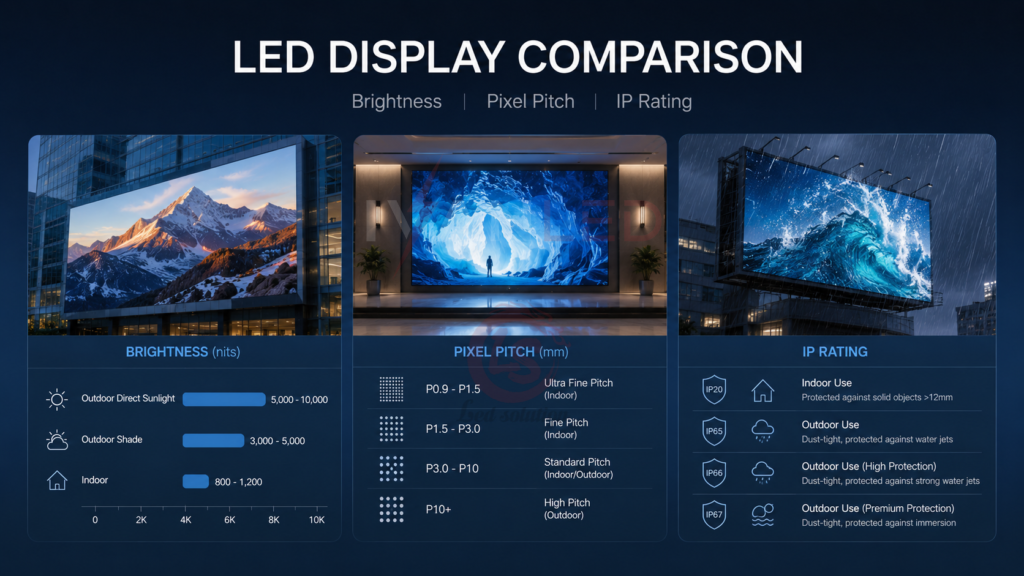
| Advantage | Description |
| Compelling visuals | Full-color, high-resolution video and animations attract attention and convey messages effectively |
| Versatile content formats | Display text, images, video, animation, live feeds, and interactive content |
| High brightness | Visible in direct sunlight (outdoor models) or bright indoor lighting |
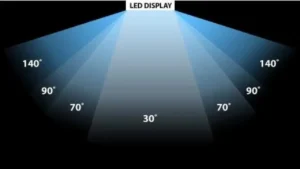
| Wide viewing angles | Ensures visibility from different positions and distances |
| Durability | Weatherproof (IP65+), impact-resistant, long lifespan (50,000–100,000 hours) |
| Energy efficiency | Lower power consumption than traditional display technologies |
| Easy maintenance | Modular design allows quick module replacement |
4. Advertising LED Display Applications
4.1. Commercial Spaces
LED displays in shopping malls, retail stores, and supermarkets showcase promotions, new arrivals, and seasonal campaigns. They drive foot traffic, increase dwell time, and boost sales.
Typical locations: Storefronts, window displays, aisle end-caps, food courts, and mall atriums.
4.2. City Landmarks and Highways
Large-format outdoor LED displays in city centers and along highways command high visibility. They are used for brand advertising, public service announcements, and event promotion.
Typical locations: Building facades, digital billboards, highway overhead signs, and public squares.
4.3. Transportation Hubs
Airports, train stations, and bus terminals use LED displays for wayfinding, schedule information, and advertising. These screens provide valuable real-time information while offering brands access to captive audiences.
Typical locations: Departure halls, arrival areas, concourses, and waiting areas.
4.4. Events and Exhibitions
Trade shows, conferences, and brand activations use LED displays to create immersive brand experiences, showcase product demonstrations, and engage attendees.
Typical locations: Exhibition booths, stage backdrops, registration areas, and immersive experience zones.
5. Types of Advertising LED Displays
5.1. Indoor Advertising LED Displays
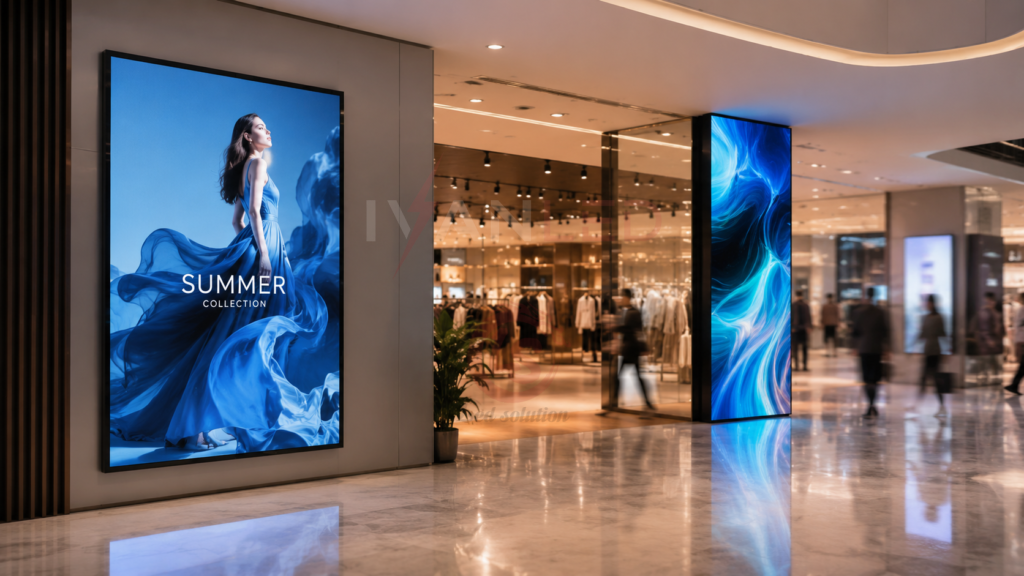
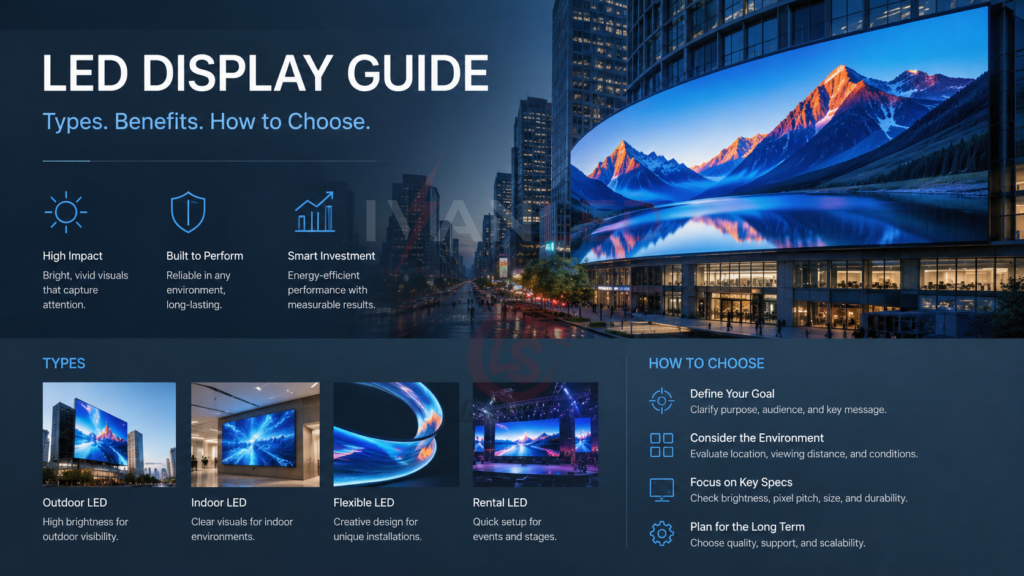
Indoor LED displays are designed for controlled lighting environments. They offer high resolution, excellent color reproduction, and fine pixel pitches (P2.5–P10) for close viewing.
Key features: Ultra-thin cabinets, lightweight, front or rear maintenance, quiet operation.
Best for: Shopping malls, retail stores, corporate lobbies, conference centers, and exhibition halls.
5.2. Outdoor Advertising LED Displays
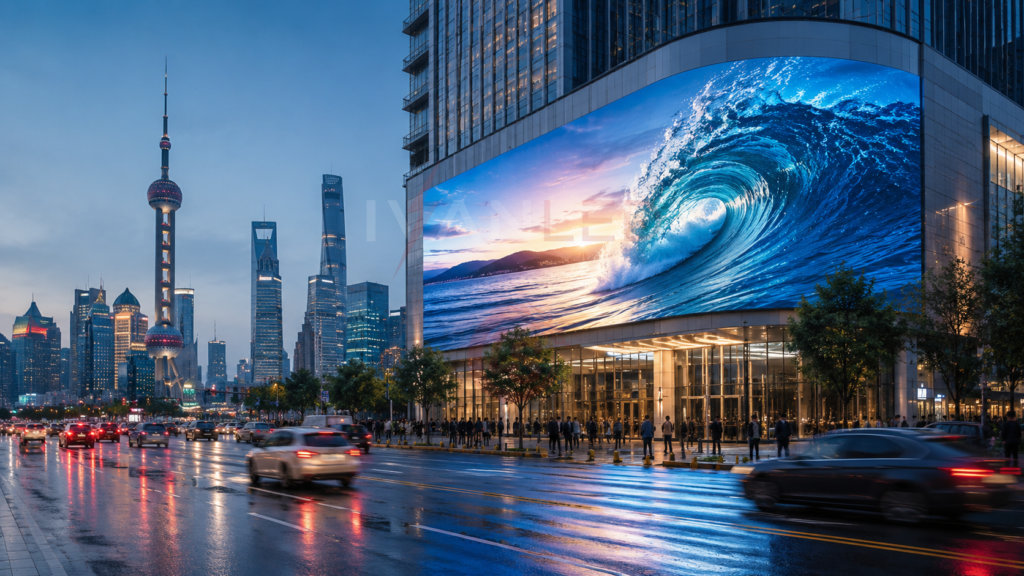
Outdoor LED displays are built to withstand harsh weather conditions. They feature high brightness (5,000+ nits), IP65 weatherproofing, and robust cooling systems.
Key features: Weatherproof cabinets, high brightness, wide viewing angles, active cooling.
Best for: Billboards, building facades, stadiums, and highway signs.
5.3. Poster LED Displays
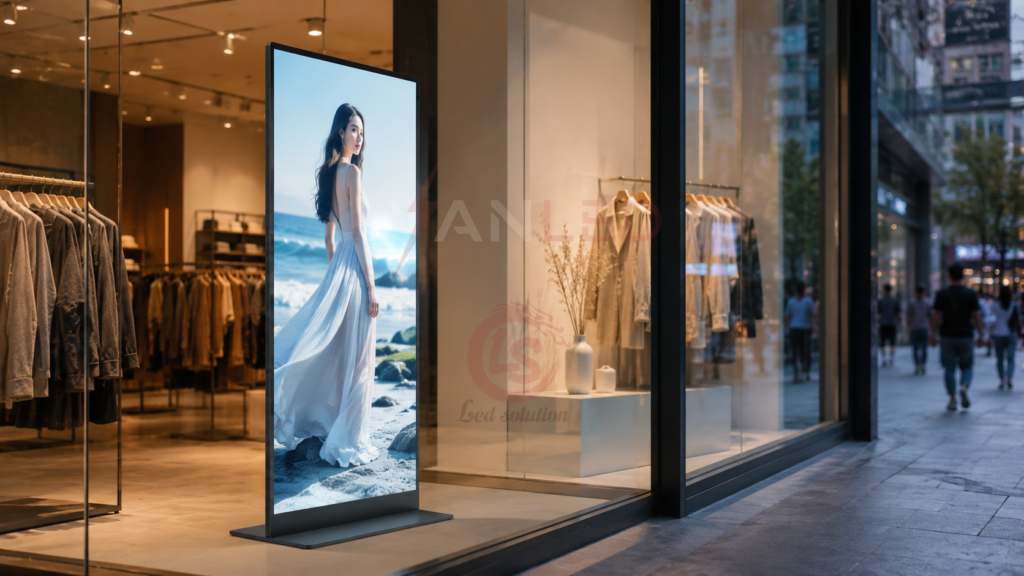
Poster LED displays are slim, portable screens that can be moved easily. They offer seamless splicing, high brightness, and versatile placement options.
Key features: Slim profile, portable, frameless design, easy setup.
Best for: Retail windows, brand counters, event entrances, and temporary installations.
6. How to Choose the Right Advertising LED Display
6.1. Define Your Environment
Is the screen for indoor or outdoor use? Outdoor screens require IP65 weatherproofing and high brightness (5,000+ nits). Indoor screens require less brightness but finer pixel pitches for close viewing.
6.2. Determine Viewing Distance
For close viewing (under 3 meters), choose P2.5–P3.9. For medium distances (3–8 meters), P4–P6 is suitable. For long distances (over 8 meters), P6–P10 offers good value.
6.3. Consider Brightness and Visibility
Outdoor screens in direct sunlight require 5,000+ nits. Indoor screens in controlled lighting need 800–1,500 nits. For semi-outdoor (covered) areas, 2,500–4,000 nits is recommended.
6.4. Evaluate Content Management Needs
Choose a display system with robust content management software. Features to look for: scheduling, remote control, multi-location management, and real-time content updates.
6.5. Plan for Installation and Maintenance
Consider installation complexity and ongoing maintenance. Front-maintenance screens are easier to service in wall-mounted installations; rear-maintenance screens are suitable for freestanding setups.
7. IvanLED Advertising LED Display Solutions
As a professional LED display manufacturer, IvanLED offers a comprehensive range of advertising LED displays for indoor, outdoor, and poster applications. Our displays are designed for durability, high performance, and easy maintenance.
Our advertising LED display range includes:
| Type | Pixel Pitch Range | Key Features | Suitable Environment |
| Indoor Advertising | P2.5 – P10 | Ultra-thin, light weight, front/rear maintenance | Malls, retail, lobbies, exhibitions |
| Outdoor Advertising | P2.5 – P16 | IP65 waterproof, 5,000+ nits, active cooling | Billboards, building facades, stadiums |
| Poster LED Display | P2.5 – P4 | Slim profile, portable, frameless | Retail windows, events, temporary displays |
All IvanLED advertising displays feature:
- High-quality LEDs from Nationstar, Kinglight, or San’an
- High refresh rate (1,920Hz+) for flicker-free video
- Modular design for easy maintenance
- 3-year warranty and global technical support
8. Expert Tips for Advertising LED Display Buyers
Tip 1: Match pixel pitch to viewing distance.
For close viewing (retail, lobbies), choose P2.5–P3.9. For billboards viewed from 20+ meters, P6–P10 is sufficient and cost-effective.
Tip 2: Invest in high-quality content creation.
The best display is only as good as the content it shows. Work with creative professionals to produce engaging, brand-aligned content.
Tip 3: Choose auto-brightness control for outdoor screens.
Automatically adjust brightness based on ambient light. This saves energy, extends LED life, and ensures the screen is always comfortable to view.
Tip 4: Order spare modules (5–10%) at time of purchase.
Color and brightness vary between production batches. Spare modules purchased with your initial order guarantee a perfect match for future repairs.
Tip 5: Plan for content management and remote control.
Choose a system that allows remote content updates and monitoring. This reduces operational costs and enables real-time campaign adjustments.
9. Frequently Asked Questions (FAQ)
Q1: What is the difference between an advertising LED display and a standard LED display?
Advertising LED displays are specifically designed for commercial advertising and brand promotion. They typically feature higher brightness, robust weatherproofing (for outdoor models), and advanced content management capabilities. Standard LED displays may be used for information display, control rooms, or other non-advertising applications.
Q2: What brightness do I need for an outdoor advertising LED display?
For outdoor advertising displays in direct sunlight, you need 5,000+ nits. For shaded or semi-outdoor locations, 3,000–4,000 nits may be sufficient. Always choose higher brightness for full-sun installations to ensure visibility.
Q3: How often should advertising LED display content be updated?
It depends on the campaign. For seasonal promotions or daily deals, update content weekly or even daily. For brand-building campaigns, monthly updates may be sufficient. The flexibility of LED displays allows for frequent, low-cost changes.
Q4: Can advertising LED displays be used 24/7?
Yes. High-quality advertising LED displays are designed for 24/7 operation. However, running at 100% brightness continuously will shorten lifespan. Use auto-brightness and consider scheduling lower brightness during off-peak hours to extend longevity.
Q5: Does IvanLED offer advertising LED displays for global shipping?
Yes. IvanLED ships advertising LED displays worldwide with comprehensive logistics support. We provide custom packaging for safe transport, and our team assists with customs clearance and installation guidance. Contact us for a custom quote.
10. Conclusion: Elevate Your Brand with Advertising LED Displays
Advertising LED displays are powerful tools for brand building, customer engagement, and revenue generation. Whether you are a brand manager, advertising agency, or property owner, investing in the right LED display solution can transform your marketing effectiveness.
IvanLED’s straightforward advice for 2026:
– For indoor advertising: Choose P2.5–P3.9, 800–1,500 nits, with robust content management.
– For outdoor advertising: Choose P4–P10, 5,000+ nits, IP65 weatherproofing, and auto-brightness.
– For maximum ROI: Invest in high-quality content creation and a reliable content management system.
– Always plan for future flexibility — choose displays that can be expanded, reconfigured, or relocated as your needs evolve.
At IvanLED, we manufacture high-quality advertising LED displays for indoor, outdoor, and poster applications. We provide full project support — from design and manufacturing to shipping and installation guidance.
Ready to elevate your brand with an advertising LED display?
👉 Contact IvanLED for a free consultation and customized quote.