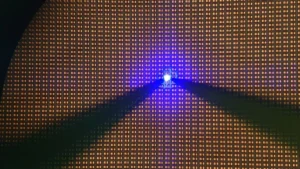












What are LED Lumens?
Lumens refer to the total amount of visible light emitted by a light source, like a lamp or a bulb. For the same light source, the higher the lumens, the brighter the light source.
Why is Brightness Expressed in Lumens Instead of Watts?
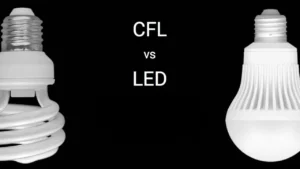
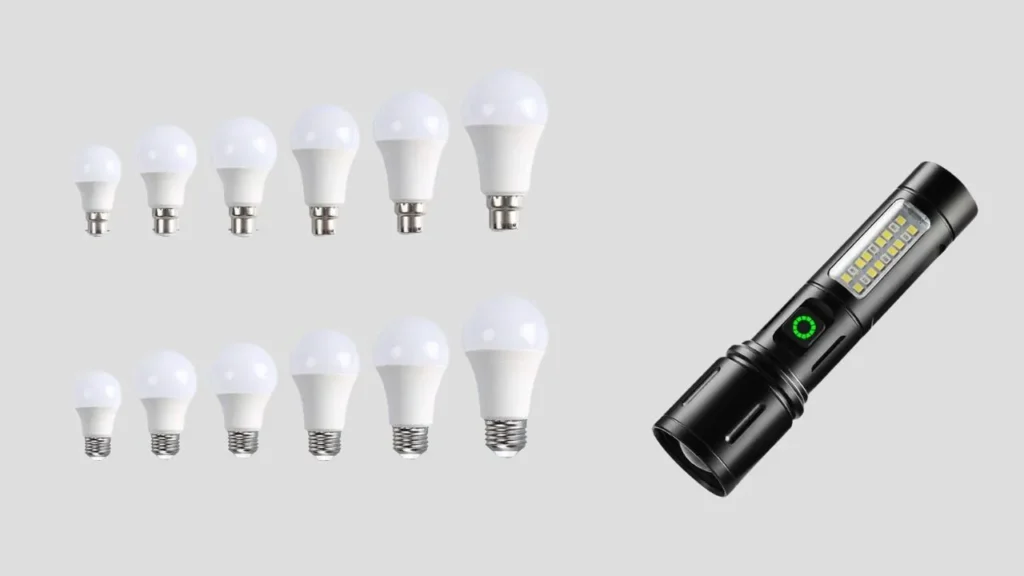
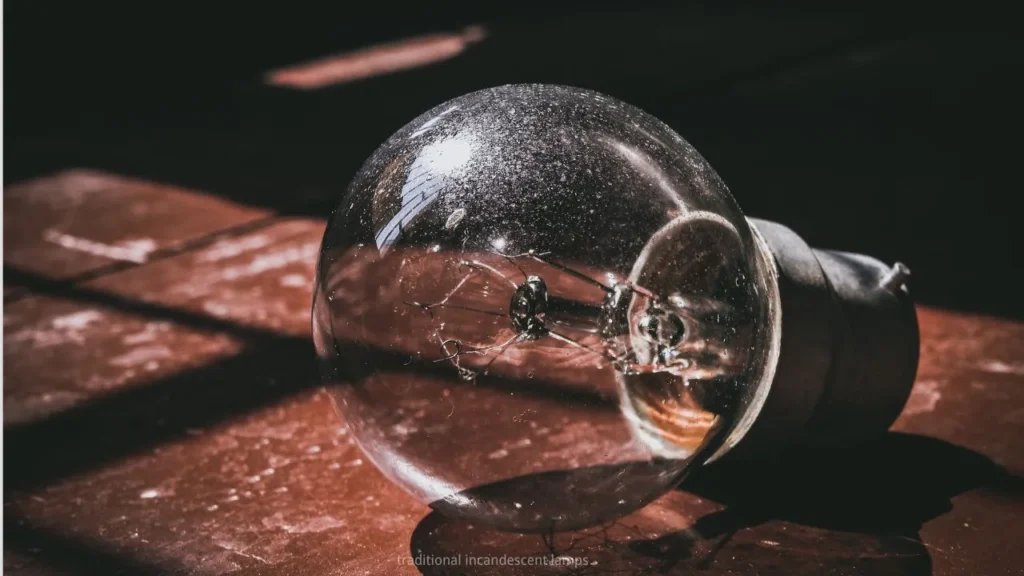
For those traditional incandescent bulbs, the power consumption can reflect the brightness. However, after various types of bulbs, especially energy-saving ones, became widely used, using watts to measure the brightness became somewhat unprofessional. For example, for the same brightness, an incandescent bulb may consume five times the power of an LED bulb.
Lumens Per Square Inch and Lumens Per Watt
Lux: Lumens Per Square Meter
The number of lumens needed for a room depends on different factors, and the most important one is the size of the room. If you want to retail to customers or buy bulbs for a project, you should know about illuminance, which is also known as Lux. It refers to the luminous flux per square meter. For instance, if 1000 lm of light is evenly spread over 10 m², the illuminance in the room is 100 lx. Similarly, if 1000 lm of light is evenly spread over 1 m², the illuminance is 1000 lx.
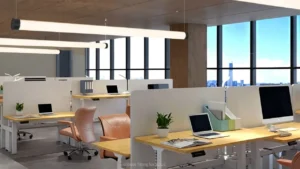
Different usage scenarios require different illuminance. Generally speaking, the illumination in offices and meeting rooms is best around 400lx. Shopping centers require high lighting, suitable for illuminance for over 500lx, while the ordinary streets only need 20-50lx.
Lm/W: Lumens Per Watt
Lumens per watt is a measure used to evaluate a bulb’s energy efficiency, which refers to the amount of light a bulb can produce per watt of power consumed. If a bulb has a lower lm/W value than another bulb, it means the bulb consumes more power.
Typically, traditional incandescent bulbs consume the most power, usually 15 lm/W, so they are gradually being phased out. The indoor LED lights, fluorescent tubes, and outdoor high-pressure sodium lamps (HPS) can reach 100 lm/W and are now widely used.
How to Determine How Many Lumens You Need?
Determine the Lux Based on the Size of the Area
Suppose you are purchasing bulbs for a room, then the total lumens it needs should be: illuminance multiplied by the area (in square meters). Sometimes, you also need to consider the utilization factor (UF) and maintenance factor (MF), and appropriately increase the total lumens.
If You Need a Large Beam Angle
Beam angle refers to the angle at which light spreads from a fixture. Indoor lighting like ceiling lights, table lamps, chandeliers, etc., generally has a larger beam angle, usually above 120°. Spotlights and downlights have a smaller beam angle, around 30°. If you want to avoid dark spots in a room, you’d better choose lights with a wide beam angle or add multiple lamps.
Confirm the Requirements for Brightness Uniformity
Some indoor spaces, such as classrooms, meeting rooms, and shopping malls, generally require good light uniformity. Excessive contrast between bright and dark areas can cause eye fatigue and even safety issues.
If you are purchasing indoor lighting, especially for large spaces like shopping malls, you also need to design a reasonable lighting arrangement to prevent uneven illumination. You can use some software such as DIALux or Relux to simulate the room’s lighting conditions.
Additional Requirements
Except for the area that needs to be illuminated and the beam angle, there are other factors you should take into account, including the wall color, the ceiling height, and other special usage.
For example, if you want to buy a projector, the measure of lumens per square meter is not suitable for you. You should choose the lumen rating based on the usage scenario.
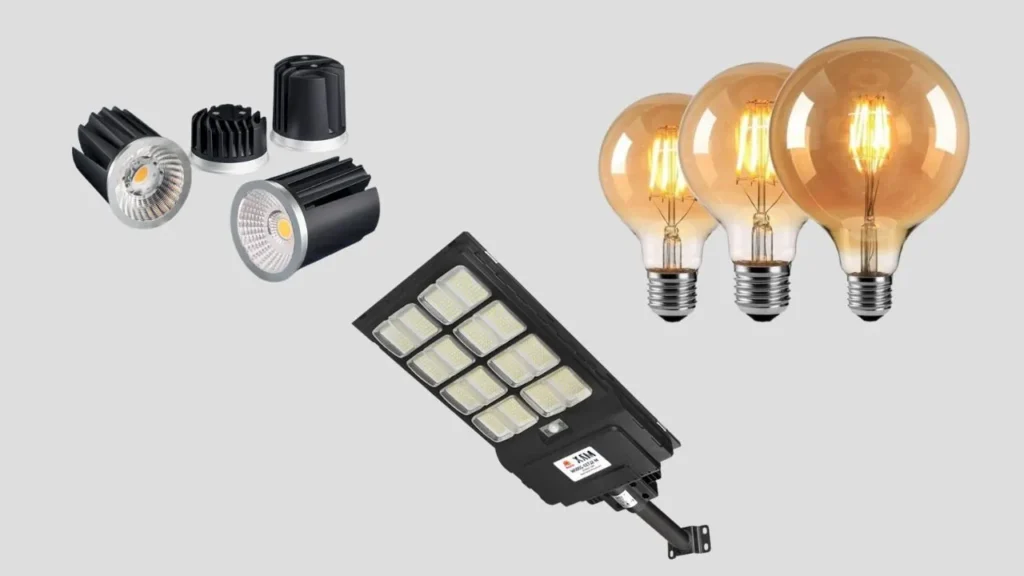
Tips for Choosing Lighting
Color Temp
Besides lumens, there are many other factors you need to consider when buying a light. The color temperature also affects the lighting. Its unit is kelvin, which is used to describe whether the light is cool or warm. Warm light, which is more yellow, usually has a color temperature of 2000–3500 K. The cool light tends to be blue or white, usually has a color temperature of 5000–6500 K or higher.
In general, different color temperatures are used for different scenarios. For instance, warm light with low color temperature fits homes, hotels, and malls; neutral white light is ideal for offices; high-temperature white light is suitable for operating rooms and industrial facilities.
Light Decay
After a light source has been used for some time, its brightness gradually decreases. This phenomenon is called lumen depreciation. For instance, an LED lamp with an initial 5,000 lm may have only 3,500 lm brightness after 50,000 hours of use.
Some manufacturers use indexes such as L70, L80, or lumens maintenance to show the speed of lumen depreciation. For example, L70 = 50,000 h means the lamp’s brightness will drop to 70% of its initial value after 50,000 hours.
In addition, different types of light sources have different rates of lumen depreciation. The lifespan of incandescent lamps is about 1000h with nearly no depreciation. Metal halide and high-pressure sodium lamps have a lifespan of over 10,000 hours, while LED lights have a lifespan of about 50,000 hours, with almost the slowest lumen depreciation.
Heat Dissipation Design
The heat dissipation design can also determine a lamp’s lifespan, especially the LEDs. If a lamp operates at high temperatures continuously and heat is not released in time, its lumen depreciation may accelerate, and its lifespan may decrease.
For some high-power lamps, you also need to check whether the lamp has fan cooling or liquid cooling when it leaves the factory.
Relevant Regulations
For different countries, there are various regulations about lamps. It is worth noting that if you want to import lamps into other countries for sale, you need to comply with local regulations. For example, lamps imported into the United States must comply with UL1598, and electrical appliances imported into China need to pass CCC certification.
Special Lightings
If you want to purchase light sources for specific purposes, such as car lights or flashlights, you should take more items into consideration, like beam distance and protection level. For those lights that need to display colors, such as ambient lights or stage lights, you also need to consider how many colors they can show.
Choose a Manufacturer that Offers Reliable After-sales Support
When purchasing lamps in large quantities, you may encounter some functional issues during using them. Therefore, it is essential to verify whether the manufacturer can provide a defined warranty period and technical guidance. You can ask the manufacturer whether they have long-term partner companies or wholesalers to confirm if they truly have rich experience.
FAQs
Can lumens be used to describe the brightness of a display screen?
If you want to describe the brightness of a display, it is better to use nits, which refers to its brightness per square meter. Because lumens represent the total light emitted in all directions, and you look at LED displays in a single direction. Therefore, it is not accurate to use lumens to measure the brightness of LED screens.
How to choose the protection level of the bulbs?
The IP (Ingress Protection) is decided on the scenario in which you use the light bulb. Typical office settings do not need special protection, and IP ratings between IP20 and IP44 are suitable. For those lighting outdoors, it is important to protect them from dust and rain, and a protection level of at least IP65 is recommended.
Is a high-lumen lamp always brighter than a low-lumen lamp?
Not yet. Generally speaking, the higher the lumens, the brighter the lighting. However, the illuminated area, beam angle, and even color temperature can all affect how bright the light appears to your eyes. Sometimes, even if a light has high lumens, it might seem less bright to you.
Final thoughts: Carefully Select Every Feature
When buying lamps in bulk, the feature you should pay attention to is not just lumens, but also various factors, including the power consumption, the color temperature, and so on. Besides, it is wise for you to cooperate with a reliable manufacturer. If you’d like to learn more about LEDs, feel free to reach out to IvanLED!