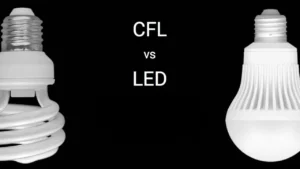












Types of LED Display Lamp Beads
Classified by Packaging Type
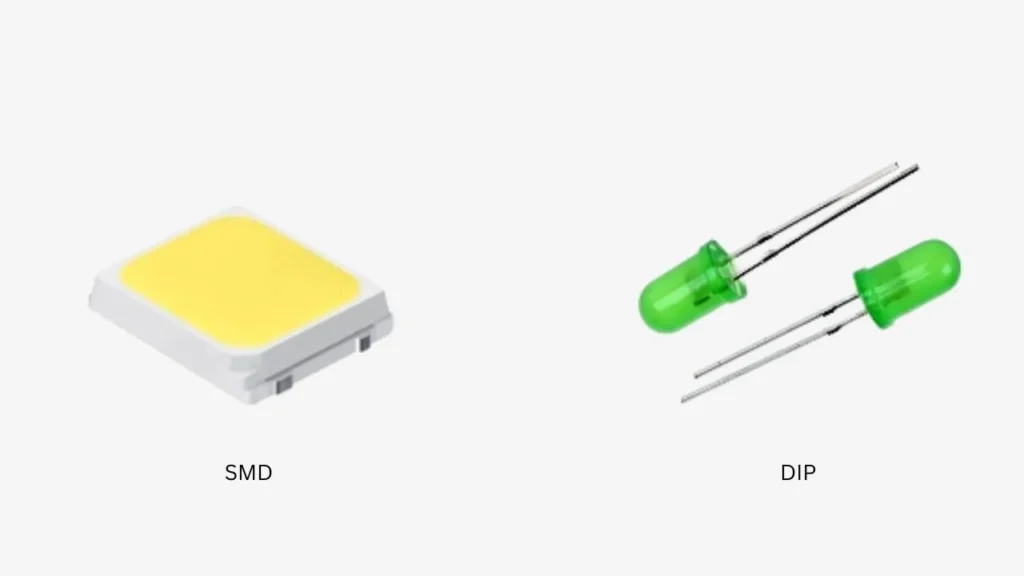
In terms of packaging type, LED beads are divided into three types as follows:
- DIP (Dual In-line Package): DIP LED beads contain semiconductor chips that emit different colors of light. On the outside, it is usually connected to a lead frame, which has a long pin and a short pin; they are connected to the positive and negative terminals, respectively.
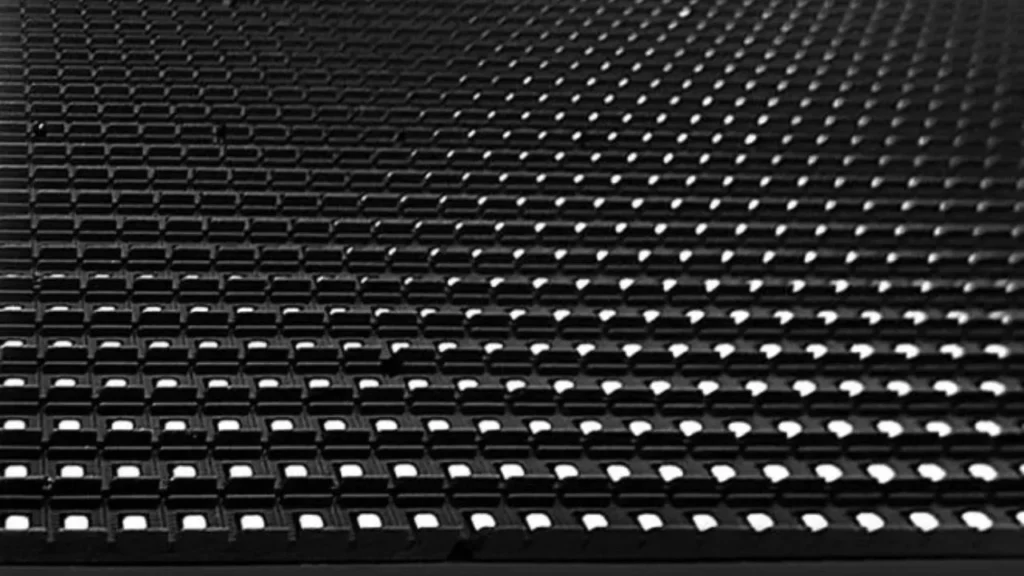
- SMD (Surface Mount Device): SMD LEDs do not have the two pins of different lengths; instead, they have a bottom pad that can be directly mounted on the PCB surface and reflow soldered. Their size is generally smaller than DIP LEDs, and they can display more colors than DIP LEDs.
- Micro LED: The chips used in Micro LED screens are extremely small, reaching 0.1–0.2 mm. In some cases, the light-emitting semiconductor chips are directly mounted on the substrate without a lens dome. This type of LED bead is very expensive.
Classified by Viewing Angle
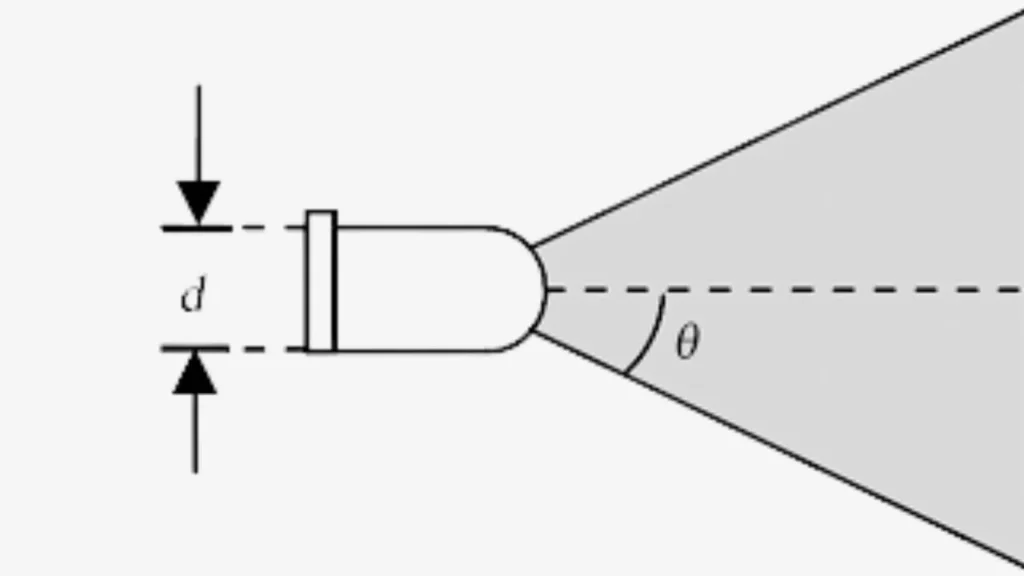
Some LED beads also differ in their light emission angles, and beads with different angles are suitable for different LED screens. By emission angles, LED beads can be divided into:
- Standard Angle: Standard-angle LEDs generally have a beam angle between 60° and 120°, which has a more uniform beam and is suitable for typical indoor displays.
- Wide Angle: Wide-angle LED beads generally have a beam angle greater than 120°, allowing the screen content to be visible from multiple angles, making them suitable for places where multiple people view the display simultaneously.
- Narrow Angle: Narrow-angle LEDs generally have a light coverage of less than 60°, which has a concentrated beam and higher intensity, and are typically used for outdoor screens, such as stage displays.
 Classified by Luminous Color
 Classified by Luminous Color
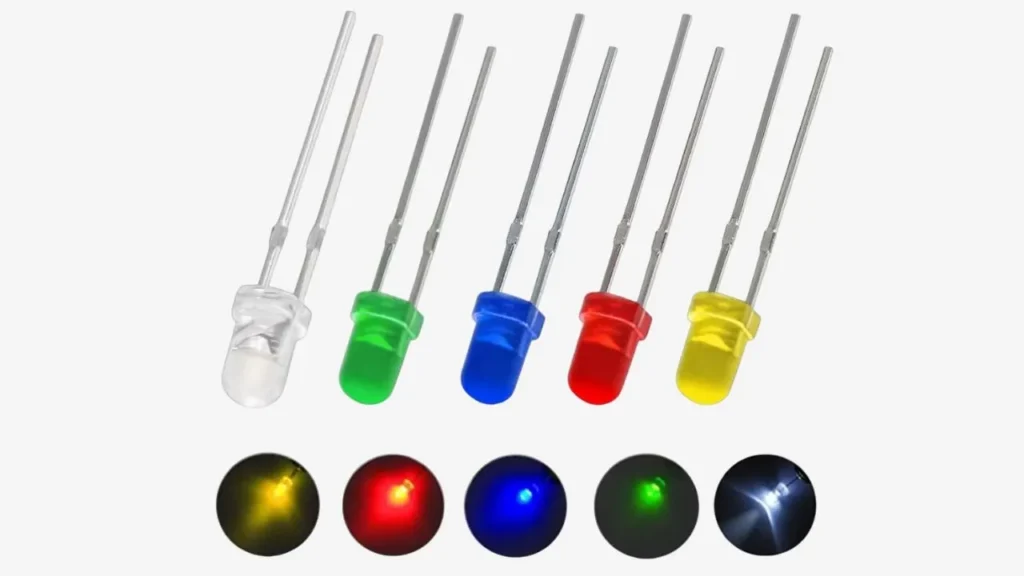
By luminous color, LED beads can be classified into single-color, full-color, and dual-color beads. Single-color and dual-color beads are generally used for LED advertising screens and lighting. The full-color beads integrate RGB chips, with the three color chips embedded in one bead, which can display various colors.
Classified by Performance
For special purposes, some LED beads also have some special features:
- High-brightness LED beads: Sunlight or other strong light sources can reduce the brightness of a screen you perceive, so a high-brightness LED displayis essential.
- Waterproof LED beads: When you want to use the screen outdoors in areas with high humidity, the LED beads need waterproof measures, generally rated IP67 or higher.
- Functional light LEDs: Different wavelengths of light take on different effects. For example, ultraviolet light can be used for sterilization and UV curing, while infrared light can be used for facial recognition and sensing.
- LEDs resistant to extreme temperatures: If you plan to use LED displays in extremely hot or cold regions, or in industrial environments such as smelting plants, additional processes are required to enhance the heat and cold resistance of the LED beads.
Key Indicators to Consider When Selecting LED Beads
Usage Scenario of the LED Display
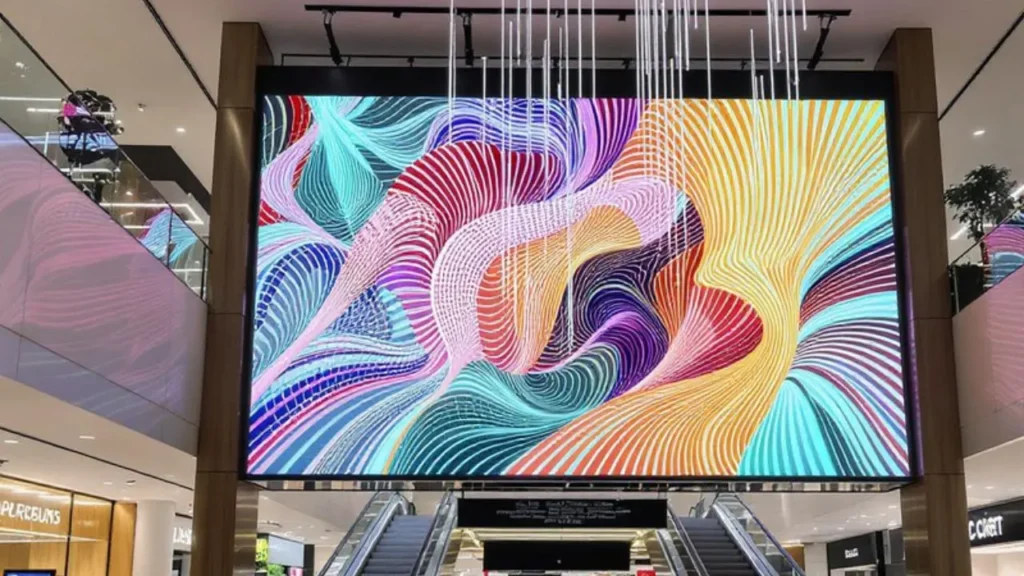
First of all, you should confirm the usage scenario of the LED display. You should find out the factors that determine LED bead characteristics, such as viewing distance, ambient brightness, installation conditions, and the screen’s daily working hours. You also need to consider whether the LEDs require any special properties, such as ultra-high brightness or vibration resistance.
Size and Package Type of LED Beads
If the expected viewing distance of the LED display is relatively short, you need to choose smaller LED bead sizes and a tighter pixel pitch, such as Micro LED, COB, or small-pitch SMD packaging.
In contrast, if the expected viewing distance is relatively long and at 10 meters or even over 20 meters, such as for stage screens or stadium screens, you can choose larger LED bead sizes and larger pixel pitch packaging, such as DIP or large-pitch SMD.
Luminous Color of LED Lamp Beads
For LED displays, the color of the LED beads depends on the application. Some advertising screens only require single-color beads, while screens that display different images must use RGB or RGB+W LED beads. LEDs in Micro LED displays also need to cover a wider color gamut, such as DCI-P3 or Rec.2020.
Brightness of LED Beads
The brightness of the LED beads should be appropriate for the surrounding environment. For some indoor screens, LED bead brightness below 1500 nits is already sufficient. For outdoor screens that need to work under direct sunlight, higher LED brightness is required, generally 5000 nits or more.
Protection Rating of LED Beads
The protection level of LED beads is usually indicated by the IP rating. The higher the IP value, the stronger the LED beads’ resistance to water and dust. If the display is used in indoor environments, such as exhibitions and offices, strong protection is not necessary. An IP rating of IP20- IP40 is sufficient to ensure long-term use.
If the display is frequently exposed to wind and rain, it is necessary to prevent water and dust from affecting the module’s normal operation. Higher protection levels are required, generally IP65 or higher.
Lifespan of LED Lamp Beads
The lifespan of an LED bead is usually expressed in terms of decay time. L70 refers to the time it takes for the brightness to decay to 70% of its original value. For LED screens that need to work for a long time and in a high-brightness environment, the lifespan is consumed faster, so a longer rated life is needed. A lifespan of 50,000 to 100,000 hours is recommended.
Tips for Choosing LED Lamp Beads with Good Quality
Choose a Reliable Supplier
A reliable LED bead supplier will provide you with complete technical specifications, LED lifespan standards, protection levels, and test reports on lifespan and impact. In terms of quality assurance, they will also provide LED samples, long-term after-sales service, and technical support for you.
Verify if the Basic Parameters Match the Stated Specifications
After receiving the sample of LED beads, you need to test parameters such as size, brightness, and protection level to verify whether they meet the manufacturer’s data. Also, when receiving the full shipment, you need to sample a portion of the LED beads from each batch to ensure consistency.
Check the Actual Lifespan Test Data
Although the manufacturer will provide a rated lifespan for the LED beads, you still need to verify it to ensure the data is reliable, especially for screens that work continuously or require high brightness.
You can conduct both regular aging tests and accelerated tests, which means operating the LED beads under high temperature and high current, periodically recording brightness, color temperature, and other parameters. After that, calculate the accelerated aging curves and confirm the lifespan under rated operating conditions.
Measure the Color Consistency of the LED Beads
Minor color differences can affect the overall performance of the screen and may even cause visual fatigue for viewers. For color, you need to check chromaticity, color temperature, and color deviation. You can use a spectrometer and a colorimeter to measure them, and perform full-screen testing once the LED display is completed.
FAQs
What is the work principle of LED beads?
The principle of LED luminescence is electroluminescence. When voltage is applied to the LED lamp beads, the electrons will flow from the N-type semiconductor inside the lamp bead to the P-type semiconductor. Then, energy will be released in the form of photons, generating visible light.
When LED beads need to be made into display screens, these beads will be embedded in a PCB board, and the brightness and color are controlled by the driver IC to display various patterns.
How long after-sales service and warranty terms do manufacturers usually provide?
Generally, LED lighting component manufacturers can provide a warranty period ranging from 1 to 5 years; manufacturers of LED displays offer a warranty within 3 years, while IvanLED can provide up to 5 years of warranty for LED screens. That is, if a failure occurs within five years, IvanLED can provide you with technical support and repair services.
What type of LED lamp beads are suitable for long-term operation projects?
For screens that need to operate continuously, such as LED posters, you should focus on LED lifespan, color stability, and module heat dissipation. You are expected to choose high-quality LED beads; though they are more expensive, they will lower maintenance frequency.
Do curved screens have any additional requirements for LED lamp beads?
Compared with common flat screens, curved screens use bent modules and usually have wider viewing angles. Therefore, strict control is required for LED bead parameters such as viewing angle, brightness, and packaging structure.
Why do individual LED lamp beads tend to fail first in the same screen?
On one hand, even LED beads from the same production batch may show minor variations in wafer placement or other microstructural details. On the other hand, differences in solder joints between the LEDs and the PCB can gradually result in poor contact over time.
IvanLED: Excellent Quality Assurance for LED Beads
As an experienced LED display manufacturer, IvanLED has strict quality control starting from individual components, especially LED beads. Additionally, we will offer you one-stop services, including both factory and online training, up to five years of warranty, installation services, and some necessary replacement parts.
If you want to customise an LED display, please feel free to contact us.