









What is Local Dimming?
Traditional LCD screens adjust the brightness at the level of the whole LED panel. When the screen is highlighted, some parts are too dazzling. When it displays at a lower brightness, you can’t see details in the shadow.
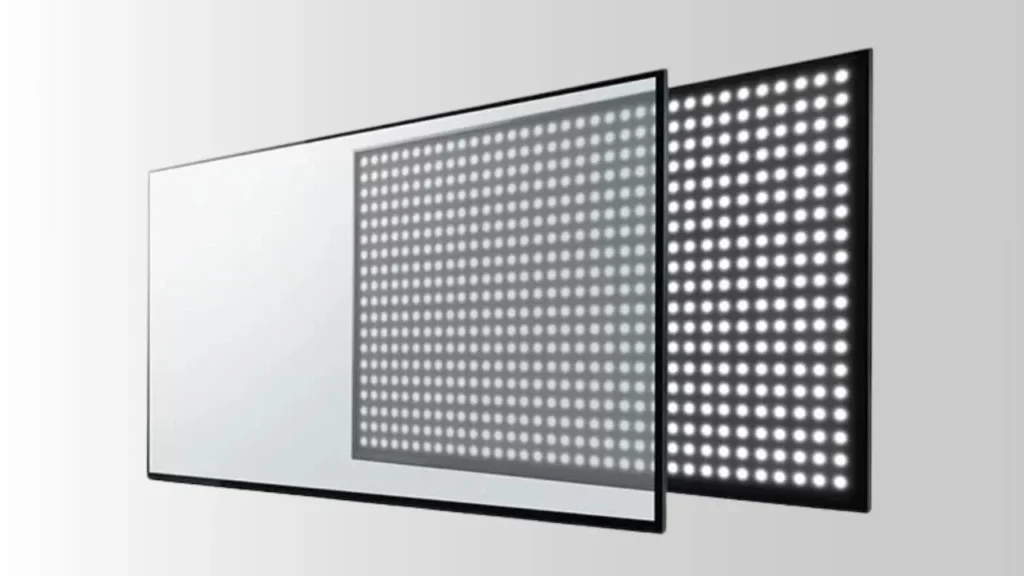
To solve this problem, local dimming was invented. This technology divides the screen’s luminous area into multiple independently controllable zones and adjusts the brightness of each zone according to the displayed content, in order to enhance contrast and black levels.
The Function of Local Dimming
Enhance the Contrast
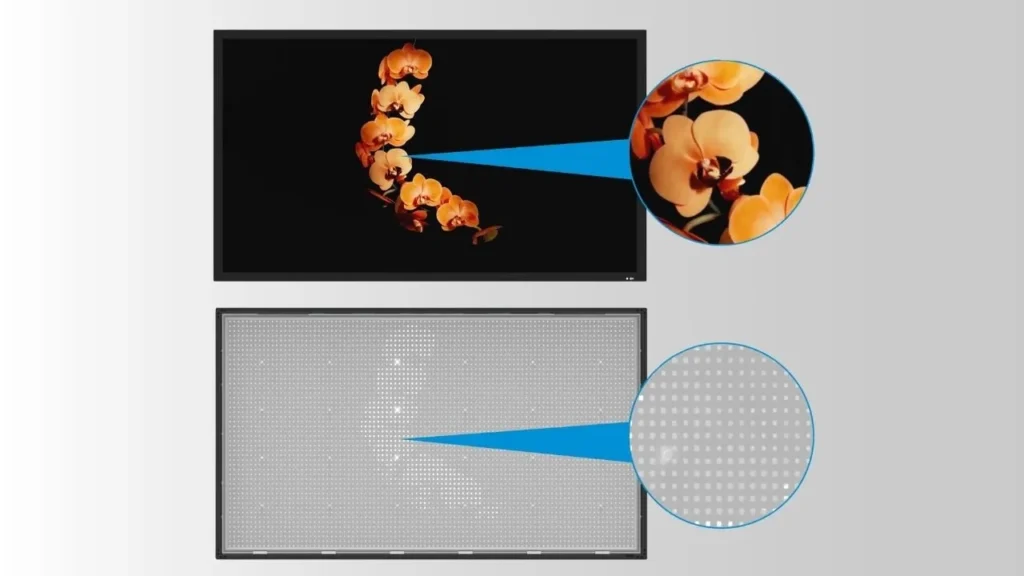
In local dimming, the screen uses its algorithm to analyse the brightness of the content and divide it into different zones based on the luminance. For dark zones, the screen reduces backlight brightness to make blacks deeper. For bright zones, it increases brightness appropriately to make highlights more vivid. In this way, the screen’s contrast will be significantly enhanced, which can make the images more three-dimensional and realistic.
Make Shadow Details Clearer
Compared with traditional global dimming, where the entire screen darkens, and shadow areas easily become muddy, local dimming allows the overall screen brightness to drop while still preserving the detail in dark or shadowed regions. Also, the blacks in dark areas are no longer bright or grayish, but much closer to the true black you see in real life.
Reduce Power Consumption
With a global backlight and no local dimming, the LEDs behind the LCD must stay fully lit even if 90% of the image is black. Under local dimming control, LEDs in low-brightness regions can be dimmed substantially or disabled altogether to refine shadow detail and enhance contrast performance. Through this mechanism, local dimming can help reduce power consumption during use.
Types of Local Dimming
Global Dimming
Global dimming has no backlight zones. When adjusting brightness, the entire screen brightens or darkens as a whole. This approach offers a significant cost advantage and is commonly used in low-end LCDs and business displays.
Moreover, in the long run, even though it is a more basic technology, global dimming will not be completely phased out, as certain applications do not require highly detailed image quality.
Direct-lit Local Dimming
Backlight technologies are generally divided into two types: direct-lit and edge-lit. In direct-lit backlight technology, the LED bulbs are evenly distributed across the entire area behind the panel.
Direct-lit local dimming divides these LED bulbs into several zones, typically around 2 to 32. During operation, these zones can independently control their brightness based on dedicated algorithms. Compared to edge-lit local dimming, direct-lit zone dimming allows for finer, more controllable zones, resulting in a more even distribution of light across the screen.
Edge-lit Local Dimming
In edge-lit backlight technology, small LED bulbs are arranged along the left and right edges of the screen, and use microstructures to evenly distribute the light across the panel. Edge-lit local dimming refers to grouping the LEDs along the edges for control, which typically divides the small LED bulbs into 4 to 16 zones, with some models even having 32 zones.
On one hand, edge-lit local dimming uses fewer LEDs, and with the local dimming feature, it can reduce power consumption. On the other hand, because the light comes from the sides, it may result in uneven brightness in certain areas.
Full Array Local Dimming
Full-Array Local Dimming (FALD) builds on direct-lit local dimming by significantly increasing the number of zones, typically dividing the backlight into hundreds or even thousands of zones. Additionally, FALD often incorporates advanced components such as diffusion films and collimating films to minimize uneven brightness.
With this technology, the screens can achieve impressive contrast and HDR performance while also improving power efficiency. FALD is usually used in high-end LCD TVs, monitors, and professional displays.
Local Dimming in Different Display Technologies
Traditional LED-LCD
Traditional LED-LCDs typically have a small number of zones or no zoning at all, and usually use global dimming. With technological advances, edge-lit and direct-lit local dimming have gradually been adopted, though their light control precision remains limited.
Mini LED
Mini LED backlighting uses a full-array layout and upgrades the FALD technology with a greater number of zones. Mini LED can have 500 or even over 5,000 zones. Among today’s LCD backlight technologies, Mini LED represents the most advanced option, and it can showcase to you the best performance that LCD technology can deliver.
Micro LED and OLED
As self-emissive LED display technologies, Micro LED and OLED do not rely on local dimming to control brightness in specific areas. The unit of dimming for both technologies is pixels. In other words, each pixel acts as an independently controllable dimming unit.
Therefore, Micro LED and OLED offer some of the best dimming performance among all display technologies, with black levels and HDR effects better than those of LCD screens.
Local Dimming Costs and Prices Across Different Technologies
Traditional LED-LCD with Global Dimming
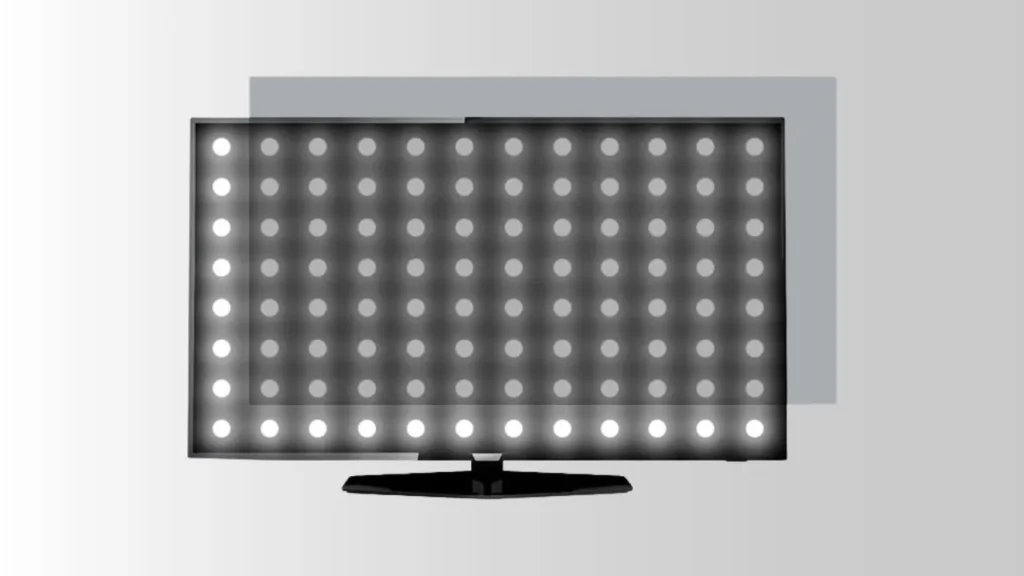
LCD screens without local dimming do not require related smart algorithms, so they are the lowest-cost option among all dimming technologies. Typically, only low-end or older LCD screens forgo local dimming, and their prices are the lowest. For example, entry-level TCL Smart TVs are priced at $129.99.
Low-zone Local Dimming
Compared to traditional global dimming screens, displays with zoned dimming have additional costs for backlight modules, driver ICs, and backlight control. However, since the number of zones is small, the number of LEDs and the complexity of the drivers remain low, so the overall cost is not significantly higher.
FALD and Mini LED
Compared to basic low-zone PWM algorithms, FALD requires high-speed dynamic local dimming algorithms and multiple LED driver ICs, which adds to the cost. While Mini LED uses tiny LEDs with diameters of 10–100 μm to achieve thousands of zones, its cost is significantly higher than that of standard FALD.
OLED and Micro LED
As mentioned, each pixel in OLED and Micro LED technologies requires a driver IC, providing extremely high control precision. Especially, the micro-LEDs in Micro LED displays are more expensive, and combined with high-precision processes and complex driving systems, Micro LED becomes the costliest display technology on the market.
Application Scenarios of Local Dimming
TVs and Mobile Devices
For TVs, you can almost see every type of local dimming, from global dimming to Mini LED and the most advanced Micro LED. The number of zones also determines HDR performance. Generally, the more zones a local dimming system has, the better the color performance of the TV.
For phones, the purpose of local dimming is to maintain good dark-detail performance when the screen brightness is lowered or videos are played. However, due to the small screen size, LCD phone displays have fewer backlight zones, typically only 2–16 zones, while some phone screens use OLED technology, such as the iPhone 12 and later models, which can achieve better zoning and dark-detail performance compared to LCD screens.
Professional Usage
Generally, professional fields such as film production, medical imaging, and surveillance displays require high accuracy in dark-area rendering, which makes local dimming more important. For example, the post-production of films requires HDR correction and the restoration of picture authenticity. Therefore, the requirements for local dimming and intelligent algorithms are extremely high.
Outdoor Commercial Display
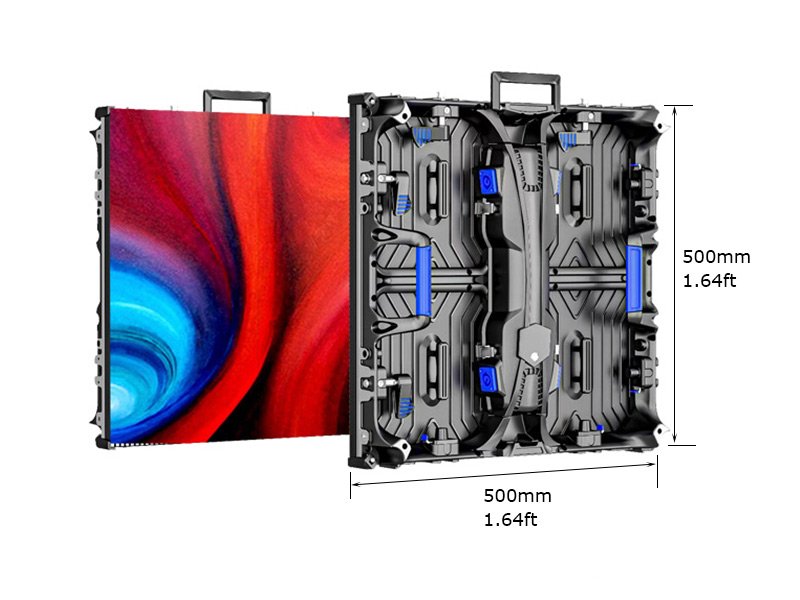
For outdoor advertising displays, ambient light changes constantly. Therefore, to maintain optimal visual performance, the screen should adjust its brightness according to the day–night cycle. Generally, outdoor advertising displays do not demand highly detailed image quality like consumer TVs or mobile devices; they usually include fewer than 20 dimming zones, with some using only global dimming.
Drawbacks of Local Dimming
Blooming
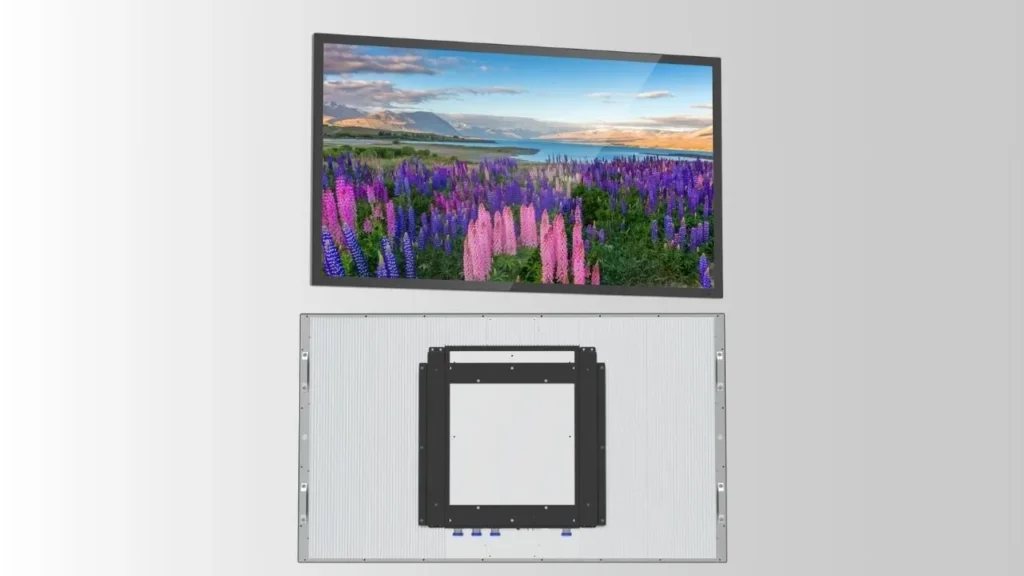
Because the backlight LEDs are unified, local dimming may cause bright areas to spill light into darker regions, making shadows look dirty or washed-out and resulting in visible halos. Halo effects are usually most obvious on TVs that have a relatively low number of dimming zones, such as those with fewer than 100.
Insufficiently Smooth Transition
When the number of partitions is particularly small or the algorithm is particularly rough, the brightness variation from one partition to another often becomes uneven, and there are unreasonable brightness differences at the junctions. In particular, displays that use edge-lit local dimming are the most prone to this issue.
Immature Software Algorithm
The algorithm not only has to handle zone-based dimming, but also requires strong technical support to ensure timely response and smooth transitions. If the algorithm is not mature enough but is still required to control too many dimming zones, the display may suffer from blooming, screen ghost, poor detail reproduction, and unstable brightness during operation.
Difficult to Achieve Pixel-level Partitioning
A higher number of dimming zones also increases algorithmic load, including the refresh rate for calculating zone brightness, inter-zone light compensation, and flicker suppression. Unlike OLED and Micro LED, which can individually control each pixel from the factory, achieving pixel-level zoning on an LCD panel is extremely challenging and nearly impossible.
FAQs
Can local dimming have an impact on eye strain?
If the backlight zones show uneven brightness, brightness fluctuations, or halo phenomena, it is very likely to cause eye fatigue. However, if there are more zones and smarter algorithms, eye strain is largely avoided. Moreover, self-emissive displays like OLED and Micro LED rarely exhibit these issues.
Does the screen’s power consumption increase correspondingly as the number of dimming zones rises?
Calculating power consumption is a complex process. The power consumption of displays with local dimming depends on the type of content, the number of dimming zones, and the efficiency of the dimming algorithm. Reducing the brightness of dark areas can indeed save energy. However, more dimming zones mean more complex backlight control circuits and driver ICs, which in turn consume more power.
Are local dimming technologies used in projectors, AR, or VR?
Yes. Unlike LCD screens, projectors generally achieve local brightness control through controllable light sources combined with digital micromirrors or liquid crystal light valves, while VR and AR devices typically use OLED or Micro LED displays, which can allow each pixel’s brightness to be adjusted independently.
Final Thoughts: Cooperation with an Experienced Manufacturer
If you want to customize a display capable of local dimming, IvanLED is your ideal choice. We are experts in LED screen local dimming technology capable of creating precise dimming zones to enhance image details, and we can also provide you with screens for various applications, sizes, and resolutions. Feel free to reach out if you want to know anything about local dimming!