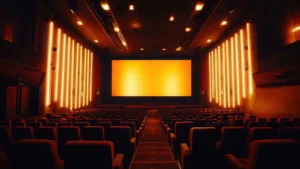











Difference Between 16:10 and 16:9 Aspect Ratio
Shape and Typical Resolutions Difference
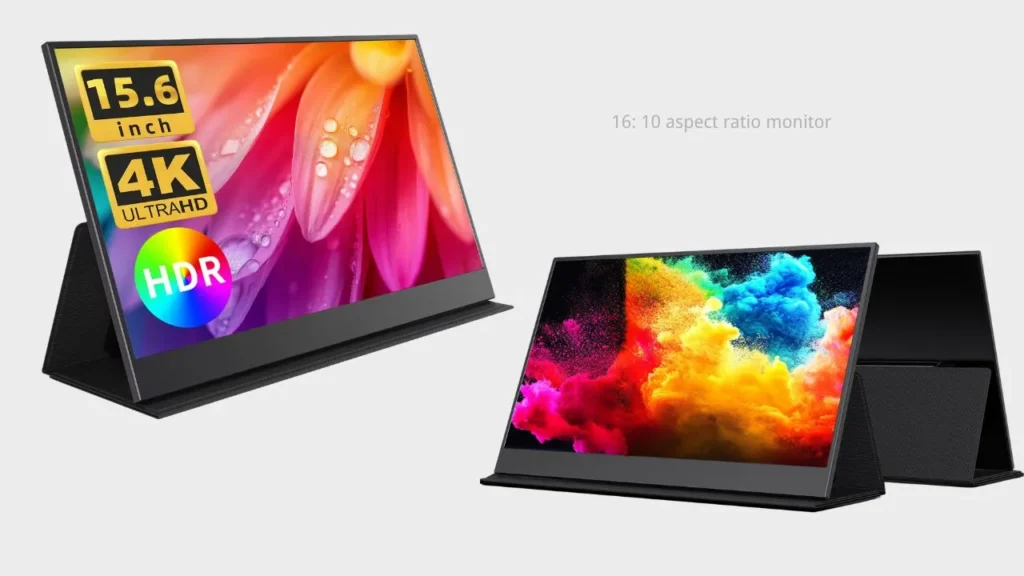
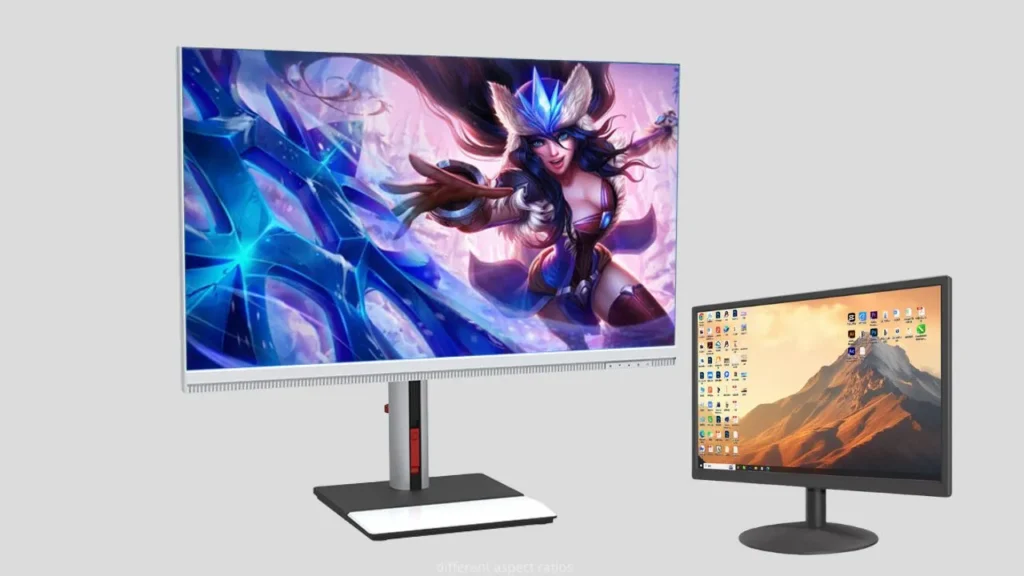
Aspect ratio is the ratio between the longer side and the shorter side of a screen or image, usually referring to the width-to-height ratio. Therefore, you can infer that at the same width, a 16:10 screen is slightly taller than a 16:9 screen.
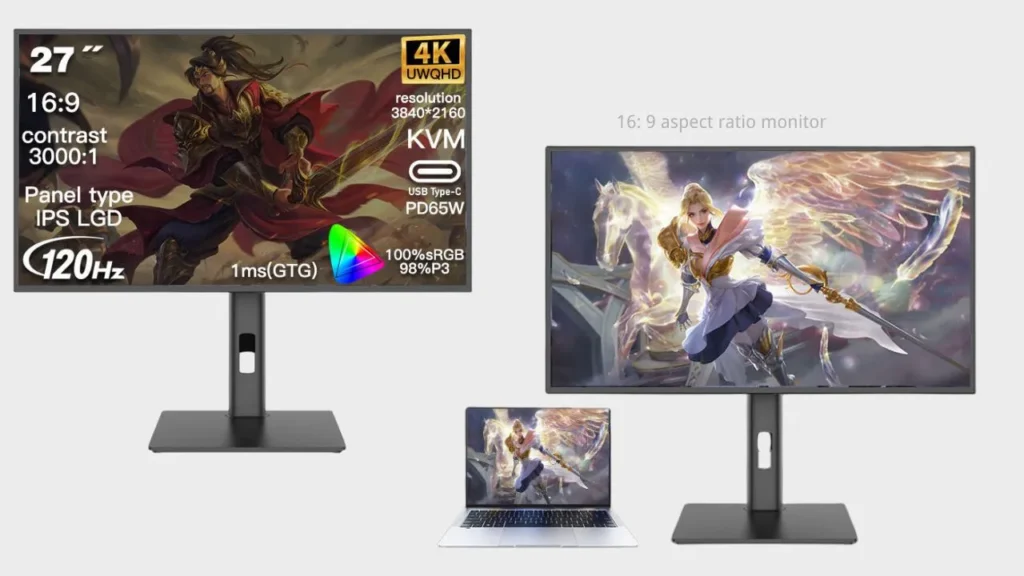
For the resolutions, at the same width, 16:10 screens usually have higher resolutions, such as 1920×1200 or 2560×1600 pixels, while 16:9 screens generally use standard resolutions, like 1920×1080, 2560×1440, or 3840×2160 pixels.
Differences in Usage Scenarios
For Productivity:
Compared with the 16:9 aspect ratio, 16:10 gives you more vertical viewing space, so you don’t have to scroll up and down as often. On the other hand, it provides a larger area for split-screen work. Therefore, when you are doing productivity-related tasks, such as programming, research, or web browsing, a 16:10 screen can provide you with a better experience.
For Entertainment:
Today, most movies and animations are made in 16:9, and videos on streaming platforms like YouTube are mostly 16:9 as well. On a 16:10 screen, you might notice some extra space or stretching of the video, which could impact your viewing experience.
For Gaming:
16:9 can provide you with a wider field of view when you are playing computer games, which can give you a more immersive experience. In addition, though a growing number of games have started to support 16:10, some games are only optimized for 16:9 screens. When some games are displayed on a 16:10 screen, you may experience a reduced field of view or notice black bars at the top and bottom of the screen.
Price Difference Between 16:10 and 16:9
The manufacturing technology for 16:10 displays is not yet as mature, and many 16:10 laptops are designed for professional users such as researchers and programmers, who usually care more about performance than price. Therefore, they are always more expensive than 16:9 ones.
Advantages of 16:10 and 16:9 Aspect Ratio
16:10 Screen
- Easier to browse web content: With a 16:10 aspect ratio, the taller screen allows you to browse the web conveniently without constant up-and-down scrolling.
- Convenient for multitasking: Due to a taller view and more screen space, 16:10 displays allow more split screens, making your multitasking easier.
16:9 Screen
- Better viewing experience for entertainment and gaming: There are more 16:9 video resources, which fit the screen perfectly in the same aspect ratio. Additionally, the wider field of view provides a more immersive experience when you are playing games or watching videos.
- Competitive price: Currently, 16:9 is still the main aspect ratio in the market. Compared with 16:10, the production supply chain for 16:9 screens is more mature, and the prices are relatively lower.
- More available models: Because of the mature supply chain and the high market share of 16:9 screens, you have more choices for brand, screen sizes, resolutions, and performance levels.
Disadvantages of 16:10 and 16:9 Aspect Ratio
16:10 Screen
- Higher price: Compared to the 16:9, 16:10 laptops always have a higher price, not only because of the lower supply, but also because users with needs like office work, programming, and design often prefer a smoother workflow and better performance.
- Limited choice of models: Since the majority of consumers prefer computers for entertainment purposes, 16:10 screens have only a small share of the market. Therefore, you have fewer options in terms of brands and models.
- Supports fewer applications: Many video platforms and games are still not fully adapted to 16:10 screens, which may cause cutting off or stretching of the video, affecting your viewing experience.
16:9 Screen
- Poor web browsing experience: With a lower screen height, web browsing requires more frequent vertical scrolling, which brings you an inconvenient experience.
- Weak multitasking performance: A smaller screen area may cause an incomplete display when splitting the screen, making your multitasking less efficient.
How to Choose?
When to Choose 16:10?
- If you have a sufficient budget and your company works in content creation, IT, or frequently handles data, such as in finance, advertising, or software development, laptops with 16:10 displays are a better choice.
- If you are a retailer targeting the high-end market, being more suitable for office work can be a strong selling point.
When to Choose 16:9?
- If you want to purchase for your company with a low budget, and your work doesn’t require heavy data handling or multi-screen collaboration, 16:9 is actually a better choice.
- If you are a retailer targeting the mainstream market, 16:9 screens have higher demand, lower costs, so they are easier to sell.
FAQs
Why is 16:9 more common in the market?
First, 16:9 is the standard aspect ratio for TVs and movies, which has a mature supply chain and low manufacturing costs. Besides, most customers buy laptops for entertainment, such as videos and gaming, while those who need them for work are still a minority.
For mixed use, what ratio should I choose?
You can choose the ratio according to your actual needs. If you spend most of your time working and only a little on entertainment, 16:10 suits you better; on the other hand, if you spend most of your time gaming or watching videos, 16:9 is a better choice. In addition, if you have a sufficient budget, you can connect a large external monitor for entertainment.
Does a 16:10 monitor affect gaming performance?
Most games are designed by default with a 16:9 aspect ratio. Changing the screen size usually has little impact on the game performance. However, games that do not yet support 16:10 screens may experience image stretching and distortion, with black borders appearing at the top and bottom (letterboxing), which can affect the gaming experience.
Will the 16:10 screen consume more power than the 16:9 screen?
There are many factors that can impact power consumption, such as the software you’re running and the screen brightness. With the same horizontal screen size, resolution, GPU, and other factors, a 16:10 screen uses a bit more power than a 16:9 screen due to the additional pixels. However, the difference is very small and you can hardly notice it.
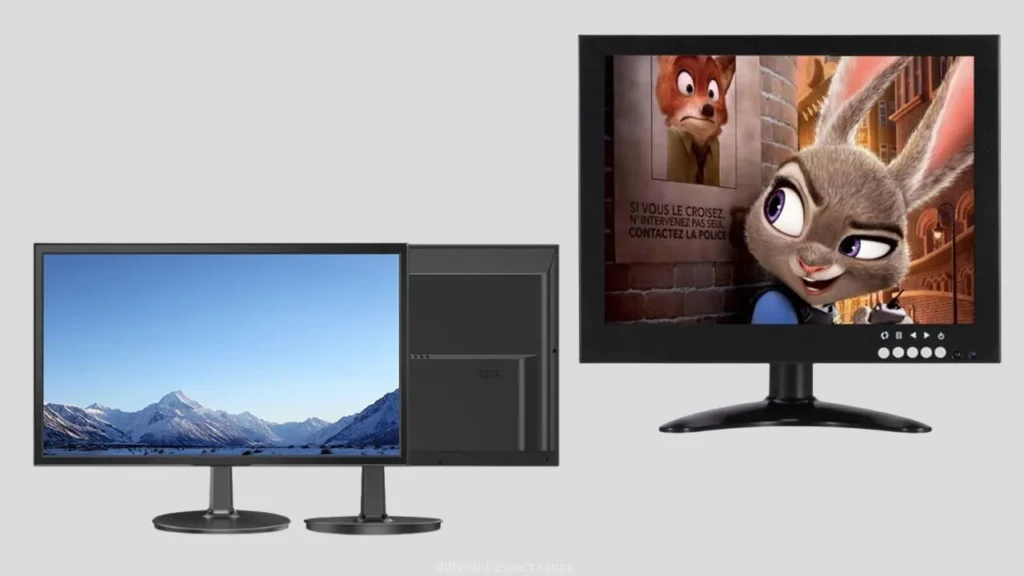
Final Thoughts: Choose the Aspect Ratio that Suits You Best
No matter you are a retailer, a company buyer, or any other customer looking to purchase computers or displays in bulk, just pick what you need. If you want to purchase in bulk or customize some sizes, IvanLED is a good choice— we can custom LED displays in any size, including 16:10, 16:9, and other aspect ratios for LED displays. IvanLED can also provide any size and resolution of displays for customization. Feel free to contact us!