









1. What Is a Naked-Eye 3D LED Display?
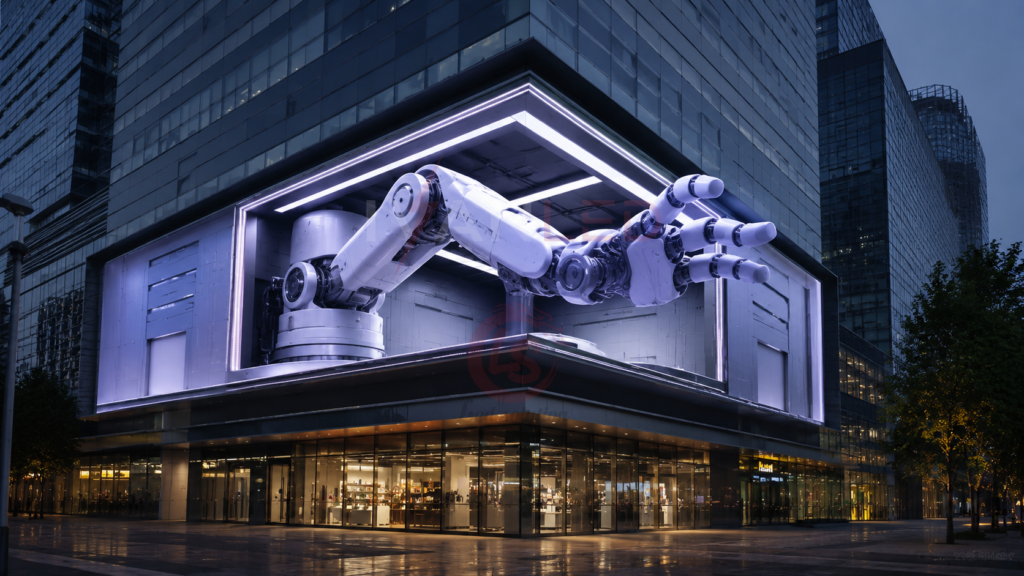
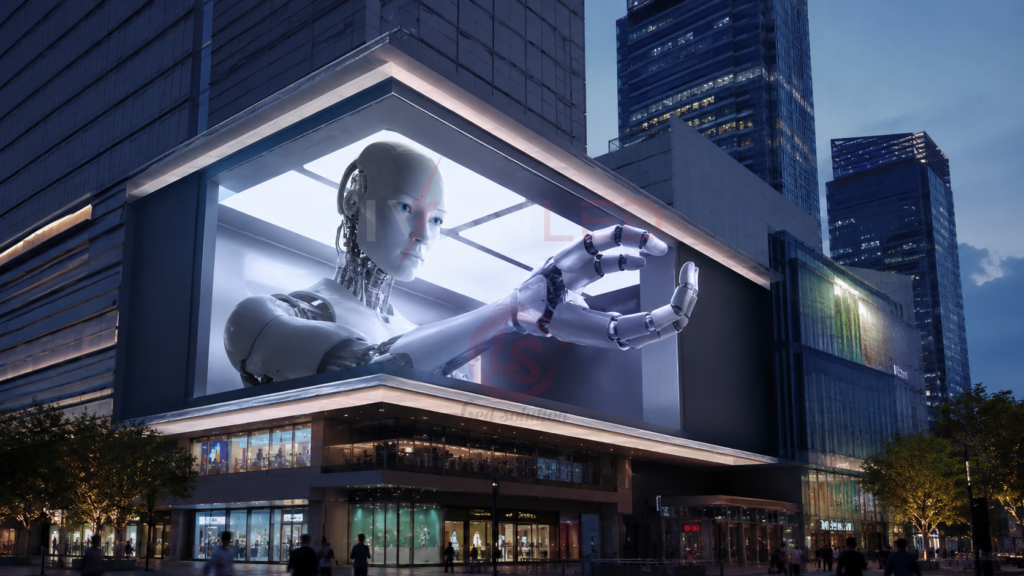
A naked-eye 3D LED display (also called glasses-free 3D LED screen) is a large-format LED display designed to present three-dimensional visual effects to viewers without the need for 3D glasses, VR headsets, or any special viewing aids.
Unlike traditional 3D technology that requires each viewer to wear eyewear, naked-eye 3D displays use optical illusions, perspective manipulation, and angled screen designs to create the perception of depth. The viewer’s brain interprets the 2D image as having three dimensions — height, width, and depth.
These displays are typically installed on building facades, in public squares, or at high-traffic urban locations. They have become “digital landmarks” in cities worldwide.
2. How Do Naked-Eye 3D LED Displays Work?
The magic of naked-eye 3D lies in the clever use of visual perception. Here is how it works:
Key technical principles:
- Angled screen design – Two LED panels meet at a 90° or curved corner, creating a “folded” display surface that mimics the way our eyes perceive depth
- Perspective manipulation – Content is created with forced perspective, using size, shadow, and motion cues to trick the brain into seeing depth
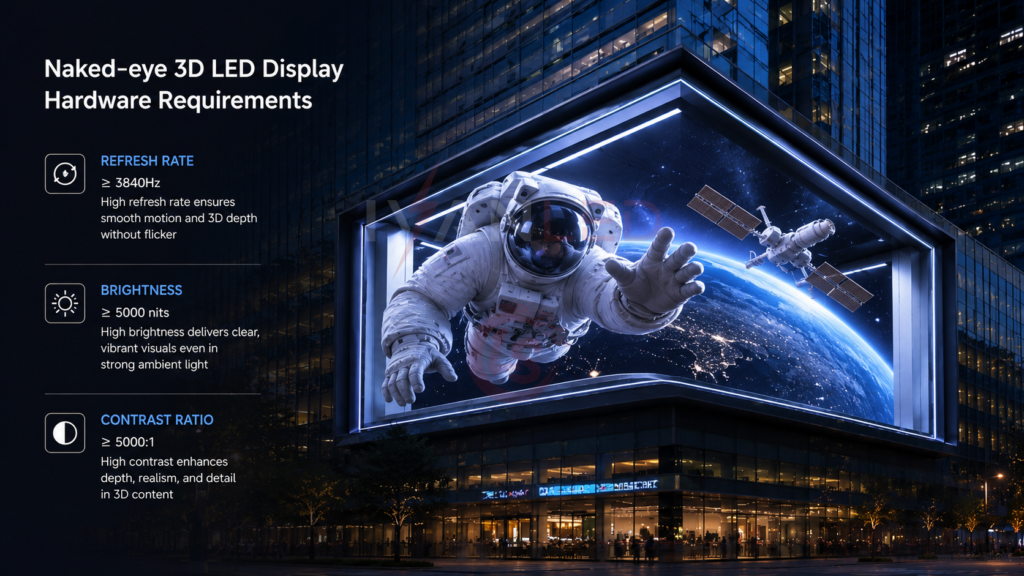
- High refresh rate (120Hz+) – Smooth motion reduces eye strain and enhances the 3D illusion
- High contrast and HDR – Deep blacks and bright highlights create the realism needed for convincing 3D effects
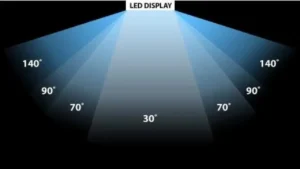
Important clarification: Most “naked-eye 3D” displays do not use true stereoscopic technology (like lenticular lenses or parallax barriers). Instead, they rely on the viewer’s position and the screen’s geometry to create the illusion — which is why they work best from specific viewing angles.
3. Why Are Naked-Eye 3D LED Displays So Popular?
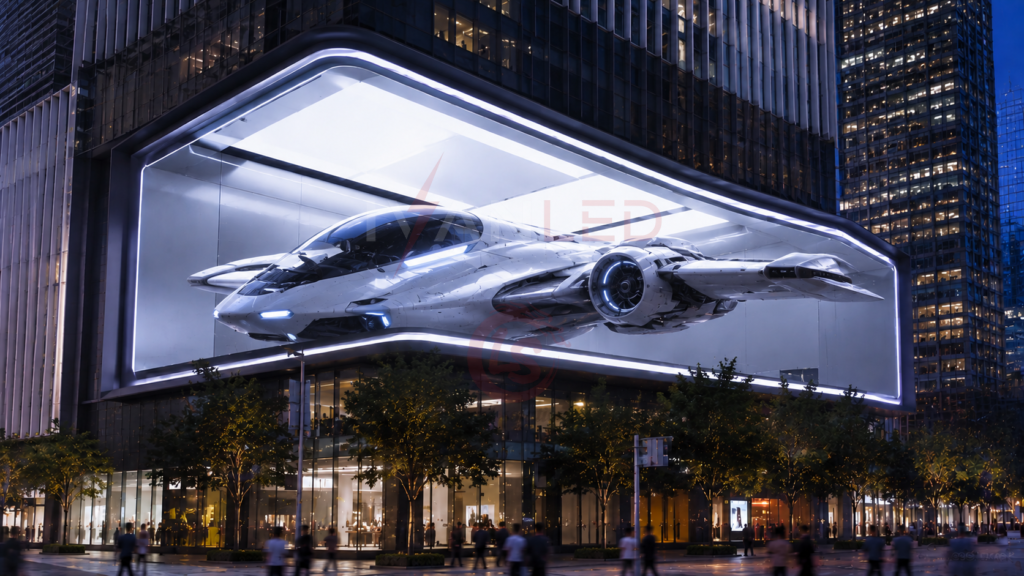
3.1. Unmatched Visual Impact
Naked-eye 3D content is inherently more engaging than traditional 2D advertising. A well-executed 3D animation can stop pedestrians, create social media buzz, and generate organic reach far beyond the physical location.
3.2. Viral Marketing Potential
Videos of naked-eye 3D displays routinely go viral on social media platforms. This extends the advertising reach exponentially — a single screen installation can generate millions of online views, multiplying the ROI for advertisers.
3.3. City Landmark Status
Many naked-eye 3D installations become tourist attractions and city landmarks. They draw visitors, enhance the urban landscape, and create positive associations with the surrounding commercial area.
3.4. Enhanced Brand Perception
Brands that invest in naked-eye 3D advertising are perceived as innovative, modern, and technologically forward-thinking. The “wow” factor translates directly into positive brand association and recall.
3.5. No Barriers to Viewing
Unlike VR or AR experiences that require personal devices, or traditional 3D that requires glasses, naked-eye 3D is accessible to anyone passing by. This inclusivity makes it ideal for public advertising and brand activations.
4. Technical Requirements for Naked-Eye 3D LED Displays
Achieving convincing naked-eye 3D effects requires specific hardware and software configurations. This is not a standard LED display — it requires careful planning and investment.
4.1. Hardware Requirements
| Component | Requirement | Why It Matters |
| Screen shape | 90° corner, curved, or L-shaped design | Creates the optical illusion of depth. Flat screens cannot produce convincing 3D. |
| Pixel pitch | P4 – P10 (depending on viewing distance) | Finer pitch allows more detail, but must be balanced with cost |
| Refresh rate | ≥120Hz (preferably 1920Hz+) | Ensures smooth motion and reduces eye strain |
| Brightness | 5,000+ nits (outdoor) | Essential for visibility in direct sunlight |
| Contrast ratio | High contrast with HDR support | Deep blacks and bright highlights enhance 3D realism |
| IP rating | IP65+ (for outdoor installations) | Weatherproofing for outdoor use |
4.2. Software and Content Requirements
- Specialized decoder – Supports material mapping and correction for angled or curved display surfaces
- High-bitrate video processing – Handles high-resolution, high-color-depth 3D content without lag
- Content creation expertise – 3D content must be designed specifically for the screen geometry. Generic content will not work
- Playback software – Must support multiple video formats, scheduling, and reliable playback
5. Advantages of Naked-Eye 3D LED Displays
| Advantage | Description |
| High refresh rate | 120Hz+ refresh provides smooth, natural viewing and reduces dizziness |
| Superior brightness and color | Advanced LED technology delivers vivid, realistic colors even outdoors |
| Easy to use | No special glasses or devices required for viewers |
| Low maintenance | Similar maintenance requirements to standard LED displays |
| Versatile applications | Can be used for advertising, brand activations, public art, and wayfinding |
6. The Business Value of Naked-Eye 3D LED Displays
6.1. City Landmark Creation
Naked-eye 3D installations transform ordinary buildings into iconic landmarks. They attract tourists, enhance the city’s modern image, and become destinations in themselves. This has been proven in cities like Seoul, Tokyo, and New York.
6.2. Brand Advertising Amplification
3D advertising captures attention more effectively than traditional 2D signage. The novelty factor ensures high recall and sharing, extending the campaign’s reach well beyond the physical location.
6.3. Improved Engagement and Interactivity
Naked-eye 3D displays create moments of wonder. Pedestrians stop, take photos, and share content online. This organic engagement creates a cultural buzz around the brand or location.
7. Common Misconceptions About Naked-Eye 3D LED Displays
- Misconception: It is true stereoscopic 3D like 3D movies. Most naked-eye 3D LED displays are actually clever optical illusions created with perspective and screen geometry, not true stereoscopic technology.
- Misconception: Any LED display can show 3D content. Flat screens cannot produce naked-eye 3D effects. The screen must have a 90° corner or curved design.
- Misconception: The 3D effect works from every angle. The illusion works best from specific viewing positions. This must be considered in the installation design.
- Misconception: Content creation is simple. 3D content for these displays requires specialized skills and knowledge. It is not a simple conversion of standard 2D video.
8. Expert Tips for Naked-Eye 3D LED Display Projects
Tip 1: Plan the viewing position carefully.
The 3D effect only works from specific angles. Identify the optimal viewing position and design the installation to maximize visibility from that location.
Tip 2: Invest in high-quality content creation.
The best hardware cannot compensate for poor content. Work with experienced 3D content creators who understand forced perspective and the specific screen geometry.
Tip 3: Choose the right pixel pitch.
For outdoor installations with viewing distances of 10–20 meters, P4–P6 is recommended. For closer viewing (under 10 meters), consider P2.5–P4.
Tip 4: Ensure adequate brightness.
Outdoor displays must achieve 5,000+ nits to be visible in sunlight. HDR capability is also important for the contrast needed in 3D content.
Tip 5: Test the content on the actual screen before finalizing.
Content that looks good on a monitor may not translate well to the curved or angled screen. Conduct on-site testing during the design phase.
9. Frequently Asked Questions (FAQ)
Q1: What is the difference between a naked-eye 3D LED display and a standard LED display?
A naked-eye 3D LED display uses an angled or curved screen design (typically a 90° corner) combined with specially created 3D content to create the perception of depth. Standard LED displays are flat and cannot achieve this 3D effect without special glasses.
Q2: Do I need to create special content for a naked-eye 3D LED display?
Yes. Standard 2D content will not produce a 3D effect on these screens. The content must be specifically designed using forced perspective techniques and optimized for the screen’s geometry. This requires specialized skills in 3D animation and visual effects.
Q3: Does the 3D effect work from any viewing angle?
No. The illusion works best from a specific “sweet spot” — typically directly in front of the screen’s corner. As the viewer moves to the side, the 3D effect diminishes. This is why installation placement is critical for these displays.
Q4: Are naked-eye 3D LED displays suitable for outdoor use?
Yes, but they must be designed for outdoor conditions. This means IP65 weatherproofing, high brightness (5,000+ nits), and robust cooling systems. Indoor versions are also available for malls, exhibition centers, and corporate lobbies.
Q5: What is the typical cost of a naked-eye 3D LED display installation?
Costs vary significantly based on size, pixel pitch, and complexity. As a general guide, a naked-eye 3D installation typically costs 50–100% more than a standard flat LED display of the same size due to the specialized hardware, engineering, and content creation required. Contact your supplier for a custom quote.
Q6: Does IvanLED offer naked-eye 3D LED display solutions?
Yes. IvanLED provides custom naked-eye 3D LED display solutions, including screen design, engineering, installation, and content creation support. Our displays feature high brightness, high refresh rates, and robust weatherproofing. Contact us to discuss your project.
10. Conclusion: Is a Naked-Eye 3D LED Display Right for You?
Naked-eye 3D LED displays are powerful tools for brand activation, city landmark creation, and immersive advertising. Their ability to capture attention and generate viral sharing is unmatched by traditional displays.
IvanLED’s straightforward advice for 2026:
– Naked-eye 3D displays are ideal for high-traffic outdoor locations where the “sweet spot” viewing position is accessible.
– They are not a simple upgrade from standard LED displays — they require specialized hardware, engineering, and content creation.
– The ROI often comes from viral marketing and brand equity, not just direct advertising impressions.
– Plan for higher upfront costs compared to standard displays, but recognize the potential for significantly higher impact.
At IvanLED, we provide custom naked-eye 3D LED display solutions with the right hardware, installation expertise, and content creation support to bring your vision to life. Contact us to discuss your project.
Ready to explore a naked-eye 3D LED display for your brand or city?
👉 Contact IvanLED for a free consultation and custom quote.