








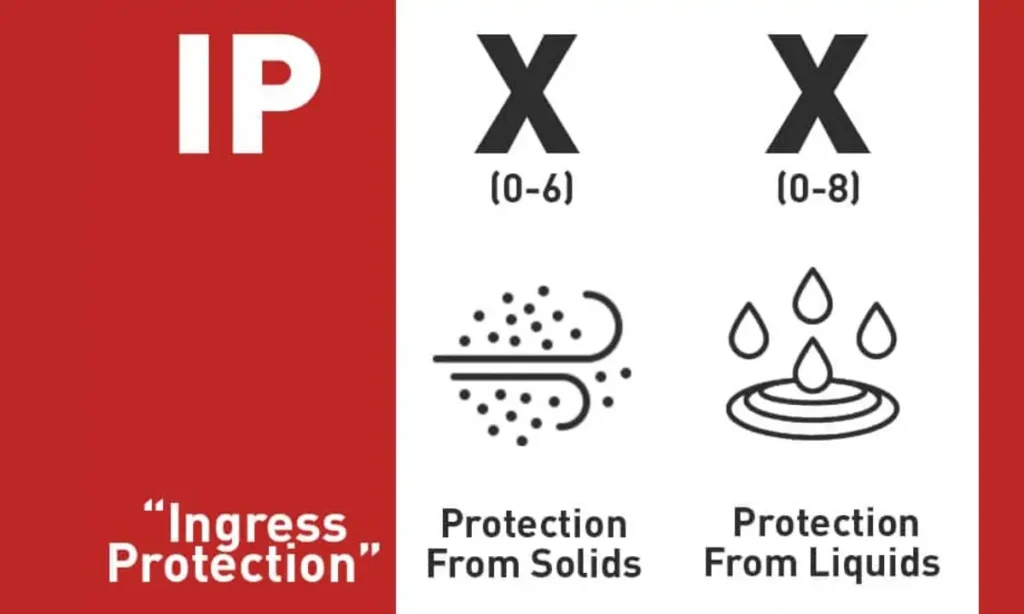
Part 1: IP Rating at a Glance
| IP Rating | Dust protection | Water protection | Suitable for |
| IP20 | None | None | Indoor only |
| IP40 | Minimal | None | Indoor, clean rooms |
| IP54 | Dust protected | Splashing water | Covered outdoor (bus shelters) |
| IP65 | Dust-tight | Water jets | Full outdoor (standard) |
| IP66 | Dust-tight | Powerful water jets | Harsh outdoor (coastal, storms) |
| IP67 | Dust-tight | Temporary immersion | Extreme conditions (flood-prone) |
| IP68 | Dust-tight | Continuous immersion | Underwater applications |
| IP69K | Dust-tight | High-pressure, high-temp jets | Industrial, food processing |
The simple rule: Indoor → IP20-IP40. Covered outdoor → IP54. Outdoor → IP65 minimum. Coastal/extreme → IP66+.
Part 2: What Do the Numbers Mean?
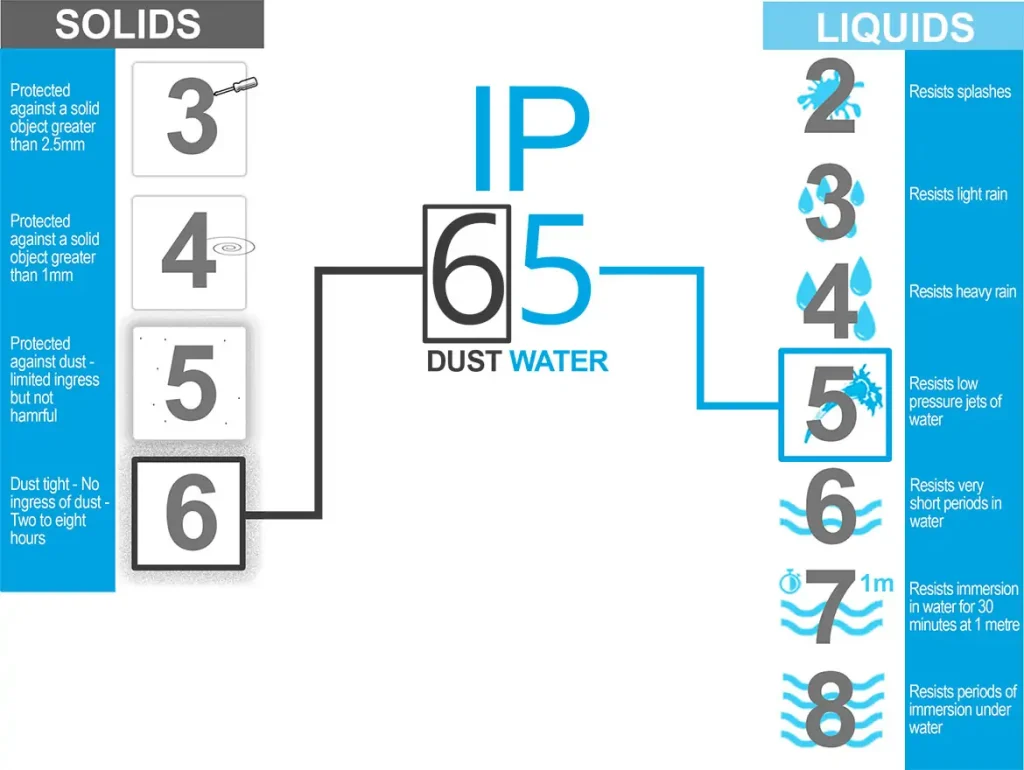
First Digit: Solid Protection (Dust)
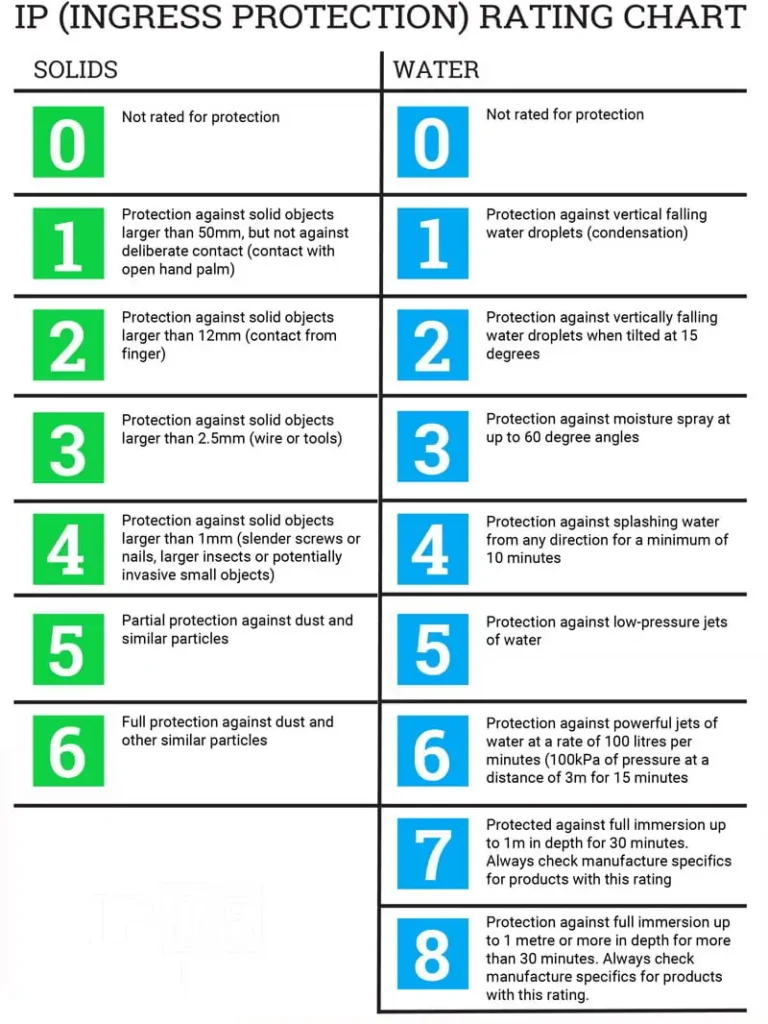
| Level | Protection | What it means |
| 1-4 | Limited | Not recommended for LED displays |
| 5 | Dust protected | Limited dust ingress (no harmful deposit) |
| 6 | Dust-tight | No dust can enter – required for outdoor |
Second Digit: Liquid Protection (Water)
| Level | Protection | What it means |
| 1-4 | Dripping to splashing | Indoor or light rain only |
| 5 | Water jets | Low-pressure jets – rain, casual washing |
| 6 | Powerful water jets | High-pressure – heavy rain, hose washing |
| 7 | Temporary immersion | Up to 1 meter for 30 minutes |
| 8 | Continuous immersion | Deeper than 1 meter |
| 9K | High-pressure, high-temp jets | Industrial cleaning |
Part 3: IP65 vs IP66 vs IP67 – Which Do You Need?
| Factor | IP65 | IP66 | IP67 |
| Dust protection | 6 (dust-tight) | 6 (dust-tight) | 6 (dust-tight) |
| Water protection | Jets (low-pressure) | Powerful jets (high-pressure) | Temporary immersion |
| Rain protection | ✅ Yes | ✅ Yes | ✅ Yes |
| Hose washing | Low-pressure only | High-pressure allowed | ✅ Yes |
| Flood protection | ❌ No | ❌ No | ✅ Up to 1m |
| Coastal suitability | Moderate | Good | Excellent |
| Cost premium | Baseline | +10-20% | +20-40% |
Recommendations:
| Your environment | Choose |
| Standard outdoor (billboards, stadiums) | IP65 |
| Coastal, hurricane zone, heavy storms | IP66 |
| Flood-prone area, near water features | IP67 |
| Underwater, fountains, marine | IP68 |
Part 4: IP Rating by Application
| Application | Recommended IP | Why |
| Indoor retail / corporate | IP20-IP40 | No weather exposure |
| Shopping mall atrium | IP40 | Indoor, some dust |
| Bus shelter (covered) | IP54 | Splashing water only |
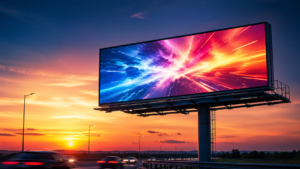
| Outdoor billboard | IP65 | Rain, dust, standard outdoor |
| Highway sign | IP65 | Wind, rain, dust |
| Stadium scoreboard | IP65-IP66 | High exposure, potential hose washing |
| Coastal billboard | IP66 | Salt spray, high humidity |
| Fountain or water feature | IP67-IP68 | Direct water contact |
| Rental outdoor screens | IP65 | Transport + outdoor use |
| Food processing / industrial | IP69K | High-pressure, high-temp cleaning |
Part 5: Common Misconceptions
Myth 1: “IP65 means waterproof”
Truth: IP65 means protected against water jets – not submersion. Do not put IP65 screens underwater. For submersion, you need IP67 or IP68.
Myth 2: “Higher IP rating is always better”
Truth: Higher ratings cost more and may affect heat dissipation. IP66/IP67 screens need active cooling (fans/AC) because they are more sealed. Choose what you actually need.
Myth 3: “IP rating is permanent”
Truth: IP rating can degrade over time. Seals can dry out, gaskets can crack, screws can loosen. Regular maintenance is required.
Myth 4: “All outdoor screens have IP65”
Truth: No. Some cheap outdoor screens are only IP54 – they may survive light rain but fail in real storms. Always verify the rating with certification documents.
Part 6: How to Verify IP Rating
Questions to ask your supplier
| Question | Why it matters |
| “Do you have third-party IP certification?” | Avoid self-declared ratings |
| “Is this rating for the full cabinet or just modules?” | Modules may be IP65 but cabinet gaps leak |
| “Can you provide the test report?” | Legitimate suppliers have documentation |
| “What is your warranty on waterproofing?” | Shows confidence in their product |
Red flags
| Red flag | What it means |
| “IP65 modules” but cabinet not rated | Water can enter through cabinet gaps |
| No certification documents | Rating may be fake |
| “Outdoor IP54” | Will likely fail in real storms |
| Significantly cheaper than IP65 competitors | Likely corners cut on sealing |
Part 7: Cabinet Material and Sealing Design
Common materials and their IP capabilities
| Material | Weight | Strength | Corrosion resistance | Max IP |
| Die-cast aluminum | Light | High | Good | IP66-IP68 |
| Aluminum alloy | Medium | Good | Good (with coating) | IP65 |
| Carbon fiber | Ultra-light | Very high | Excellent | IP65-IP66 |
| Magnesium alloy | Light | High | Excellent | IP69K |
| Steel | Heavy | Very high | Moderate (needs coating) | IP65 |
Sealing design features
| Feature | Purpose |
| Silicone sealing strips | Fill seams, prevent water vapor |
| Waterproof adhesive / UV glue | Seal joints and seams |
| Three-proof coating (PCB) | Protect circuit boards from moisture |
| Concealed cable routing | Avoid external cable exposure |
| Microporous breathable membrane | Allow airflow, block water vapor |
| Liquid cooling (sealed cabinets) | IP68 + effective heat dissipation |
Part 8: Installation Considerations
Outdoor installation checklist
| Item | What to check |
| Cable entries | Use waterproof glands – not regular connectors |
| Seals between modules | Ensure gaskets are properly seated |
| Drainage holes | Some cabinets have weep holes – do not block |
| Mounting hardware | Use corrosion-resistant (stainless steel) |
| Power supply | Must be outdoor-rated |
Important: An IP65 screen installed with regular cables and unsealed entry points will fail – regardless of its rating. The rating applies to the complete installed system.
Part 9: Maintenance of Waterproof Performance
Regular maintenance schedule
| Task | Frequency | Why |
| Inspect seals and gaskets | Every 3-6 months | Seals dry out and crack |
| Check cable glands | Every 6 months | Tighten if loose |
| Clean exterior | Monthly | Remove dust, salt, debris |
| Check for water stains | Monthly | Early detection of leaks |
| Test IP rating | Annually | Professional verification |
Signs of waterproof degradation
| Sign | What it means | Action |
| Water stains on surface | Seal failure | Inspect and replace seals |
| Mold or mildew | Moisture ingress | Dry immediately, find leak |
| Corrosion on connectors | Long-term moisture | Replace affected parts |
| Condensation inside | Seal breach | Dry out, reseal |
| Flickering or dead pixels | Moisture damage | Professional repair |
Part 10: IP Rating Selection Guide
| Step | Question | Action |
| 1 | Indoor or outdoor? | Indoor → IP20-IP40. Outdoor → continue |
| 2 | Covered or exposed? | Covered → IP54. Exposed → IP65+ |
| 3 | Coastal location? | Yes → IP66 minimum |
| 4 | Flood risk? | Yes → IP67 or IP68 |
| 5 | Will it be pressure-washed? | Yes → IP66 or IP69K |
| 6 | What is your budget? | Balance IP rating with cost |
Ivan’s IP-Rated LED Displays
At IvanLED, we manufacture LED displays with various IP ratings:
| IP rating | Our products | Best for |
| IP20-IP40 | Indoor fine pitch | Retail, corporate, control rooms |
| IP54 | Semi-outdoor | Covered walkways, bus shelters |
| IP65 | Outdoor standard | Billboards, stadiums, building facades |
| IP66 | Outdoor rugged | Coastal areas, heavy rain zones |
What we offer:
Die-cast aluminum cabinets
Silicone sealing on all seams
Waterproof cable glands included
3-year warranty on waterproofing (with proper installation)
1-year warranty on electronics
Tell us your installation location and weather conditions. We will recommend the right IP rating and provide a free quote.
Frequently Asked Questions
Q: How long does a waterproof LED display last?
With proper maintenance, outdoor IP65-IP66 LED displays can last 10+ years. Seals may need replacement every 3-5 years depending on environmental conditions.
Q: What IP rating do I need for an outdoor billboard?
IP65 is the minimum standard for most outdoor billboards. For coastal areas or regions with heavy storms, choose IP66.
Q: Can IP55 be used outdoors?
IP55 is splash-proof but not rain-proof. It can be used in covered outdoor areas (under awnings, bus shelters) but not in direct rain.
Q: How do I maintain waterproof performance over time?
Regularly inspect seals for cracking or hardening. Clean drainage channels. Replace damaged gaskets. For professional verification, do annual IP testing.
Q: Can I upgrade a lower IP rating (e.g., IP44) to higher?
Not cost-effectively. Retrofitting seals and waterproofing requires redesigning the cabinet. It is better to buy the correct IP rating from the start.
Q: What is the difference between “splash-proof” (IP44) and “spray-proof” (IP65)?
IP44 protects against splashing water from any direction. IP65 protects against direct water jets – much more powerful. IP44 will fail in rain; IP65 will not.
Q: Does IvanLED provide IP certification?
Yes. All our outdoor displays come with IP65 or IP66 certification. Test reports are available upon request.