







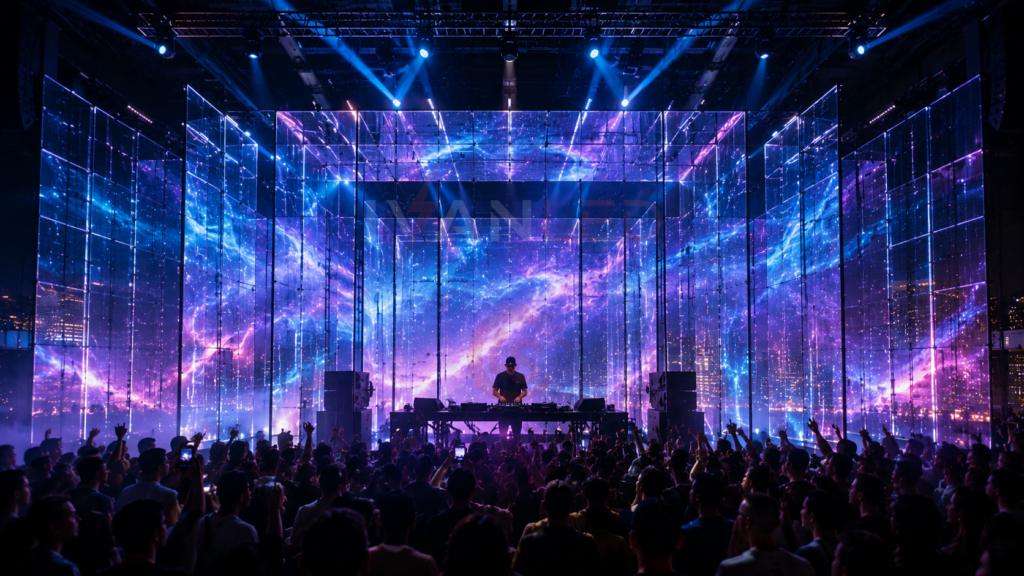
1. What Is a DJ LED Screen?
A DJ LED screen is a large-format LED display specifically designed for use in nightclubs, bars, music festivals, and live events. These screens are typically positioned behind or around the DJ booth, working in harmony with lighting and sound systems to create a cohesive, immersive visual experience.
Key characteristics:
- High brightness and resolution for clear visuals in dark or variable lighting
- Flexible configurations — curved, custom-shaped, or modular
- Real-time content playback synchronized with music
- Durable construction suitable for high-traffic environments
DJ LED screens are not just for nightclubs — they are also used at festivals, corporate events, weddings, and product launches to create memorable visual experiences.
2. Types of DJ LED Screens
2.1. DJ Background LED Screen
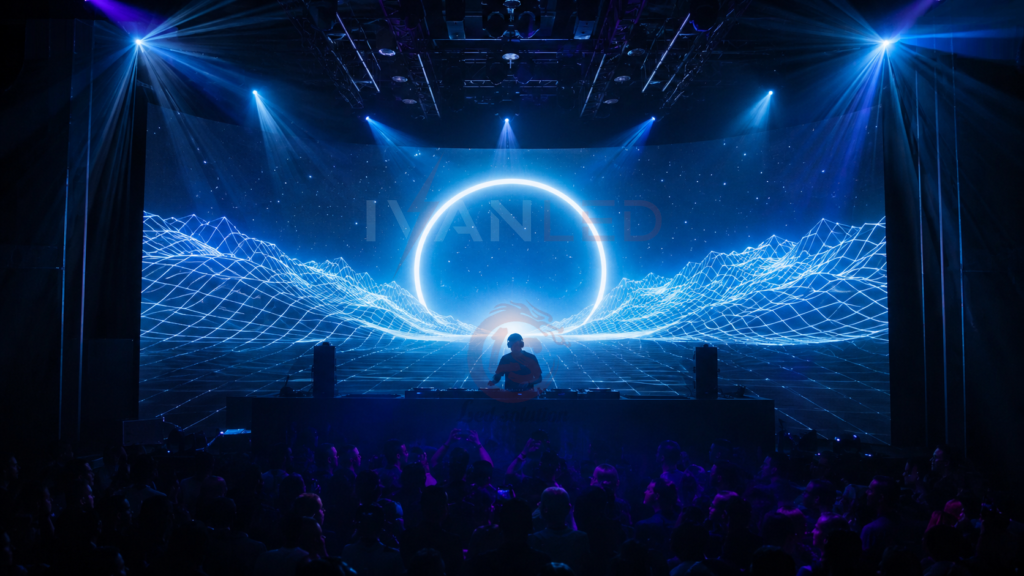
This is the most common type of DJ LED screen — a large display positioned directly behind the DJ booth. It serves as the primary visual focal point, showing music videos, live camera feeds, or dynamic visual effects that synchronize with the performance.
Best for: Nightclubs, concert stages, music festivals, and DJ performances.
2.2. Special-Shaped (Custom) DJ LED Screens
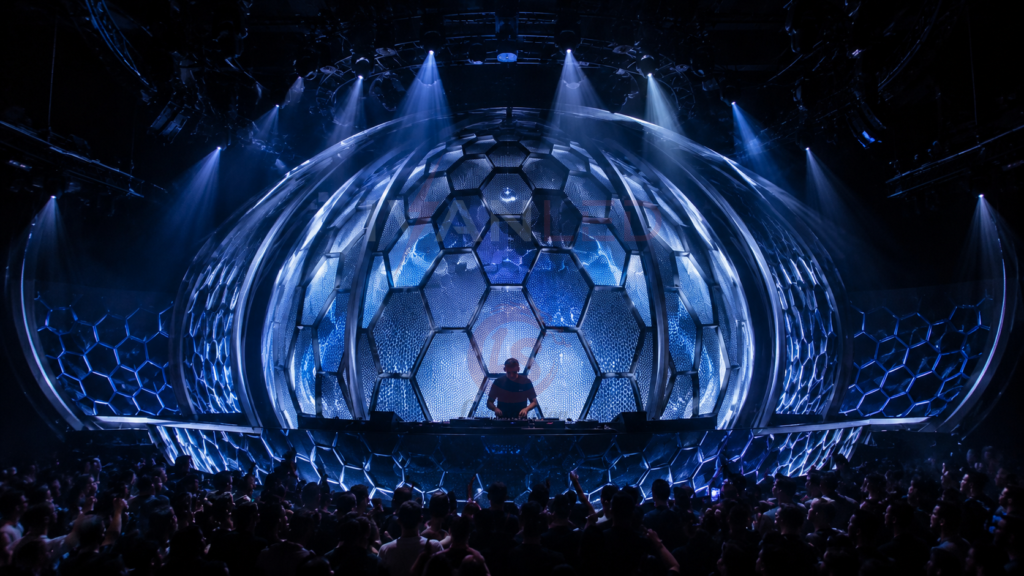
Special-shaped LED screens are designed to fit unique architectural elements — ceilings, aisles, or custom structures. Shapes include curved, spherical, honeycomb, hexagonal, and 3D configurations.
Best for: High-end nightclubs, immersive installations, venues with unique architecture.
2.3. DJ Booth LED Screen
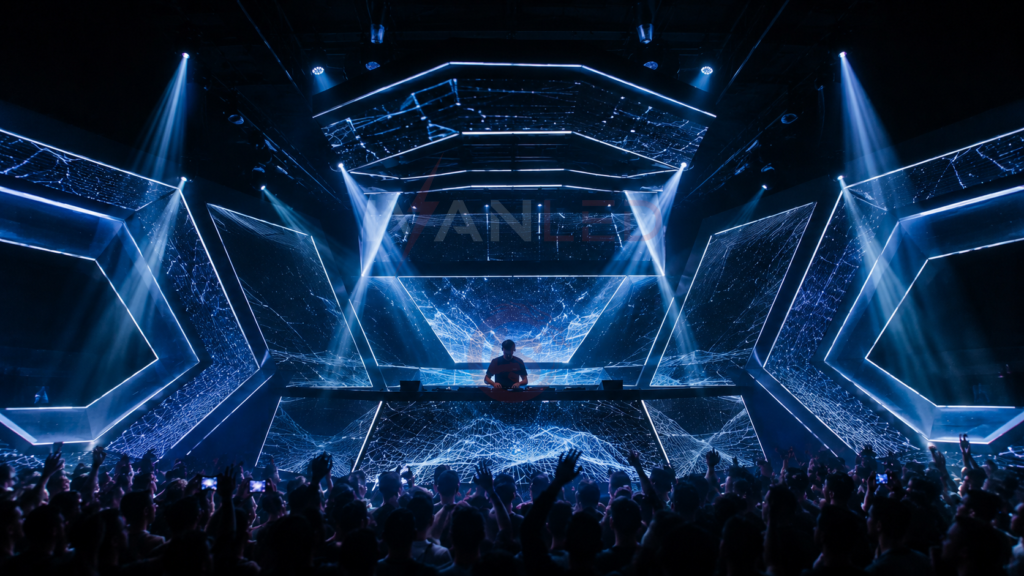
These screens are integrated directly into the DJ booth structure, often wrapping around or encasing the DJ position. They create a “command center” aesthetic and enhance the DJ’s stage presence.
Best for: Nightclubs, discos, and event stages where the DJ is the central focus.
2.4. Floor-Standing / Interactive LED Floor Screens
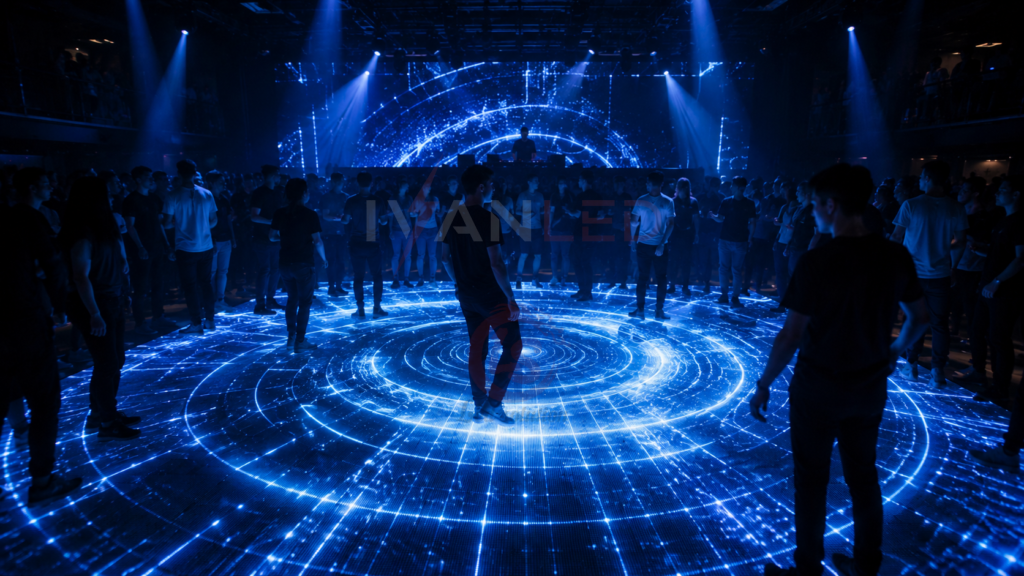
LED floor screens are installed on the dance floor or stage floor. They feature high load-bearing capacity and impact resistance. Interactive versions respond to footsteps or movement, creating an engaging, participatory experience.
Best for: Dance floors, nightclubs, interactive exhibits, and high-energy events.
3. Benefits of Using DJ LED Screens at Events
| Benefit | Description |
| Enhanced visual effects | High-definition dynamic images synchronized with music create a stunning visual experience |
| Increased audience engagement | Interactive content — social media feeds, polls, and games — makes the audience feel involved |
| Flexible content display | Show videos, animations, brand logos, sponsor ads, or custom graphics |
| Unique atmosphere creation | Custom shapes and dynamic visuals create a distinctive, memorable event atmosphere |
| Brand and marketing impact | Eye-catching screens increase sponsor visibility and brand recall |
4. How to Use DJ LED Screens Effectively
4.1. Music Videos and Visuals
Playing music videos or custom visual content enhances the DJ’s performance and provides a platform for artist promotion. The combination of audio and visual elements creates a more powerful, memorable experience.
4.2. Lighting Atmosphere
Small pixel pitch screens can produce subtle lighting effects that synchronize with the music. This brings energy to the venue and highlights key moments, creating an immersive environment.
4.3. Visual Effects
Dynamic visual effects — such as motion graphics, particle effects, and reactive animations — enhance the professionalism and visual appeal of the show.
4.4. Customized Graphics
Branded or theme-specific graphics reinforce the event’s identity and help artists stand out. Custom visuals are both artistic expression and effective brand-building tools.
4.5. Interactive Elements
Interactive features — audience polls, live social media feeds, and movement-reactive visuals — actively engage the audience and encourage participation, maximizing the screen’s potential.
5. How to Choose a DJ LED Screen
5.1. Consider the Installation Location
Space layout: Determine the best position for the screen — behind, around, or integrated into the DJ booth. Ensure it is visible to the majority of the audience.
Installation environment: Consider ceiling height, wall structure, power availability, and mounting options (wall-mounted, suspended, or freestanding).
5.2. Determine the Right Size
Choose screen size based on venue dimensions and viewing distance:
- Small venues (under 100 people): 2–3m wide screens
- Medium venues (100–500 people): 4–6m wide screens
- Large venues (500+ people): 6–10m+ wide screens
5.3. Select the Appropriate Pixel Pitch
Pixel pitch determines resolution and clarity. For DJ screens, where viewers are relatively close, finer pixel pitches are recommended:
| Viewing Distance | Recommended Pixel Pitch | Typical Use |
| Under 2 meters | P1.875 – P2.5 | Close-up viewing, intimate venues |
| 2 – 5 meters | P2.5 – P4 | Most nightclubs and bars |
| 5 – 10 meters | P4 – P6 | Large nightclubs, event stages |
| 10+ meters | P6 – P10 | Festival stages, large venues |
5.4. Evaluate Brightness and Refresh Rate
Brightness: Indoor DJ screens typically need 1,000–2,000 nits. Higher brightness is better for venues with strong ambient lighting.
Refresh rate: Choose 1,920Hz or higher to avoid flicker in video and camera recordings. For broadcast-quality, consider 3,840Hz.
5.5. Consider Configuration and Maintenance
Installation method: Fixed, mobile, or modular installation — choose based on venue requirements and whether the screen needs to be relocated.
Maintenance access: Front or rear maintenance? Front maintenance is easier for wall-mounted screens; rear maintenance is suitable for freestanding setups.
6. Expert Tips for DJ LED Screen Buyers
Tip 1: Match pixel pitch to your venue size and viewing distance.
For nightclubs where the audience is close, choose P2.5 or smaller. For large festival stages, P4–P6 is sufficient and more cost-effective.
Tip 2: Prioritize high refresh rate for video content.
If you plan to show music videos or live camera feeds, choose a screen with a 1,920Hz+ refresh rate to avoid flicker and motion blur.
Tip 3: Consider interactive features for engagement.
Interactive LED floor screens or touch-enabled displays can significantly boost audience engagement, especially in nightclub and festival environments.
Tip 4: Plan for content management.
Choose a screen system with user-friendly content management software that allows real-time updates, scheduling, and multi-screen control.
Tip 5: Order spare modules (5–10%) with your purchase.
Color and brightness vary between production batches. Spare modules purchased with your order ensure a perfect match for future repairs.
7. Frequently Asked Questions (FAQ)
Q1: What is the difference between a DJ LED screen and a standard LED display?
A DJ LED screen is specifically designed for nightclubs, bars, and live events. It features high brightness, flexible configurations (including custom shapes), and real-time content synchronization with music. Standard LED displays are typically designed for advertising, information display, or permanent installations.
Q2: What pixel pitch is best for a DJ booth LED screen?
For nightclubs where the audience is close (2–5 meters), P2.5–P4 is recommended. For larger venues with distances over 5 meters, P4–P6 is sufficient. For close-up, high-end applications, consider P1.875–P2.5.
Q3: Can DJ LED screens be used outdoors?
Yes, but they must be rated for outdoor use. Outdoor DJ screens require IP65+ weatherproofing, high brightness (4,500+ nits), and UV-resistant materials. Always verify the specifications for your environment.
Q4: How much does a DJ LED screen cost?
Costs vary based on size, pixel pitch, shape, and customization. Standard DJ background screens typically range from $800 to $2,500 per m². Custom or special-shaped screens can cost significantly more. Contact us for a custom quote.
Q5: Does IvanLED offer DJ LED screen solutions?
Yes. IvanLED provides custom DJ LED screen solutions for nightclubs, bars, festivals, and events. Our offerings include background screens, special-shaped displays, booth screens, and interactive floor screens. Contact us to discuss your venue or event requirements.
8. Conclusion: Elevate Your Events with DJ LED Screens
DJ LED screens are powerful tools for creating unforgettable event experiences. They combine stunning visuals with music synchronization, audience engagement, and branding opportunities to transform any venue or performance.
IvanLED’s straightforward advice for 2026:
– For nightclubs and bars, choose P2.5–P4 screens with 1,920Hz+ refresh rate and 1,000–2,000 nits brightness.
– For festivals and large events, prioritize durability, weatherproofing (outdoor), and modular design.
– Invest in interactive features (floor screens, touch interactivity) to boost audience engagement.
– Plan for content management and spares to protect your investment.
At IvanLED, we manufacture high-quality DJ LED screens designed for the unique demands of nightlife and live events. Our solutions combine superior visual performance, flexible installation options, and reliable durability.
Ready to create unforgettable events with DJ LED screens?
👉 Contact IvanLED for a free consultation and customized quote.