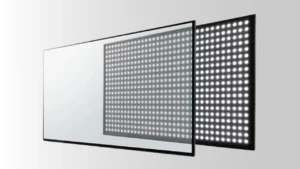
What is an LCD (Liquid Crystal Display)?

It is a flat panel display using liquid crystals to produce images. Between them, you will find two layers of glass. That allows light to pass through and give an image when applied when an electric current is applied. These LCD’s are also known as thin films and are commonly found in TVs, monitors, and smartphones.
What is an LED (Light Emitting Diode) Display?
LED display means an image produced on-screen by light-emitting diodes. Unlike traditional displays, they do not rely on store-bought sources of light such as fluorescent tubes or LED lights. The use of this technology is more energy efficient than the older display type. These are less bulky and lighter and more suitable for contemporary TVs.
Key Differences Between LCD and LED
Display Technology vs. Backlighting
- LCD: Liquid crystals are used to display the images on LCD screens. The output of these crystals is not light, they use a backlight to make the image visible. Fluorescent bulbs are used for the backlight.
- LED: LCD’s are the type of LED displays. The backlighting is what makes the main difference. Light emission efficiency increases through the implementation of LED technology that substitutes fluorescent light fixtures.
Brightness and Contrast
- LCD: It maintains poor black tones because brighten limitations exist. The liquid crystals let light pass through differently although complete blocking is practically impossible.
- LED: These displays offer better contrast effect since they have the most advanced backlight control systems. Local dimming technology in these screens allows separate screen areas to adjust their brightness levels according to the displayed images.
Power Efficiency
- LCD: These screens use fluorescent backlighting technology and consume more power. The available energy-efficient models consume more power compared to LED screens despite their energy-saving features.
- LED: The LED’s are energy efficient as their power consumption is low and they use less electricity to produce a similar brightness level. These screens provide the best choice for energy-efficient displays when you need to save electricity. A future reduction of electricity expenses occurs because of these displays.
Color Accuracy and Picture Quality
- LCD: A good LCD will perform well with backlight and display technology, affecting the color accuracy of the LCD. Less vibrant colors and likely poor uniformity are offered by older LCD models. It is quite noticeable, especially in darker or brighter scenes.
- LED: Usually these displays provide good color perfection and better picture quality. The richness and brightness of colors are enhanced by the advanced LED backlighting. In general, LED screens provide a good experience than screens that do not use LED; especially when it is used for gaming or watching movies.
Lifespan and Durability
- LCD: Such displays exhibit solid durability yet their backlight features a known aging process which results in reduced brightness levels and contrast appearance. The slow backlight degradation throughout time can negatively impact the total lifespan because of your screen observation.
- LED: The life time of LED screens is generally higher than that of traditional LCD screens. LED’s operate in a solid state and therefore are not prone to much degradation. Moreover, the LED’s are tolerant of heat and physical wear and hence are more durable.
Cost and Affordability
- LCD: Most often, LED models cost more money than LCD. The cost of manufacturing is lower since it has been around longer. An LCD display could be the best option if you don’t want a top performance and are on a tight cost.
- LED: However, the initial cost of LED displays is higher but provides better value in the longer term. The greatest benefit of using them is power efficiency, larger life time, and better picture quality than other LCD or LED models.
Advantages and Disadvantages of LCD Displays
LCD displays are widely used in many devices, from monitors to televisions. Advantages may be offered, but there are also some disadvantages. This will allow you to make a better-informed decision regarding display choice.
Advantages of LCD Displays:
- You will find LCD screens more effective than LED versions. Due to this, they are a budget-friendly option for users.
- Although not nearly as energy efficient as an LED, LCD’s still represent relatively power-saving technology in comparison to older CRT displays.
- LCD technology is widely available and supported on many devices.
- LCD displays provide good picture quality, especially when it is a well-lit room and has bright and sharp visuals.
- LCD’s are thin and lightweight which enables them it’s be wall-mounted and you can use them for various applications.
Disadvantages of LCD Displays:
- LCD displays usually have a lower contrast than LED or OLED screens, this affects the image depth of the content being viewed.
- They are not ideal when viewed from the side, so aren’t suitable for large group situations.
- Sometimes the onset of motion blur can change the response time, especially when playing breathing, or video watching fast footage.
- Even though LCD screens are thin, they are bulky compared to modern display units.
Advantages and Disadvantages of LED Displays
In many key areas, LED displays have superior performance to modern technology, so you will find them more popular. However, they provide little improvements over regular LCD’s in terms of picture quality, energy efficiency, and other performance.
Advantages of LED Displays:- Display screens using IPS deliver superior color presentation that produces crisp hues together with intense black and white saturation.
- The production of visually intense images from LED technology requires lower energy usage than what LCD displays need. Lighter and thinner than LCD technology allows for simple mounting and swift transportation of LED displays.
- LED technology requires smaller amounts of energy to create visually intense displays when compared to LCD devices.
- LED gives better contrast ratios, so the images have higher contrast.
Disadvantages of LED Displays:- The problem is that, unlike standard LCD’s, LED displays are much more efficient but also more expensive.
- Some LED displays, namely edge-lit, have uneven brightness potential.
- Some lower-end LED models may not be as precise with color accuracy as is in higher-quality models.
Key Factors to Consider When Choosing between LCD and LED
There are some important factors to consider in order to deciding among these two technolgoies.
1. Budget
Among LCD models, the price is lower compared to LED models. If you are looking for a cost-effective option, you might as well go for LCD.
2. Picture Quality
The display produces better color contrast and achieves maximum brightness with the clearest image quality than LCD displays do. Potential gamers who value movie or game aesthetics should choose LED as their display solution.
3. Energy Efficiency
It provide both exceptional imaging quality while consuming less power at lower power settings. Businesses should select LED if energy conservation stands as their main priority.
4. Size and Space
LED Displays are thinner and lighter it perfectly fits into tight spaces and for wall mounting. It may also prove to be better suited if space is of concern.Taking into account these factors carefully helps you make an informed decision based on your preferences and requirements.
Conclusion
Understanding the contrasting features between these two technologies allows users to pick the perspective that best suits their requirements. Both display types have their pros and cons whether you get one based on picture quality, energy efficiency, or price. Choose IVANLED today and
contact us , we will provide you with the best options for your display solution.
FAQ’s
Which one is better for gaming LCD or LED?
Generally, LED displays are a better choice. One of the benefits when it comes to LED displays compared to other alternatives is that refresh rates improve and so do the motion blur, giving very smoother visuals.
Are LED TVs really better than LCD TVs?
The public perceives LED televisions to perform better than standard LCD displays. The brightness along with contrast and power efficiency are improved through LED technologies. LED TVs extend their lifespan and require less electricity for operation.
How does LED backlighting improve an LCD display’s performance?
The use of LED backlighting enables better control over LCD display brightness together with contrast levels. It improves visual quality with brighter images and shallower blacks.
Why do LED displays consume less power than LCD displays?
Therefore, LED displays have less power consumption than traditional LCD’s because they utilize more energy. Unlike the older fluorescent lights in these two technologies do not create nearly as much heat, and they generate less energy to produce light.
Do LED displays have better color accuracy than LCD’s?
LED displays usually provide better color accuracy than LCD’s. LED technology spans a broader range of color production which enables more real-looking and striking color outputs.
Is there any difference in viewing angles between LCD and LED displays?
Though limited viewing angle is a problem with both of these displays, LED displays usually do better.
Which display type offers better contrast: LCD or LED?
For contrast reasons, LED displays are better than the standard LCDs. This is because LEDs have more control over the backlighting, making it possible to go for deeper blacks or brighter whites.












 It is a flat panel display using liquid crystals to produce images. Between them, you will find two layers of glass. That allows light to pass through and give an image when applied when an electric current is applied. These LCD’s are also known as thin films and are commonly found in TVs, monitors, and smartphones.
 LED display means an image produced on-screen by light-emitting diodes. Unlike traditional displays, they do not rely on store-bought sources of light such as fluorescent tubes or LED lights. The use of this technology is more energy efficient than the older display type. These are less bulky and lighter and more suitable for contemporary TVs.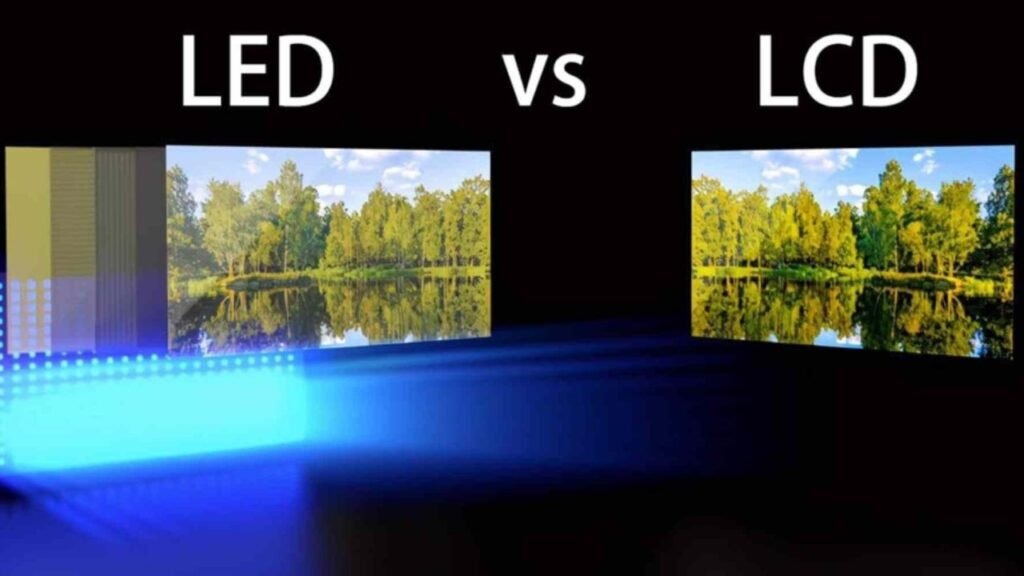
 LCD displays are widely used in many devices, from monitors to televisions. Advantages may be offered, but there are also some disadvantages. This will allow you to make a better-informed decision regarding display choice.
 In many key areas, LED displays have superior performance to modern technology, so you will find them more popular. However, they provide little improvements over regular LCD’s in terms of picture quality, energy efficiency, and other performance.Advantages of LED Displays:
 There are some important factors to consider in order to deciding among these two technolgoies.
 Understanding the contrasting features between these two technologies allows users to pick the perspective that best suits their requirements. Both display types have their pros and cons whether you get one based on picture quality, energy efficiency, or price. Choose IVANLED today and contact us , we will provide you with the best options for your display solution.