









What is a P3 LED Wall?

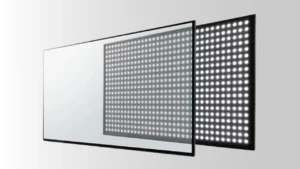
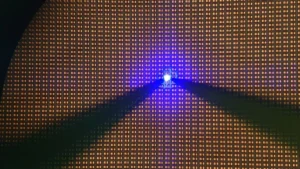
A P3 LED wall is a high-quality display screen made of small LED panels. The “P3” means the pixel pitch which is 3mm for P3 LED Walls. These pixels can easily make the picture clear and sharp. It works best when you view it from a short distance because of its high resolution.
Types of Modules in P3 LED Displays
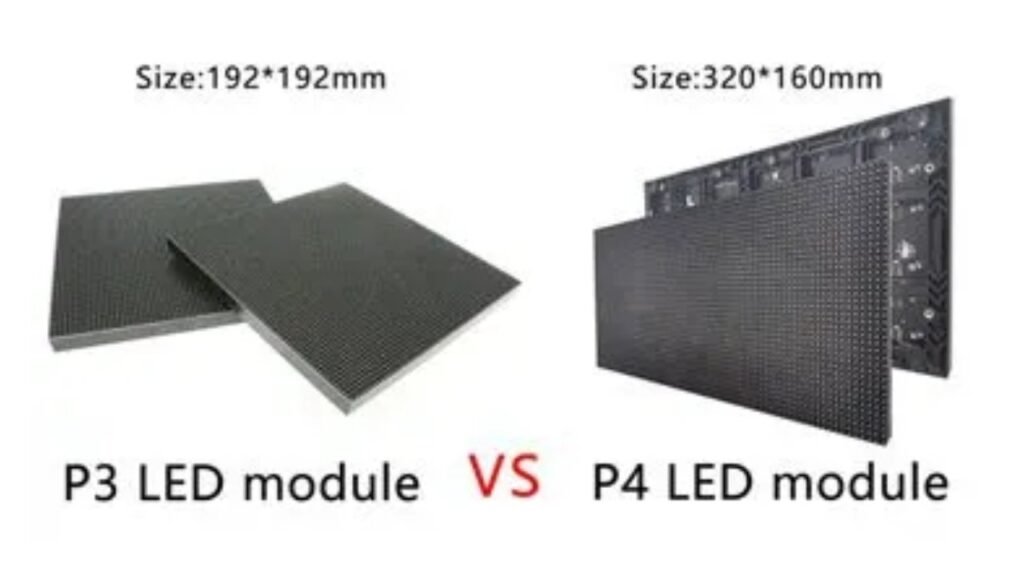
P3 LED wall modules are usually 192x192mm in size. However, different displays have different modules based on their use. Some of them you can use for indoor displays, while others are made for outdoor use due to their weather protection. You can also find flexible modules that bend to fit curved screens. P3 LED displays use the following modules:
- Size of Indoor module is 320×160mm
- Size of outdoor module is 320×160 mm
What is a P4 LED Wall?
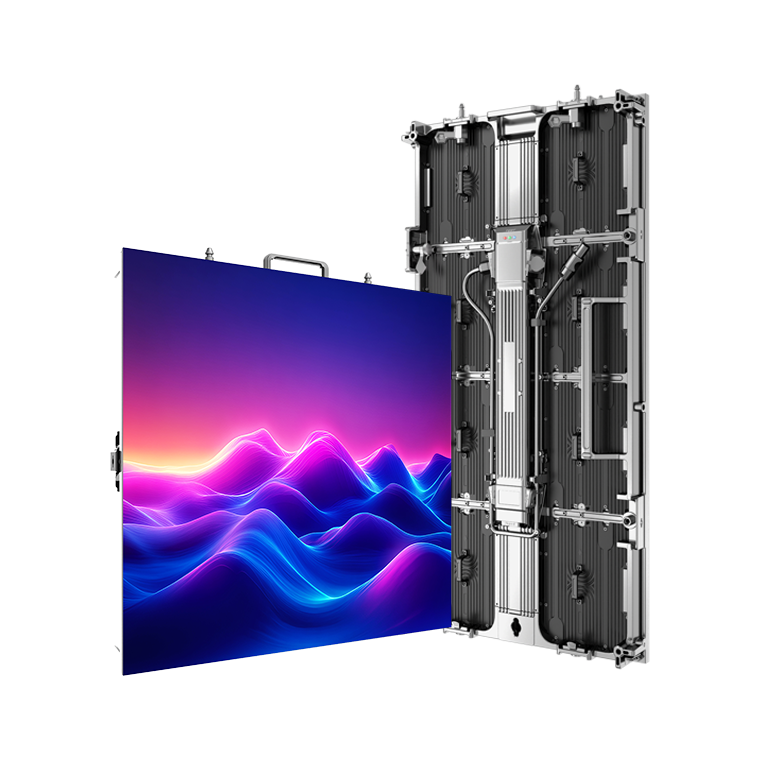
A P4 LED wall is a big screen made of small LED lights. The “P4” means the pixels are 4mm apart. It makes images look sharp and clear. It works best when people watch from a little far away. For example: outdoor ads, concerts and advertisements.
Types of Modules in P4 LED Displays
If we talk about the type of modules used in P4 LED walls, it will primarily depend on where they are used. But it depends on the manufacturing of the LED screens too. These include the indoor P4 soft module, outdoor P4 soft module and front maintenance P4 LED panel.
Common module sizes for P3 are 320x160mm and 256x128mm, with technologies like SMD, COB and HOB. There are two commonly used module:
- Rental P4 LED modules: Made for short term or portable displays.
- Fixed P4 LED modules: Built for long term setups.
Comparison of P3 & P4 LED Walls
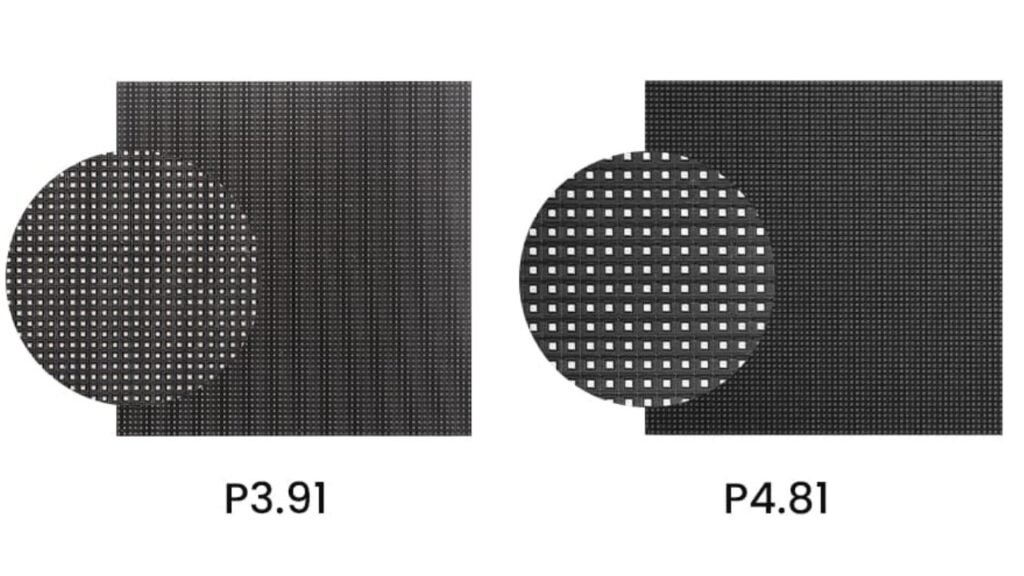
P3 and P4 LED Walls have several differences in terms of their infrastructure and usage. Both have their unique strengths which depend on your needs. The main contrasts are as follows:
| Features | P3 LED Wall | P4 LED Wall |
| Pixel Pitch | 3mm | 4mm |
| Pixel Density | Approximately 111,111 pixels/m² | Nearly 62,500 pixels/m² |
| Viewing Distance | It is ideal for 3 to 9 meters | It is suitable for 4 to 12 meters |
| Best Use Case | Mostly used for indoor and smaller places | Generally installed in outdoor and larger venues |
| Visibility Angle | Wider angle and clearer from sides | It’s a good angle, but there is a slight color loss from the side |
| Typical Applications | Shopping malls, conference halls, showrooms, events | Stadiums, public squares, large halls, some indoor use |
| Price Range |
|
|
Pixel Pitch & Resolution
P3 LED walls have a pixel pitch of 3mm, which means the distance between each pixel is smaller. On the other hand, P4 LED walls have a 4mm pixel pitch. That means the pixels are spaced a bit farther apart for P4.
P3 LED pitch leads to a higher pixel density of about 111,111 pixels per square meter. But, P4 has a pixel density of about 62,500 pixels per square meter. So we can say that P3 provides sharper and more detailed images and P4 resolution is slightly lower as compared to P3.
Distance & Display Clarity
P3 LED walls are ideal for closer viewing, with decent distances ranging from 3 to 9 meters. From the perspective of P4, it is better suited for slightly larger spaces, at distances of 4 to 12 meters.
Due to its range and clarity standards, P3 LED walls are perfect for smaller or indoor settings. And P4 are great choices for bigger venues or outdoor displays.
Visibility Angle
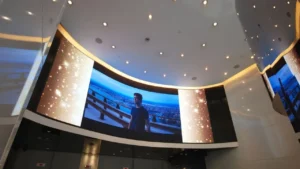
P3 LED walls usually have a wider visibility angle. It means people can see the screen clearly even when they are not standing directly in front of it. This makes them a great choice for indoor places. For example: shopping malls, conference halls, showrooms or events.
P4 LED walls also offer a good viewing angle. But are slightly less wide as compared to P3. However, the picture may lose some brightness and color when seen from the side. Plus, they work well in large spaces where people watch from the front.
Applications
Due to their clear and bright picture quality, P3 LED walls are typically designed for indoor use. They offer good visibility for the setup of big rooms, lecture halls, stages, control rooms and entertainment venues. Because P3 panels are easy to install and move anywhere.
In contrast, P4 LED walls are used in bigger places, such as outdoor events or large halls. These LEDs are also applicable in places like stadiums and public squares. In some cases, P4 LED walls are used in indoor activities too.
Cost & Pricing Factors
When we compare the P3 and P4 LED Walls modules, there is only 1 mm difference. Additionally, when they are put together into a 1-square-meter wall. In result, P3 has 48,611 more LED lights than P4. This extra number of lights increases the overall cost for P3 LED walls.
However, P4 LED walls are more affordable and cheaper than P3 LED walls. But, the cost factor for both LEDs also depends on size, features and where you plan to use them.
Conclusion
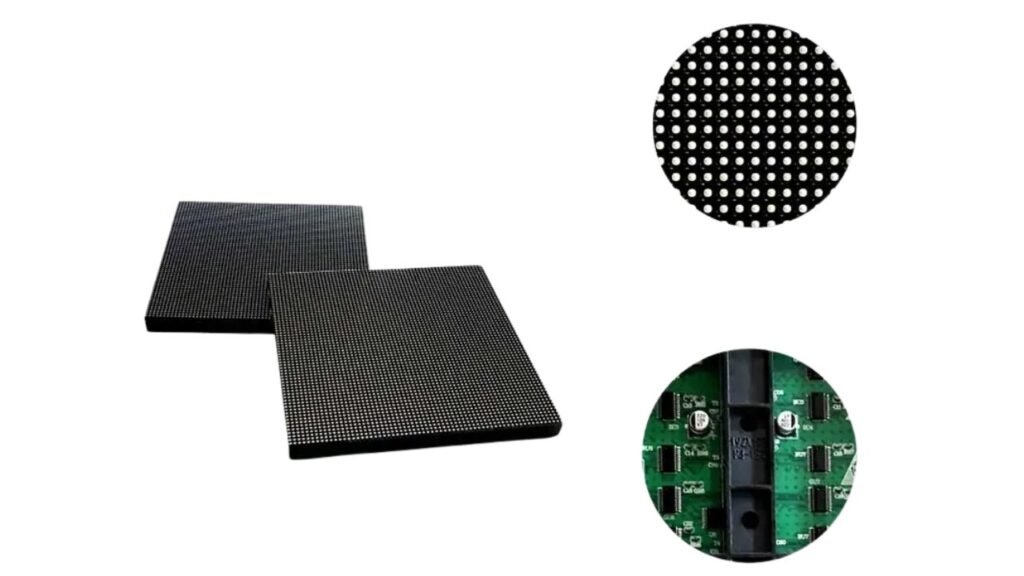
P3 or P4? It all depends on how far people will view it, where you’ll use it & how much you plan to spend. If you need sharp visuals for indoor use, P3 is a great pick. For larger or outdoor setups, P4 works well. When you know what exactly sets P3 and P4 apart, it becomes easier to choose the right one for your setup.
FAQs
Are P3 and P4 LED Walls Energy-efficient?
Yes, both P3 and P4 LED walls are energy-efficient. They use less power as compared to older screens. P3 may use a bit more energy because of more lights. But both still save power. They are a good choice if you want bright screens and lower electricity bills.
Can P3 and P4 LED Walls Display Content in 3D?
No, P3 and P4 LED walls cannot show real 3D content by themselves. They display flat (2D) images and videos. But with special software, you can make the content look 3D. It’s still just a visual trick, not real 3D.
How Does the Refresh Rate Affect the Performance of P3 & P4 LED Walls?
Basically the refresh rate shows how fast the screen updates images. That means higher refresh rate will be higher photo quality, especially in videos. Both P3 and P4 LED walls work better with high refresh rates. It makes the display look stable and nice to your eyes too.