










LED Screen Resolution?
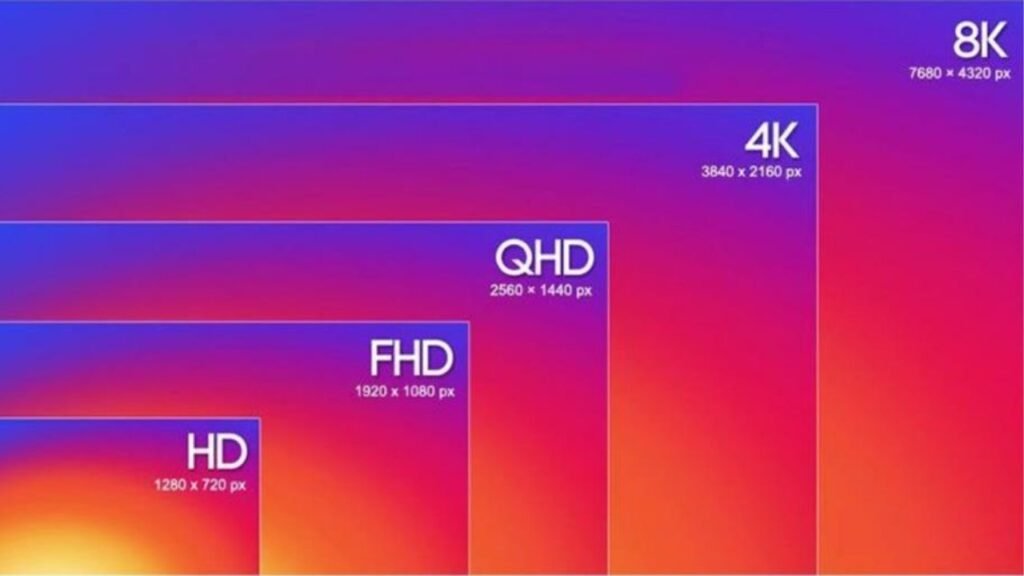
The number of pixels on the screen, as a product of the width and height of the pixels, is known as the resolution of the LED screens. This test identifies the image clarity and sharpness of the images and videos that one can see on the screen. The resolution of the LED screen is very important as it allows choosing the best display that is used in different applications and has the best visual results and viewer experience.
Types of LED Screen Resolutions

HD (720p):
Offers a resolution of 1280×720 pixels, which makes up to about 0.9 megapixels. Suitable for small screens or a cost-effective application. Gives simple content, clear pictures.
Full HD (1080p):
Size is 1920×1080 pixels or approximately 2.1 megapixels. Produces clearly determined high-resolution images. Applied in digital signage, television, and monitors.
4K UHD:
Has a 3840×2160 pixels resolution, which equates to approximately 8.3 megapixels. Contains 4 times the number of pixels of Full HD. Best suited to large screens and content of high quality.
8K UHD:
Resolution of 7680×4320 or about 33.2 megapixels. Offers images with high resolution at extremely high quality. It can be used on large screens and in theaters.
16K (emerging):
Has a resolution of 15360×8640 pixels, which amounts to approximately 132.7 megapixels. Under prototype and large-scale installations. The leading edge of display resolution technology.
Calculating LED Screen Resolution

Formula:
Resolution (width × height) = (screen width ÷ pixel pitch) × (screen height ÷ pixel pitch).
Example:
Given a 3m x 2m screen with P5 pixel pitch:
Width: 3000mm / 5mm = 600 pixels
Height: 2000mm / 5mm = 400 pixels
Resolution = 600 x 400 = 240,000 pixels
The calculation will ensure that the number of pixels is determined properly. It will help you to achieve excellent display performance and compatibility with control systems.
The Importance of Resolution in LED Display

Visual Clarity:
An increased resolution increases the sharpness and detail of the image and minimizes pixelation. This is very important in applications that demand finer graphics, like control rooms and storefront displays.
Viewing Distance:
The best viewing distance is dependent on resolution. The increased resolution enables the viewers to move nearer without seeing pixelation, and thus it is best suited for home interiors.
Content Compatibility:
Resolution displays are able to display finer content, including fine text and complex graphics, effectively making them clear and legible.
Factors Influencing LED Screen Resolution

Pixel Pitch:
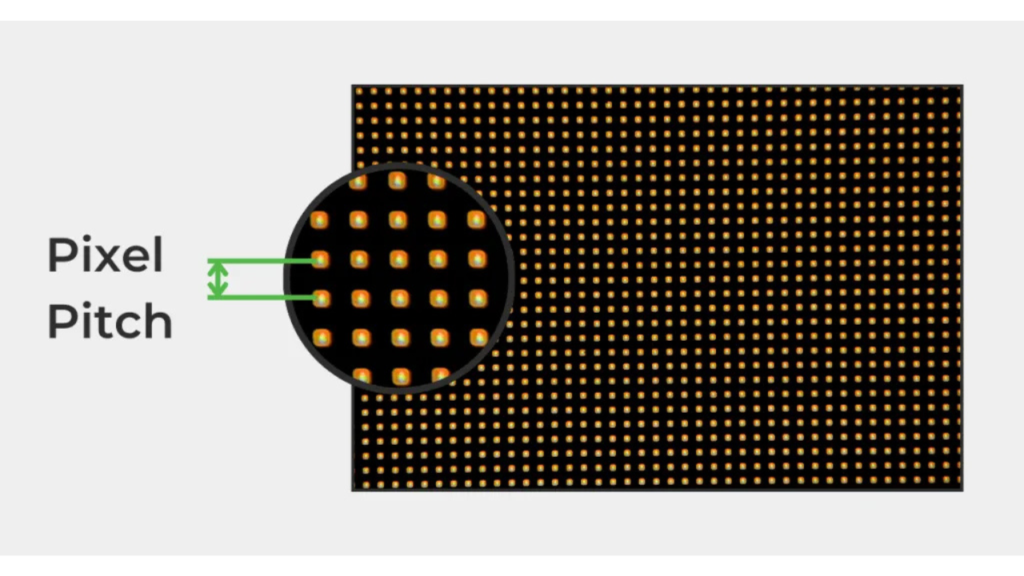
The pixel pitch is smaller and which implies that the pixel density is higher and therefore the resolution and images become sharper. Such is necessary in the instances where the details matter, such as in the case of retail setups, control rooms, or event backdrops, where close-up shots are often common.
. This is essential in cases where details are important, like in retail setups, control rooms, or event backdrops, where close-up shots are frequent.
Screen Size:
The resolution of the LED screen is dependent on its size. Bigger screens demand more resolutions to ensure that images are clear and not pixelated, particularly when the user is near the screen. Smaller screens, on the other hand, are usable with reduced resolutions.
Application Type:
The resolution is also a major concern, depending on the intended display of the LED display. An example is that digital signage and advertising billboards might not require ultra-high resolutions, but control centers and broadcast studios would require high-resolution screens for detailed monitoring. In water treatment systems, high-resolution LED control panels are used to display real-time water quality data, ensuring operators can clearly monitor turbidity, TDS, pressure, and system status.
Budget Considerations:
LED screens that are of higher resolution with smaller pixel pitch would cost more because both the material and manufacturing costs are higher. There must be a balance between the requirement of resolution and the budget issues, taking into consideration such factors as installation, maintenance, and costs of operations.
How to Choose the Right Resolution for Your Needs
Assessing Viewing Distance:
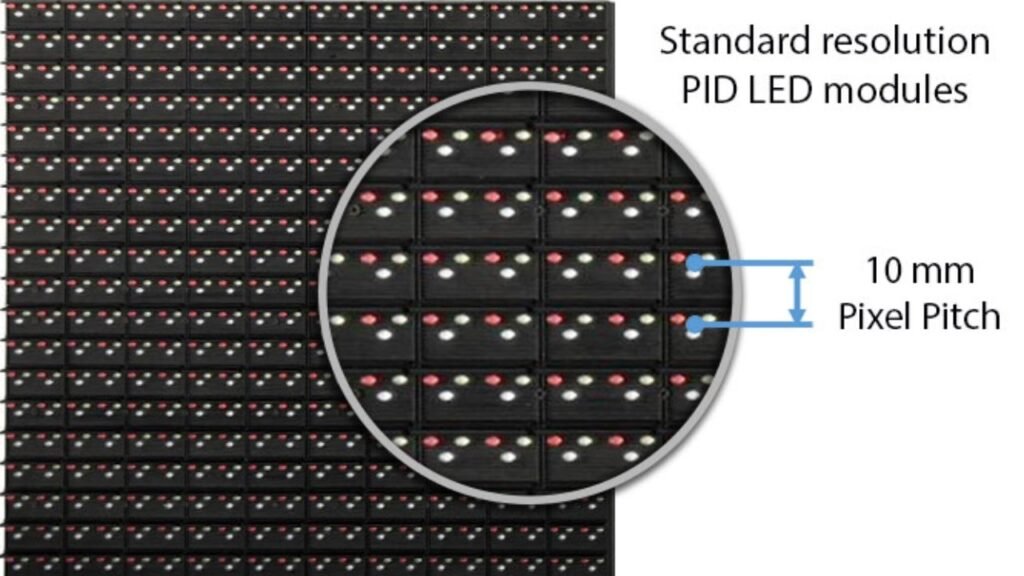
Pixel pitch has an effect on the optimal viewing distance. Reduced pixel pitch will enable the viewers to move closer and still observe the pixels without pixel enlargement. As an example, a P2.5 screen should not be seen any closer than 2.5 meters, and a P10 should not be seen closer than 10 meters.
Purpose of the Display:
The required resolution will depend on how the LED screen is going to be used. Higher resolutions, such as 4K, are necessitated where intricate information, such as control room data, is required, or even the high-end retail displays. On the other hand, when using a huge outdoor billboard or general advertisement, a resolution of 720p and 1080p is enough.
Content Type:
Content that is being presented influences resolution choice. To ensure clarity, high-definition video, complex graphics, or presentations with plenty of text require a high resolution. Simple animations or still images can be well displayed on screens with lower resolutions.
Future-Proofing:
To be able to last and be flexible to future changes in content and standards, it is necessary to invest in better display resolution. Although the initial price can be more expensive, a 4K or 8K display can be upgraded, allowing it to accommodate future technologies, which eliminates the need to upgrade much more.
Common Mistakes to Avoid
Overlooking Pixel Pitch:
When the pixel pitch is picked badly, it may cause a loss in image quality. A higher pitch w, will result in pixelation with closer viewing, whereas a smaller pitch will reduce the costs but not clearly benefit viewers further. In the example, a P2.5 display is suitable in a room where the audience can view the image closely, as compared to a P10 display that is used in the billboard placed in the open air.
Mismatched Content:
Projecting low-resolution images on a high-resolution screen results in low-quality images. Make sure that what you are putting onscreen is as sharp as the resolution capabilities of that screen. To take the case of blowing up a 720p picture to a 4K display, the pixels become obvious, and the details are lost.
Ignoring Environmental Factors:
The performance of LED screens is highly affected by the environmental conditions. The brightness of outdoor displays (5,000-7,000 nits) should be high to see them in the sunlight, and indoor screens only should reach about 500-1,000 nits.
Conclusion

The resolution of the LED screen is significant in order to reach the best visual performance. The proper pixel pitch and resolution allow the clarity and improve the experiences of the viewers, and this can be achieved by considering the optimal pixel pitch and resolution to use in your application. In case of high-quality LEDs, screens, IvanLED is the solution to your problem. Contact us now in the present day and find out.
FAQs
What is the ideal pixel pitch for indoor LED screens?
In the case of indoor LED screens, 1.5mm to 3mm in pixel pitch is the best. It guarantees s high image quality at short viewing distances, hence suitable in retail displays, event screens, as well as control rooms.
Can I upgrade the resolution of my existing LED screen?
No, to change the resolution of a current LED screen, one needs to replace the experience lenses. Usually, it is simply not possible to upgrade the resolution without changing components, such as the LED modules and control system.
Is 8K resolution necessary for home entertainment?
The resolution of the screen, that is 8K, gives an amazingly sharp image, and 4K resolution is more than what is needed when considering large-sized screens and professional purposes. 8K screens are perfect when dealing with large screens, and also when dealing with professional use.
How does pixel pitch affect outdoor LED displays?
Outdoor LED displays typically have a larger pixel pitch, such as P8 or P10. These pitches are more visible from a distance, and they are cheaper. Large screens can be used in billboards or other big advertisements with high pixel pitch screens.
What is the relationship between screen size and resolution?
Screen size is almost equal to the resolution. The bigger the screen used, the higher the resolution, so that the image does not lose its sharpness. To take an example, a 65-inch screen is recommended to use a 4K resolution rather than a smaller screen, which will not pixelate.