










What is 3D Technology?
3D means Three-Dimensional, which refers to using techniques to create a three-dimensional effect on the screen, giving you a sense of depth. It relies on the fact that your eyes see slightly different images, which your brain then merges to perceive a three-dimensional scene.
Currently, 3D can be achieved in several ways, including Polarized 3D, Active Shutter 3D, Dolby 3D, and Autostereoscopic 3D. Most of the 3D movies we talk about today are RealD 3D, which is a type of Polarized 3D, and over 80% of cinema 3D screenings use RealD 3D.
RealD 3D’s working principle is that the images are processed through a circular polarizer, so that when you wear 3D glasses, the left eye sees only the left-eye image and the right eye sees only the right-eye image. The brain combines the two images, making the scene appear more lifelike to your eyes.
What is IMAX?
IMAX is the abbreviation of Image Maximum, which usually refers to a cinema technology standard developed by IMAX Corporation, including a giant screen with a width of over 630 inches and a height of over 400 inches, specialized projectors, sound system, and seating.
IMAX can be divided into several types: traditional film IMAX, digital IMAX, IMAX Laser GT, and IMAX Dome. Moreover, IMAX can play both 2D and 3D content. In most cinemas, the most common type is Digital IMAX. It uses two projectors, and the projected image generally reaches 4K resolution after being combined.
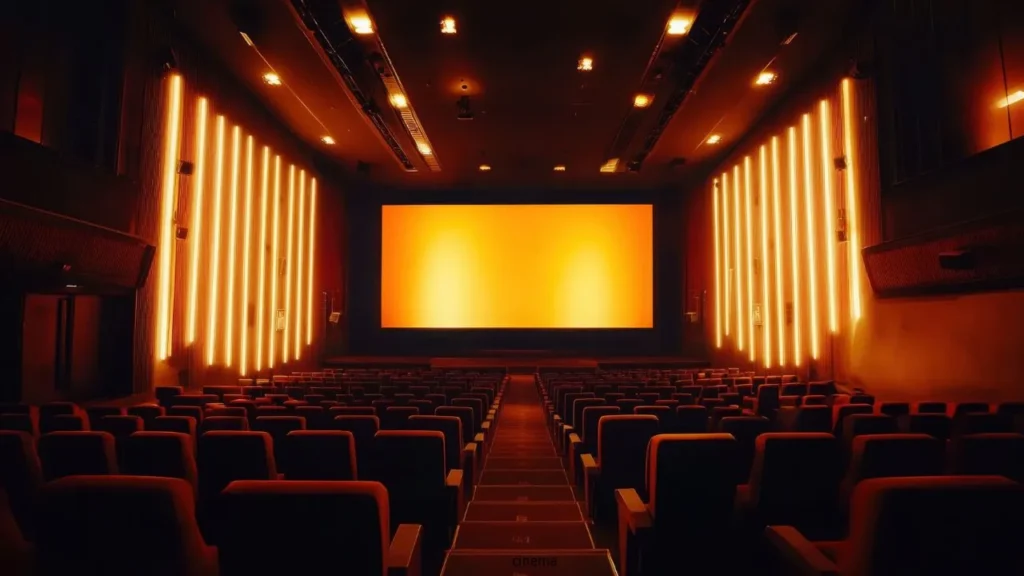
Differences Between RealD 3D and IMAX 3D
Size of Screen
Normal 3D screens are generally 400 inches in width and 200 inches in height, whereas IMAX theater screens are often two times larger or more.
Playback Requirements
Ordinary 3D has low requirements and can be shown in most cinemas, while IMAX 3D demands high-end facilities, including dual or laser projectors, dedicated sound systems, and calibration setups to ensure the immersive giant-screen experience.
Three-Dimensional Effect
The principle of RealD 3D perception is the same for regular 3D and IMAX 3D, but in fact, there are some differences between them in the 3D effect. Because of its massive screen, higher brightness, higher resolution, and professional-grade audio system, IMAX 3D provides stronger depth perception and a more immersive experience.
Sound Equipment
Most standard cinemas use a 5.1 audio system for RealD 3D movies, which includes five full-range channels and one low-frequency channel. IMAX typically uses around 12 channels, creating a far more immersive sound environment.
Ticket Price
Due to the high costs of IMAX projection hardware, such as screens and audio systems, and cinemas sometimes need to pay additional IMAX licensing fees, IMAX 3D tickets are significantly more expensive than regular 3D tickets.
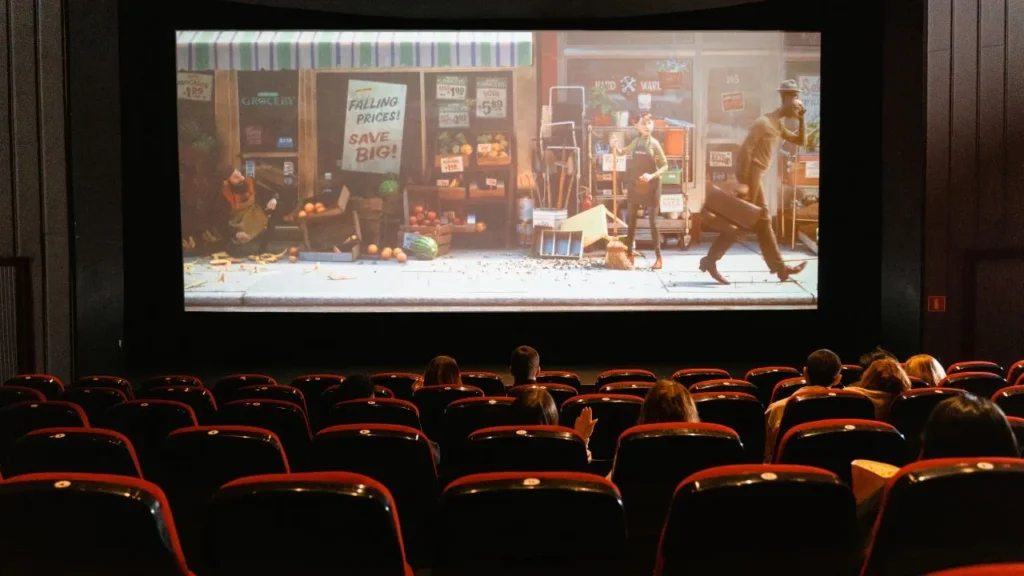
Main Usage Scenarios for 3D and IMAX
3D Technology
3D Billboards of Marketing
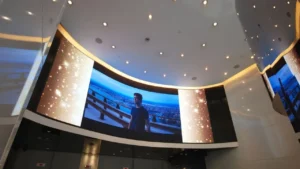
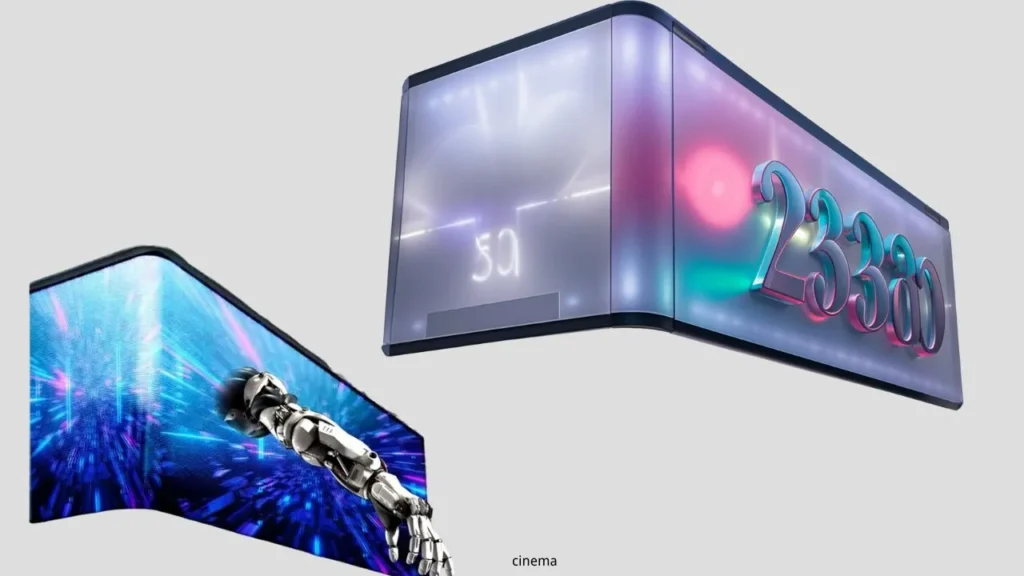
Glasses-free 3D and RealD 3D work on the same principle, and the difference is that glasses-free 3D doesn’t require any eyewear. It’s commonly used on large commercial displays, for example, to show details of shoes or phones during Nike or Apple product launches.
AR and VR
VR (Virtual Reality) allows users to experience three-dimensional space and a sense of depth through a head-mounted display (HMD), such as VR games and VR immersive experiences.
AR (Augmented Reality) adds virtual 3D elements to the real world, enhancing your sense of the environment. For example, in some museums, AR is often used to let visitors interact through their phones or AR glasses, enabling 3D reconstructions of historical buildings.
Real Estate Property Showcase
In some real estate sales offices, 3D digital showrooms are often set up, allowing clients to explore the layout and details of a property from all angles before entering the actual model home.
IMAX
The Cinema
The most typical application of IMAX is in cinemas, where it provides audiences with a superior viewing experience.
Theme Park
Some theme parks, like Disney and Universal Studios, use IMAX screens to give visitors virtual adventures or roller-coaster films, making them feel as if they are in a whole new, immersive world.
Industrial Simulation
IMAX can also be used in scientific research and industrial fields for high-precision simulated scenarios, such as flight simulation, urban planning, and industrial design.
Which Movies are Better Suited for IMAX?
Sci-Fi Films
Movies with lots of spectacular special effects are best experienced in IMAX, which allows you to experience much more realistic and stunning visuals.
Animation Films
The animation films already have high-resolution images, and playing them in IMAX can better showcase the colors and details of the movie.
Action Movies
Action movies, such as the Fast& Furious series, are better suited for IMAX screenings. The larger screen lets you see clearer action details, and the more advanced audio makes you feel like you’re right in the middle of the scene.
3D or IMAX 3D, How to Choose?
If you want to screen movies with grand scenes, lots of special effects, and sweeping shots, and you have a sufficient budget, use IMAX 3D. On the other hand, if you want to keep costs lower, or the movie doesn’t demand high visual quality, standard 3D will suffice.
FAQs
Are the maintenance costs for 3D and IMAX 3D projection equipment significantly different?
Yes, IMAX theaters are more expensive than regular RealD 3D cinemas in both purchase and maintenance costs, including projector upkeep, regular bulb replacement, screen calibration, labor, and venue maintenance.
Is it necessary to wear glasses when watching 3D movies?
Except for Glasser-free 3D, almost all 3D formats require wearing 3D glasses, including RealD 3D, Dolby 3D, and others. Because glasses-free 3D currently has high costs and technical requirements, it is only suitable for certain advertising, marketing, or educational experiences, and ordinary cinemas generally do not have the budget to install it.
Will watching 3D movies cause eye fatigue?
To some extent, 3D can cause visual fatigue. Common RealD 3D movies, due to reduced screen brightness, can cause dry eyes if watched for a long time. However, IMAX 3D generally causes less eye strain than standard 3D due to its higher brightness and optimized seating layout.
Is IMAX definitely better than 3D?
IMAX 3D often provides a better experience than RealD 3D in terms of screen size, resolution, sound, and overall immersive experience. However, due to the high investment and maintenance costs, even with higher ticket prices, IMAX theaters may face losses if audience numbers are low.
What equipment is needed for a family to watch 3D movies?
If you want to watch 3D movies at home, you should prepare a screen or projector that supports 3D, compatible audio equipment, and the corresponding polarized 3D glasses. Some home displays support glasses-free 3D, but the screen may be small.
Can 3D movies be played on smart TVs or streaming platforms?
Some streaming platforms like Netflix, Amazon Prime, and Disney+ offer 3D content, but you usually need VR or special devices to view it. Most smart TVs do not support native 3D playback, and regular streaming on these TVs usually only shows a 2D version.
IvanLED: Customize the Screen for Your Cinema
IvanLED is a professional display manufacturer providing high-quality displays that can customize screens of various sizes and resolutions for you, including RealD 3D displays, glasses-free 3D displays, and IMAX large screens. No matter you want custmize what kind of screen, such as cinema screens, commercial displays, or museum large screens, we have extensive experience in customization. Feel free to contact us!