









The Function of Local Dimming
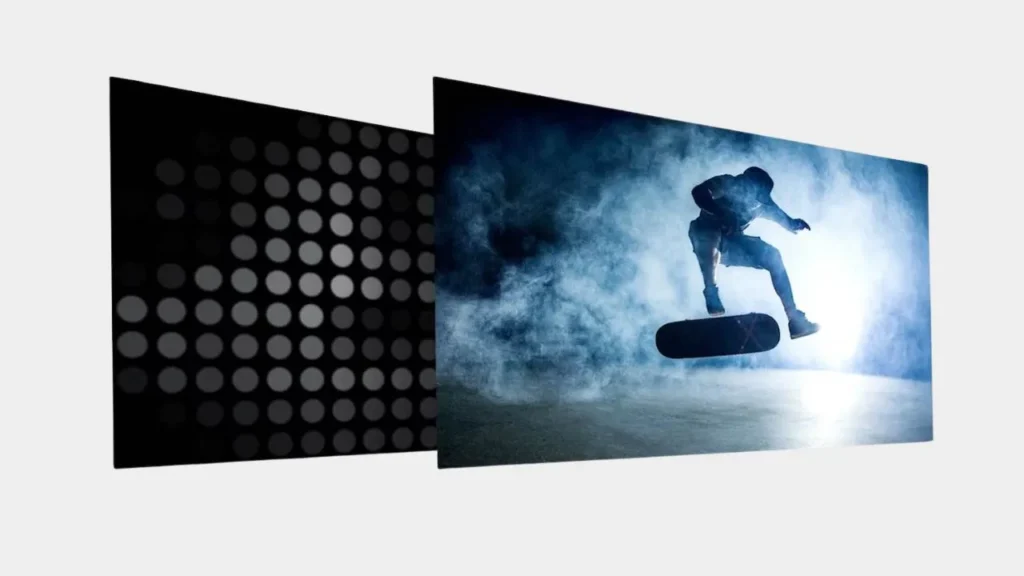
For traditional screens, which can only adjust brightness as a whole, excessive brightness may cause overexposure, while insufficient brightness makes it difficult to see dark details. In addition, the contrast of these screens is very low, resulting in colors appearing muddy.
The rise of local dimming technology addresses this issue by dividing the screen backlight into multiple independently controllable zones. In this way, bright areas can remain highly illuminated, while dark regions can have their brightness dimmed or even turned off, making blacks appear truly black instead of grayish.
Full Array Local Dimming
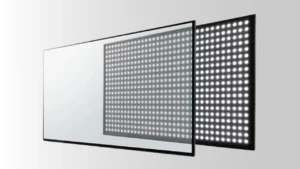
Full Array local dimming (FALD) is generally used in LED-backlit LCDs. The LCD panel itself cannot emit light, and it provides illumination by arranging LCDs behind the screen. There are two main ways to install the backlight: edge-lit, where LEDs are mounted around the screen edges, and full array, where LEDs are evenly placed behind the entire panel.
Typically, under a Full Array backlit system, the LEDs behind the screen are divided into multiple zones, each of which can control brightness independently, typically ranging from dozens to hundreds of zones.
Mini LED Local Dimming
Mini LED is developed based on Full Array Local Dimming. It uses much smaller individual LEDs and a greater number of LEDs, resulting in more local dimming zones and improved dimming precision.
Due to the larger number of LEDs and more precise dimming zones, Mini LED displays involve a more complex manufacturing process and higher production costs, and are therefore typically used in high-end applications or professional video production.
Differences between the Full Array and Mini LED
LED Size
For backlight LEDs, Full Array uses conventional-size LEDs, typically in the 300–1000 μm range, while Mini LED uses smaller LEDs, usually around 100–200 μm. In addition, although the LED sizes differ, both technologies use traditional backlight packaging methods, and their protection levels are generally similar.
Local dimming Zones
Full Array typically features 32, 64, 96, or 128 zones, with relatively large zone sizes, which can sometimes result in noticeable granularity. In contrast, Mini LED local dimming offers a much higher number of zones, commonly 256, 512, or even more than 2,000, making granularity almost imperceptible.
Local Dimming Accuracy
When the backlight performs local dimming, the higher the dimming precision, the more accurately the brightness of light and dark areas can be controlled, which effectively reduces light leakage and can lead to a better visual performance. Because of the smaller LEDs and more zones, Mini LED local dimming can be performed with greater precision, and it is significantly better in dimming performance than Full Array.
HDR Performance
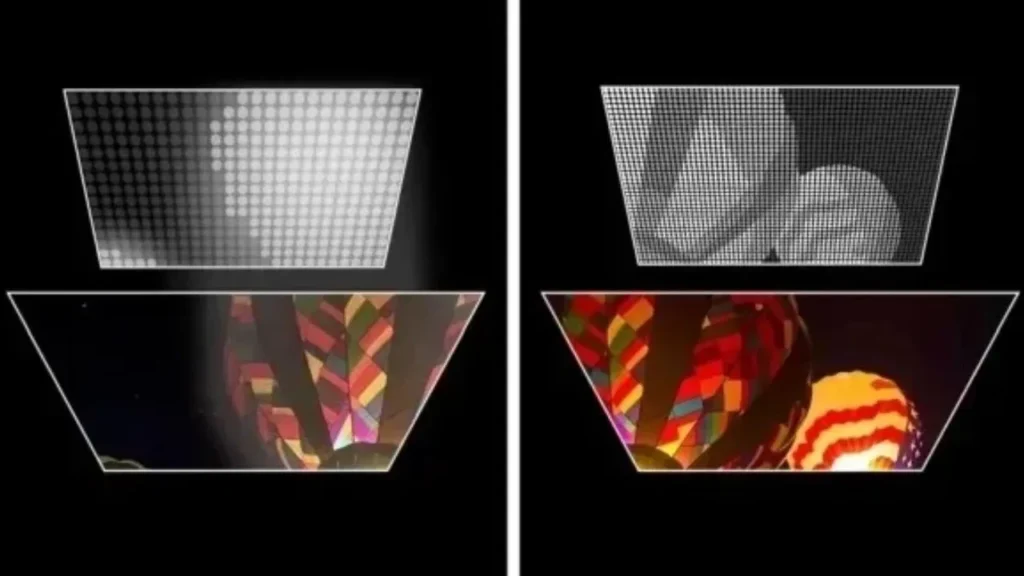
HDR includes several aspects of a display, such as peak brightness, black level, contrast, and grayscale performance. There is no doubt that Mini LED performs better in these aspects, thanks to finer dimming zones and reduced light bleed. Moreover, Mini LED also employs more sophisticated algorithms, which allow faster and more precise dynamic adjustment of zone brightness, making the contrast between dark and bright areas clearer.
The Cost of Screens with the Two Technologies
Compared to Full Array, Mini LED backlight modules are more expensive, and their manufacturing and dimming processes are also more complex. Moreover, due to their high-end positioning, manufacturers often equip Mini LED displays with additional features, such as enhanced HDR, wider color gamut, and higher brightness. As a result, Mini LED screens are usually priced higher.
For example, for Samsung, a 65-inch Full Array TV is priced at approximately $1,500, while a Mini LED backlight TV costs around $3,000.
Thickness of the Screen
The LED chips used in Mini LED backlights are very small, which allows the display modules to be designed thinner. However, due to the increased number of LEDs, Mini LED displays also require a more effective heat dissipation design. The final module thickness still depends on the manufacturer.
Power Consumption
Because the zones are finer and local dimming is more flexible, part of the unnecessary backlight can be reduced. Therefore, Mini LED has greater potential for energy savings. However, Mini LED backlights use more LED chips and more complex driving circuits and algorithms. If all zones are lit, their power consumption may be higher than that of Full Array.
| Item | Full Array | Mini LED |
| LED Size | 300–1000 μm | 100–200 μm |
| Local Dimming Zones | Dozens or even hundreds | Hundreds or even thousands |
| Local Dimming Accuracy | High | Much higher |
| HDR Performance | Good | Excellent |
| Cost | Affordable | Expensive |
| Thickness of the screen | Generally thicker | Thinner in most cases |
| Power consumption | more power-efficient at high brightness | more power-efficient at normal brightness |
Drawbacks of Full Array and Mini LED
Blooming
Pixel-level dimming cannot be achieved; each zone in conventional local dimming has to drive multiple pixels. When some pixels require high brightness while others require deep black, the boundaries between pixel brightness levels can become blurred, resulting in light spots and halo effects.
Moreover, if the number of dimming zones increases without corresponding algorithm optimization, the display may fail to adjust zone brightness dynamically in time according to the content, resulting in brightness lag and blooming.
Insufficiently Smooth Transition
During playback, changes in image brightness are generally expected to be continuous and smooth. However, when the number of dimming zones is high, overly frequent brightness adjustments can lead to luminance instability, that is, brightness may rise or fall abruptly and unreasonably.
This issue occurs more frequently in Mini LED local dimming with a large number of zones, while it is rarely seen in technologies with fewer zones, such as Full Array.
Limited Luminance of High-brightness Areas
Higher backlight brightness makes light leakage more likely, and sudden brightness increases can also cause flicker. Also, the power supply may be unable to support multiple zones operating at full power, which can lead to overload. Moreover, prolonged high-brightness operation of LEDs can raise chip temperature, resulting in reduced lifespan.
Therefore, for displays that support local dimming, system-level brightness limitations are often required to ensure visual quality, thermal performance, and long-term reliability.

Usage Scenarios of Full Array and Mini LED
Full Array Local Dimming
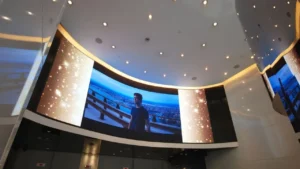
Compared with traditional displays that only support global dimming, full-array backlit displays offer higher contrast, better HDR performance, and superior image quality in indoor environments. They are commonly used in mid- to high-end televisions, conference displays, and indoor commercial displays in shopping malls.
Mini LED Local Dimming
Mini LED displays, which offer higher dimming precision, superior HDR performance, slimmer form factors, and reduced blooming, are suitable for some more high-end cases, such as professional video production, home theater applications, and high-end laptops and tablets.
Tips for Choosing
For Retailers and Brand Owners
In terms of product positioning, if you aim to emphasize mainstream appeal, cost-effectiveness, or a more stable supply chain, Full Array technology is an ideal choice; If you want to emphasize a more premium positioning or deliver an ultimate viewing experience, choose Mini LED dimming.
In terms of profitability, if you prefer faster turnover, lower risk, and more stable sales, choose Full Array; Mini LED offers higher profit per unit but slower turnover.
For Integrators
Full Array is more suitable for scenarios with limited budgets and less demanding HDR performance, such as large conference rooms, exhibition halls, advertising displays, and everyday monitors and TVs.
Mini LED, with a higher price point, offers a premium visual experience and is ideal if your budget allows and you want to deploy it in high-end environments, such as luxury conference rooms or home theaters.
FAQs
Does the Mini LED backlight have a longer lifespan than the Full Array backlight?
Yes. Temperature is almost the most critical factor affecting LED lifespan. Mini LED bulbs, being smaller in size and benefiting from better thermal design, operate at lower temperatures even at the same brightness. Moreover, because local dimming is supported, LEDs in dark zones usually carry lower current and lighter load, which further extends their lifespan.
Will having more backlight zones cause uneven screen brightness?
Generally, the more zones a display has, the better its brightness uniformity. However, simply increasing the number of zones without corresponding algorithm optimization may cause local dimming to respond slowly, resulting in uneven brightness or noticeable halo effects.
Is the maintenance cost of a screen with local dimming technology high?
Due to the more complex structure of displays with local dimming, which includes a larger number of LEDs, more sophisticated driving circuits, built-in algorithms, and enhanced thermal management, there are more potential points of failure.
However, for daily use, the screens seldom fail, so the maintenance cost of local dimming screens is only slightly higher than that of standard backlit displays.
IvanLED: Customise Your Local Dimming Solution
If you want to customize a display capable of local dimming, IvanLED is your ideal choice. We are an experienced LED display customization manufacturer, with over a decade of experience and a team of professional engineers. Moreover, IvanLED has a strict quality control team that supervises from the component level to ensure zero-defect and high-performance displays.
If you have any questions about LED displays, feel free to contact us!