











The Principle of 3D Playback
The positions of your two eyes are about 6.5 cm apart, and the images seen by the left and right eyes have slight differences. Based on this difference, your brain can generate a sense of depth through calculation.
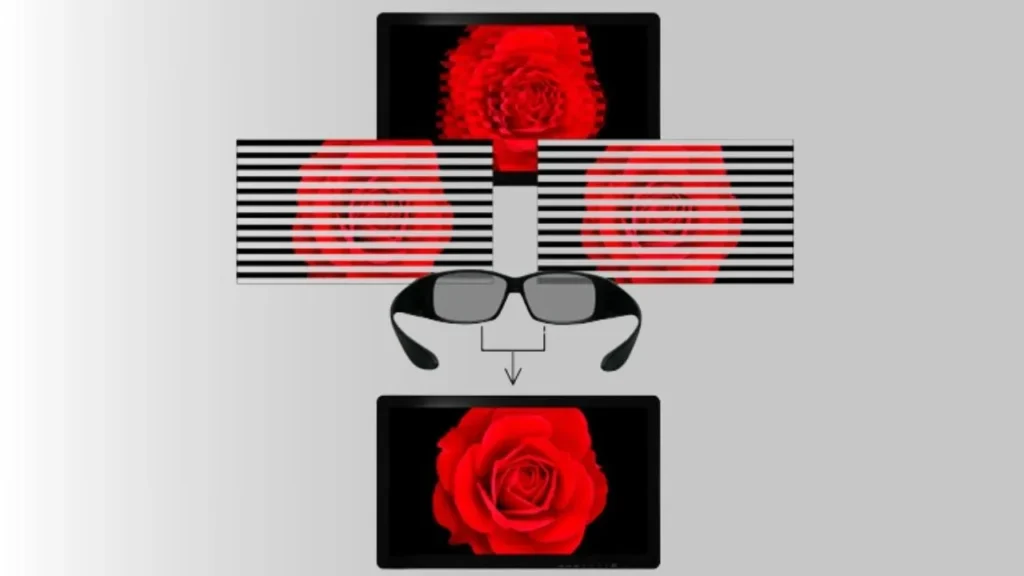
3D videos are essentially the same. They generally contain two sets of images, corresponding to your left and right eyes respectively, creating a sense of depth through the horizontal disparity of the images. Common implementation methods include side-by-side images for the left and right eyes, top-and-bottom arrangement, and alternating display.
Is a Special Screen Required to Playback a 3D Video?
3D Technologies That do not Require Special Screens
Some 3D technologies can be realized using ordinary LCD, OLED, or LED displays. Active shutter 3D achieves the 3D effect by rapidly alternating the left- and right-eye images. Anaglyph 3D allows viewers to see stereoscopic content through color filters. Each eye of a VR/AR headset has an independent display channel. Therefore, these types of 3D technologies do not rely on special screens.
3D Technologies Rely on Special Screens
Polarized 3D
For polarized 3D, an ordinary white screen scatters polarized light, mixing the images seen by the two eyes. A special polarized screen can maintain the polarization direction and preserve the stereoscopic effect.
Autostereoscopic 3D
Without wearing glasses, directing different pixels to the left and right eyes requires the use of optical separation technology. Moreover, the pixels on the screen need to be precisely aligned with the lenticular lens, otherwise ghosting, blurring, or dizziness may occur. These requirements cannot be met by ordinary LCD or LED screens.
How to Make a Polarized 3D Display?
Make a 3D video
Polarized 3D generally uses dual-lens stereoscopic shooting with a 6.5 cm interocular distance. After shooting, the images are aligned and the disparity is adjusted through software. Besides that, 3D images can also be captured with a single lens, using software to produce separate left- and right-eye views.
The Components of the Display
If you want to play polarized 3D videos, apart from the screen, you need to prepare a single or dual projector to output the left- and right-eye images alternately or simultaneously, equipped with a polarization switching device; a polarization modulator to assign different polarization states to the left and right frames; polarized glasses; and synchronization calibration equipment.
Choose a Screen with Suitable Polarization Extinction Ratio(PER)
When selecting or making a 3D display, the following factors should be considered:
Polarization Extinction (PER)
PER is the screen’s ability to maintain the polarization of incident light. The higher this value, the better the separation effect between the left and right eyes, and the clearer the stereoscopic image is.
Gain
Gain is a common metric used in cinemas. It refers to the multiple of intensity by which the screen reflects projected light toward the audience. A high gain value allows polarized light to remain bright enough after passing through the glasses, but excessively high values can cause uneven brightness. The gain of a typical commercial screen is around 1.0–2.0.
Uniformity
Screen uniformity is the consistency of brightness and polarization retention across the entire screen surface. It ensures that viewers in the front and side rows have no noticeable difference in the stereoscopic experience. Qualified screens generally have a variation rate below 10%.
View Angle
Since the screen is viewed from various angles, it needs to maintain high polarization within a certain range of angles, generally within 30 degrees; otherwise, the stereoscopic effect decreases when viewed from the side.
Degree of protection
In the daily use of the screen, especially in cinemas, damage such as friction or moisture exposure is inevitable. Therefore, the screen itself also needs features like moisture resistance, mildew resistance, abrasion resistance, and cleanability.
Material
Ordinary white screens are not suitable for 3D display. When you want to build a polarized 3D display, materials with high reflectivity and good polarization retention are usually used, such as metallic screens with surfaces containing metal particles or thin aluminum layers, or white screens with polarization-preserving coatings.
Commissioning
After completing the assembly of the screen, you need to perform the final debugging. You need to check hardware aspects such as whether the projector and screen models are compatible, whether the screen specifications meet expectations, and whether the type of 3D glasses is correct. In addition, geometric alignment, brightness adjustments and color adjustments are also important.
How to Make a Glasses-free 3D Screen?
Taking the lenticular lens as an example, the process of making a glasses-free 3D screen is as follows:
Confirm the Number of viewing angles
The number of viewpoints refers to the number of directions from which the full 3D content can be seen. The more viewpoints there are, the more angles from which the 3D content can be viewed, and the more three-dimensional the perception is.
For fixed viewing locations, such as display cabinets or digital signage, 2 or 4 viewpoints suffice. For large outdoor LED screens, 8 or 12 viewpoints are more suitable.
Determine the Display Medium
Screens that can support lenticular lens technology mainly include LED screens, LCD screens, and OLED screens. LED screens have high brightness and relatively large pixel pitch, making them suitable for outdoor commercial screens.
OLED and LCD have average brightness and are more suitable for indoor use. Among them, OLED has better color performance and clarity, making it suitable for higher-end options.
Design the Lenticular Lens
The principle of lenticular lens implementation is to attach a lenticular lens array in front of the LED array. After determining the screen parameters, such as size, resolution, and number of viewing angles, the engineers calculate the required lens parameters, including lens pitch, focal length, and curvature, select suitable lens materials, and perform optical simulation and optimization.
Optical Simulation
After the preliminary calculation of the lens parameters, engineers need to simulate the light distribution, brightness uniformity, and other visual effects in simulation software such as Zemax or LightTools to prevent loss. And they also need to continuously adjust the parameters until the desired effect is achieved, before putting the lenses into production.
Packaging and Testing
After processing is completed, the display module needs to be encapsulated to protect against dust and water. In addition, a frame for protection and thermal management must be added.
Finally, engineers need to test the screen, including optical performance tests and functional tests, such as viewpoint testing, color adjustment, and dynamic image refresh testing. After these steps are completed, the screen can be prepared for packaging and transportation.
Types of 3D Technologies
Anaglyph 3D
Anaglyph 3D refers to encoding the images for the left and right eyes into different color channels, usually red and cyan. Users wear corresponding color-filter glasses, and each eye can see a different image, thereby creating a sense of depth. The sense of depth seen with this method is not strong, and it has gradually been replaced.
Active Shutter 3D
Under Active Shutter 3D, display rapidly alternating of different images while synchronizing the shutters of the glasses, and the left and right eyes can see different images, which create a sense of depth.
Polarized 3D
Polarized 3D displays the left-eye image with a vertical polarization direction and the right-eye image with a horizontal polarization direction. After wearing polarized glasses, each eye only sees the corresponding polarized image. Then, the brain calculates and presents the stereoscopic image to you.
It is further divided into Linear Polarization and Circular Polarization. The most common RealD 3D in cinemas belongs to Circular Polarization, which has the advantage of maintaining the 3D effect even when you rotate your head.
Autostereoscopic 3D
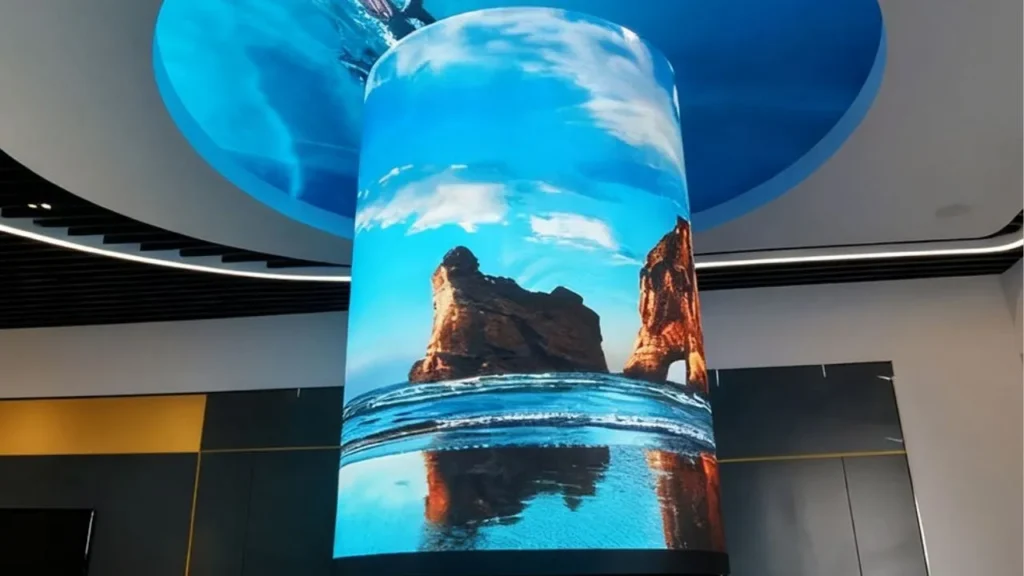
Glasses-free 3D includes three technologies: Parallax Barrier, Lenticular Lens, and Light Field. At present, due to its good light transmittance and resolution, the lenticular lens solution is used by the vast majority of glasses-free 3D screens.
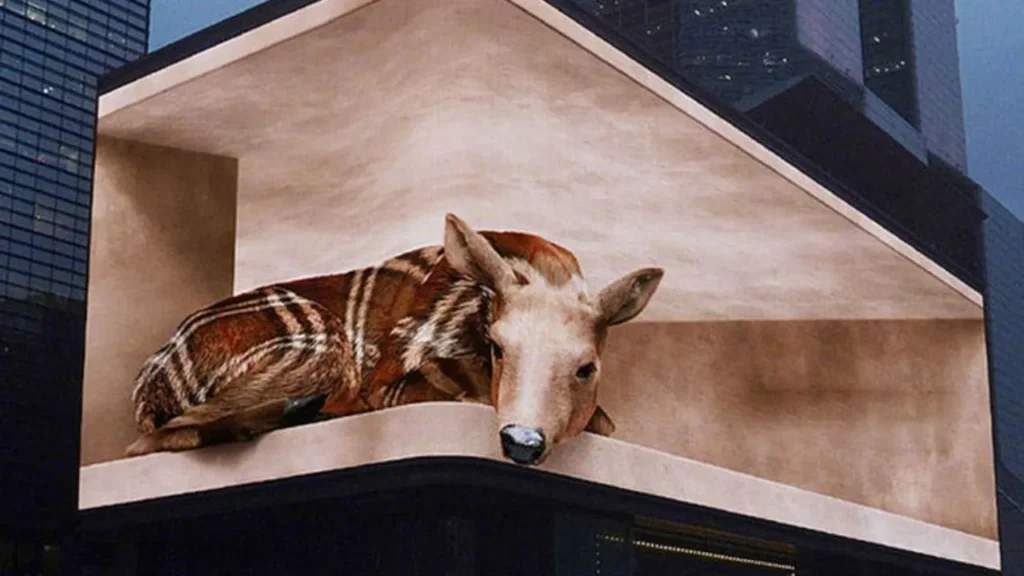
Visual Deception 3d
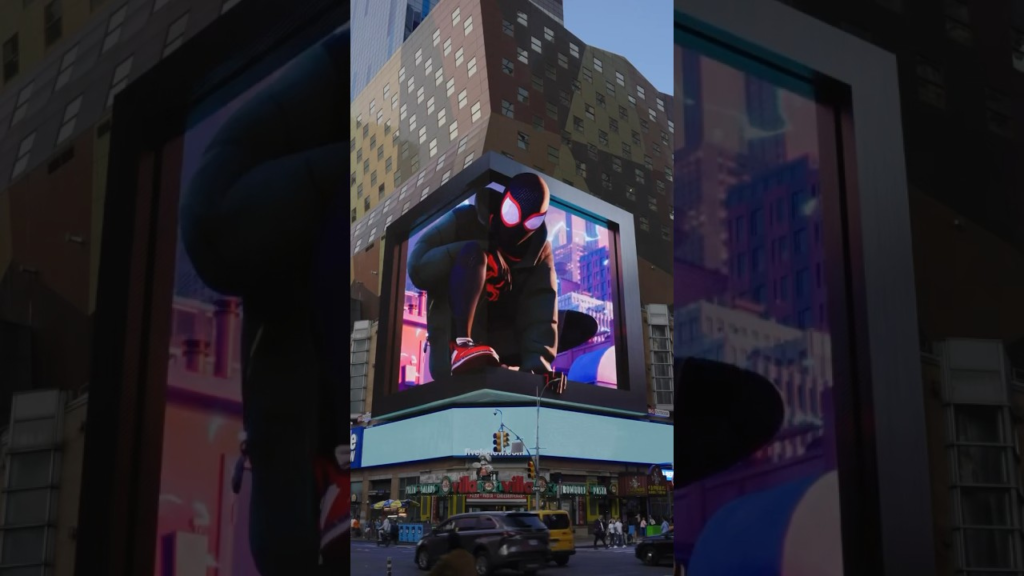
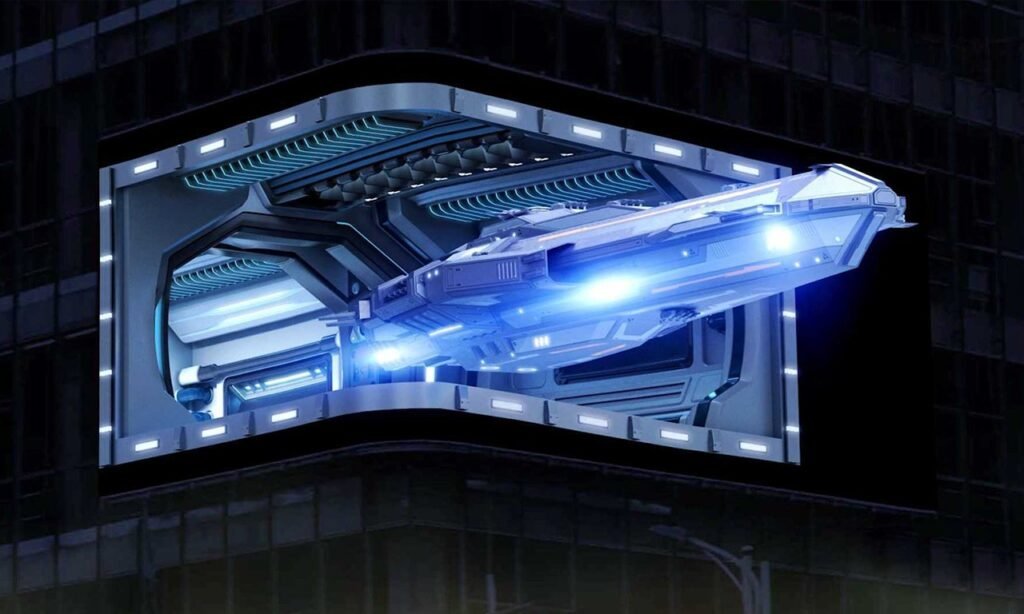
Strictly speaking, visual deception 3D is not a true stereoscopic display technology, but rather a technique that makes 2D videos appear to be 3D through visual illusion.
Under this technology, the left and right eyes see the same 2D image. However, engineers use techniques such as strong perspective, occlusion, and motion parallax to create a certain sense of depth. In everyday life, most 3D content you can see on commercial displays is visual deception 3D.
AR/VR
AR/VR technology is also not true 3D technology. After you put on the headset, the content seen by your two eyes shows a slight difference, and it is this difference that creates the sense of depth. It uses a slight horizontal offset between two images. After processing by the brain, and with the viewing angle changing in real time with head movement, it makes you feel immersed.
FAQs
What is the function of 3D glasses in 3D displays?
After both the video and the screen are ready, 3D glasses are the final step that allows you to perceive the stereoscopic effect. It creates a difference between the images seen by the left and right eyes by using color filtering, high-speed switching, and polarization in different orientations.
Can a 3D display play regular 2D content?
Yes. Most 3D technologies, including glasses-free 3D, Active Shutter, and Anaglyph, are generated based on 2D images. Therefore, 3D displays can be backward compatible with 2D content.
Does 3D display cause eye strain?
Yes. Under insufficient brightness and after prolonged viewing, you may experience eye strain, or even dizziness and headaches. Especially Anaglyph 3D, due to color conflicts, is more likely to cause eye fatigue. To reduce this effect, you can use high-brightness, high-refresh-rate display devices and avoid prolonged viewing.
Does 3D video playback demand high bandwidth?
Yes. 3D video playback typically requires higher bandwidth than 2D. This is because, compared to 2D, 3D needs to transmit an additional set of image data. Therefore, the bandwidth required for 3D video transmission is approximately twice that of 2D video.
How much does the installation and maintenance of 3D displays cost?
The installation and maintenance costs vary for different types of screens. For installation, autostereoscopic 3D displays have high installation costs, while screens such as Active Shutter and Polarized 3D have relatively lower installation fees. For maintenance, 3D displays are much more expensive than ordinary 2D screens because of regular calibration and cleaning.
Final Thought: Choose IvanLED as Your Reliable Supplier
IvanLED is a professional manufacturer with over ten years of experience, and we are also specialized in 3D LED screens. IvanLED can provide you with different screen specifications, including various pixel pitches, multiple brightness levels up to 12,000 nits, and IP66 or higher ratings. We can also customize different panel types, including flat rigid, flexible, curved, transparent, or others.
If you want to customize a 3D LED screen, please send us your inquiry!