










9 Easy Steps For Making LED Display Board
Gather Required Materials
Before you start the process of LED display board building, you have to buy some accessories. These all tools will help you to stay organized throughout the steps. Because, when you have everything ready at your workspace, you don’t need to search for missing items anymore. Below are the main components and equipment that you will need for making LED boards.
- Dial Clamp: Hold wires & parts tightly while working. It also keeps your hands free and makes your work stable and safe.
- Electric Hands-On Drill: You can use this drill to make holes in your board. With its help you can fix the display parts perfectly in position.
- Dot Board: Act as base for your LEDs and all other parts of the LED display board.
- Screwdriver: Thai tool can fix or remove screws when you assemble your display. You can easily install material and secure them properly with a screwdriver.
- Nose Pliers: You need to cut, bend and hold small wires in this project. So, a nose pliers tool was actually used for this purpose.
- LEDs Display Modules: You can show your customized message and other patterns on the LED display. It is also the main part of your LED display board.
- Header Pins: Header pins let you attach wires & devices easily. They also allow you easy repairs and changes whenever you need.
- Resister: To control the current flow to your LEDs. They protect your LEDs from burning out due to extra power load.
- Power Supply: Provide electricity to your LED display. It ensures your display lights up safely and works smoothly.
- Cabinet: Cabinet is the outer body that holds and protects your display components. It also gives your board a clean and professional look.
Calculate LED Display Screen Size
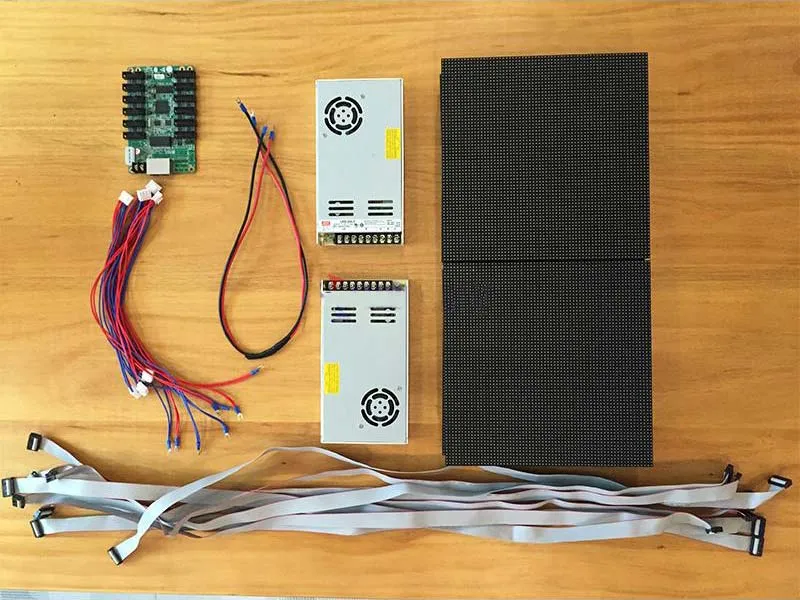
Well, it is important for you to consider the LED screen size. LED size and type will decide how big your display will look. The number of LED display modules which you need also depends on the screen size you decided. Also finalize the exact dimensions of your LED display board.
Further, you have to plan where your buyers want to place these LED display boards. For example, it can be indoors, outdoors, on a wall and at an event. Next, you should take the measurements of LED modules. Most of them are 16 cm x 16 cm and 32 cm x 16 cm.
For calculation of screen size, you have to multiply the module size by the number of modules you have. Following are simple formulas for this purpose if you use 4 modules in one row & 3 modules in one column.
- Width = 4 modules x module width
- Height = 3 modules x module height
Assemble the LED Display Frame
Now it’s time to build the frame of your project. This structure will work as a base for your display board. You can use multiple options such as: wooden, plastic and metal frame. It all depends on you, whatever is easy for you to handle at home. You can make holes on frame with an Electric Hands-On Drill.
But, you have to ensure that your frame should have the ability to hold LED modules to protect them from any damage. Moreover, don’t forget to leave a gap for wiring, power and extra parts. You should also check that the frame size exactly matches your screen size as well.
Set the Middle Keel Position
Keel is a strong support bar that works as the backbone of your display. Hence, when you add the keel, your frame won’t bend, twist and shake easily. To set the middle keel, you should first measure the center of your LED display frame.
You can do it with a measuring tape to find the exact halfway point. Then place your keel bar right in the middle of the structure. You should fix it with screws and brackets.
Install the LED Modules
Modules are the heart of your display, so you need to handle them carefully. Set each module inside the board frame and fix them side by side. You have to align these modules in a way that they should not be off from their position. The reason is it can spoil the overall look of your LED display board.
After the placements, you can fix it with screws. As a result, the display board is combined tightly and doesn’t disturb when you move or adjust it later. Also remember that you have to leave some space at the edges to connect power cables.
Complete the Wiring
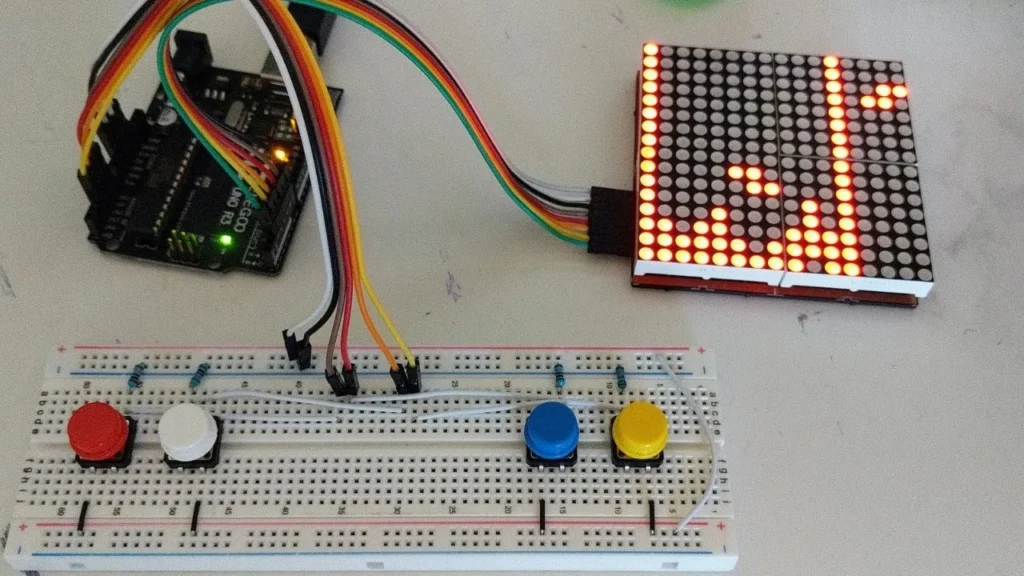
Next, install the wires carefully and connect positive / negative terminals of each module to the correct wires. You have to be careful that no wires cross each other. Therefore, you can use colorful wires for identification, such as red for positive and black for negative.
Once you have placed all the connections then secure the wires, don’t forget to add resistors where needed. This will protect your LED display board from any damage and short circuit. If you want a more secure connection, we suggest you can go for zip ties & small clips.
Additionally, all the connections should be tight and there are no loose ends too. Your display will function in flow when powered up if you install all cables in the right way.
Fix the Power Supply
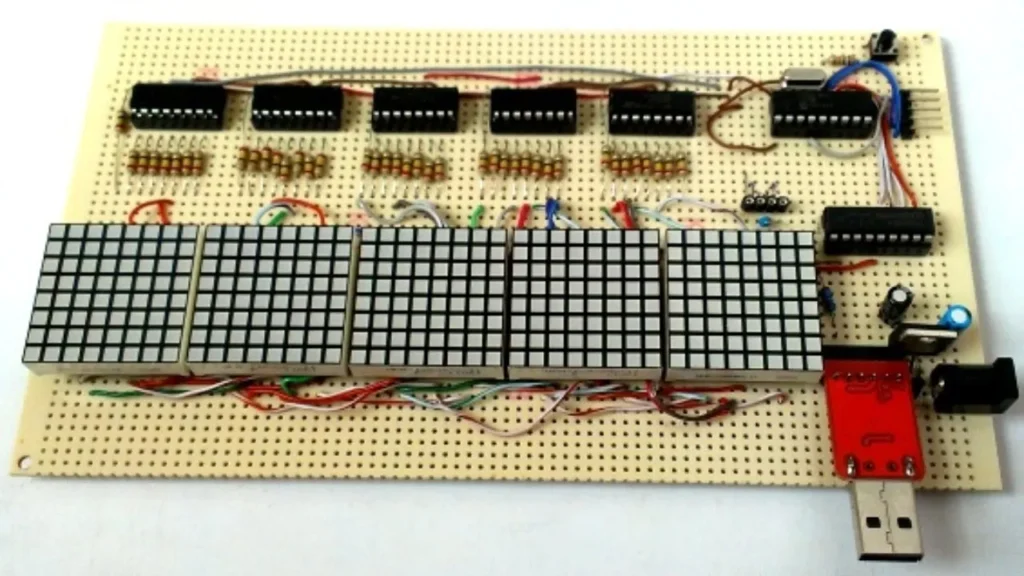
Power supplies are used to provide the right amount of electricity to your entire system. Therefore, it’s among the important steps which require your attention. First, pick an easy-to-reach spot inside your LED display body. Then you can fix the power supply unit at that position.
In addition, leave enough space around it for air to flow, so when it operates it can still stay cool. You can fix the power supply with multiple types of tools like screwdrivers and nose Pliers. Plus, you have to connect the power supply with the main wiring of your LED display.
Install the LED Control Card
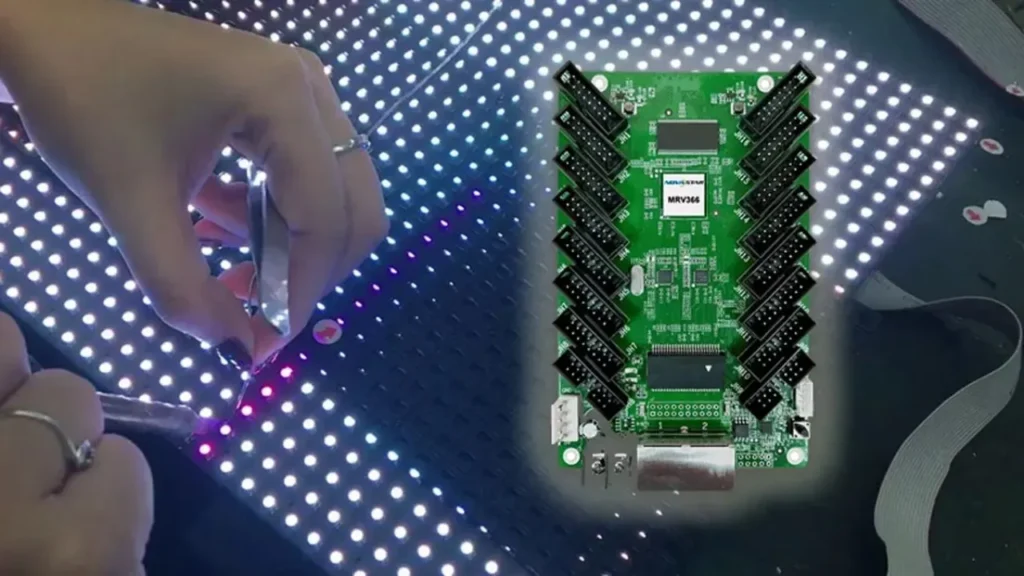
An LED control card is like the brain of your display board because it tells the LED modules what to show and how. You have to decide the perfect locations inside your frame where you can easily place control cards. Now, you need to carefully fix the control card by the use of small screws, dial clamps and header pins.
But once you set it, you make sure it’s tightly placed. So that it does not move when your display runs. Now, you can connect the data cables from the control card to your LED modules. These cables will allow your card to send signals to LEDs to show your message & pattern.
Test and Debug the Display
Finally, it’s time to test your LED display. For this, you can turn on the power and check if all the LED modules light up properly. You should also assess your display showing the message, text and pattern same as you planned.
However, If you see any lights not turning on and showing wrong colors. That means there might be a wiring mistake or loose connection. So you can fix any loose parts and replace damaged wires if needed. This final test will help to examine your project and you can easily identify errors.
Once everything looks good and works fine, your LED display board is ready to shine bright. When the system is off you can close your LED display inside the cabinet for protection.
To Summarize
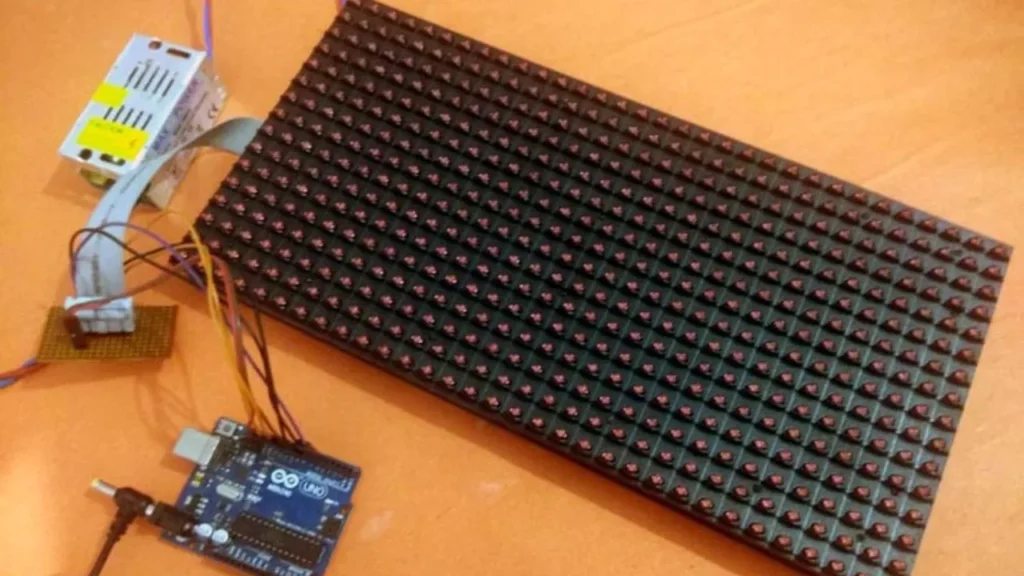
In conclusion, now you have a clear understanding of how to make an LED display board. You can see, if you use the right tools and do placements properly, you can create a display that works perfectly.
With careful installation and attention to detail, your LED display board will be ready to impress your customers plus serve its purpose very well.