










HD란 무엇인가요?
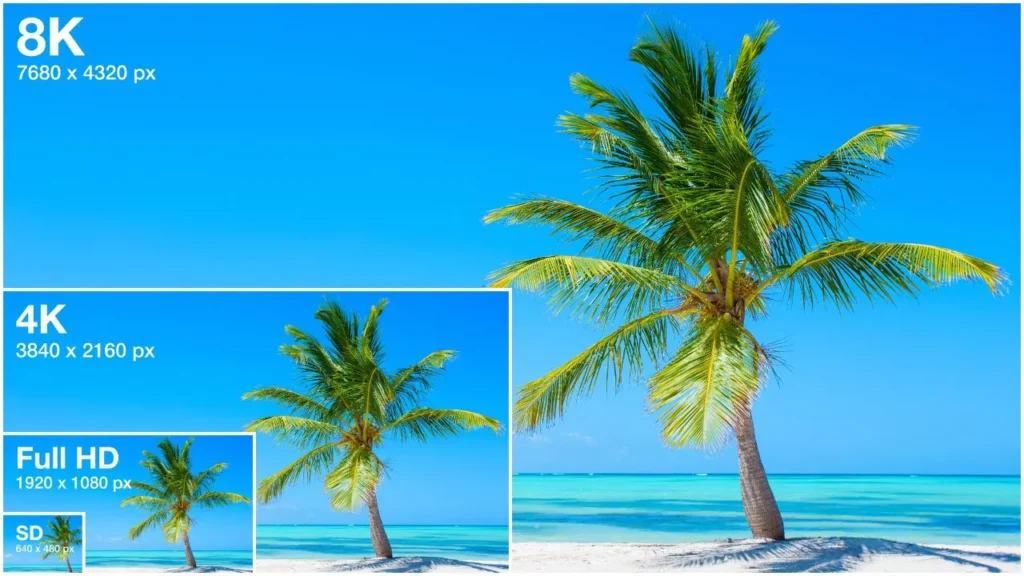
HD is the abbreviation of High Definition, and it is also known as 720p resolution. Generally, it refers to a screen with 1,280 pixels horizontally and 720 pixels vertically. HD evolved from standard definition (SD), that is, 480p. Compared to SD, HD has richer details and clearer displayed content.
However, nowadays, the application of 720p is becoming less and less common. On larger screens, higher clarity replaces it. Only some entry-level TVs, monitors, and mobile phones are still using HD clarity.
What is UHD?
UHD is also known as 4K UHD, which is the abbreviation of Ultra High Definition. Most consumers also call it 4k resolution. Its horizontal and vertical pixels are 3,840 and 2,160, respectively, with approximately 8.29 million pixels. The pixel count of UHD is nine times that of HD, making it clearer than HD.
The picture quality of UHD is extremely fine and performs exceptionally well on large screens larger than 50 inches. It is generally applied to some high-end TVs and monitors.
Difference between HD and UHD
The Fineness of the Picture
In terms of pixel count, UHD is nine times that of HD. On a screen of the same size, the more pixels there are, the fewer details are merged, and the more delicate the picture will be. Therefore, the picture fineness of UHD is much higher than that of HD.
Visual Experience of HD and UHD
The pixel density that your eyes can observe is quite high, while UHD and HD are far from achieving this pixel density. This means that UHD is closer to what you see with your own eyes than HD, which can bring you more immersion. Moreover, even on small screens, HD will show obvious jagged edges and a visible pixelated appearance, and the detail performance will be even worse.
Color Performance of HD and UHD
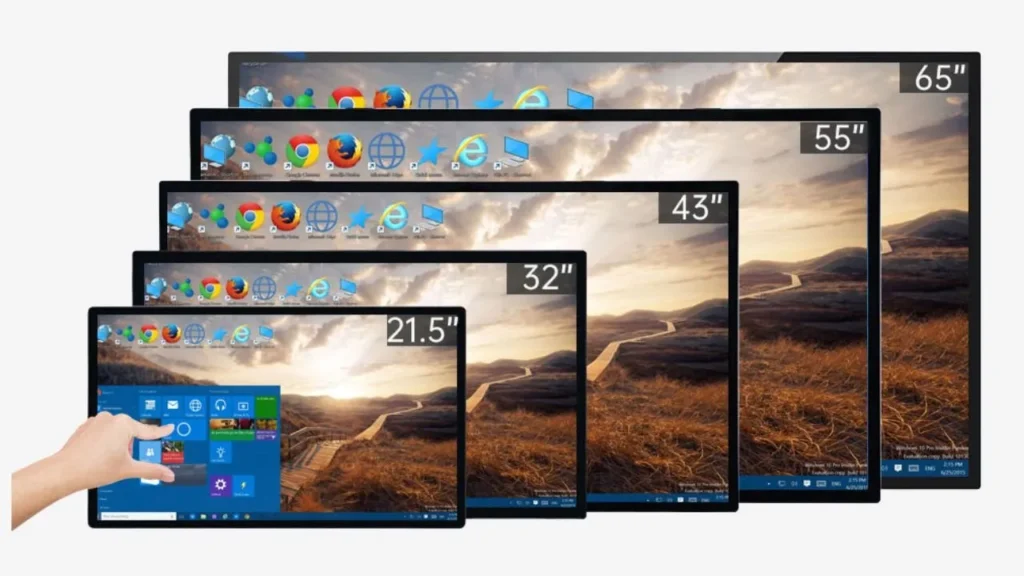
The color performance of UHD screens is usually better. They often have a wider color gamut, higher color depth, and higher brightness. However, this is not caused directly by the resolution. Due to its higher clarity, in most cases, manufacturers position UHD products as high-end brands and equip the screens with higher performance.
Cost of HD and UHD Screens
Due to the higher pixel counts and more advanced technology used in screens, UHD is usually more expensive than HD. It can even be said that UHD is much more expensive than HD in all aspects, such as circuits, processors, and driver cards. Normally, the price of a UHD screen may be twice that of an HD screen, or even more.
Content Compatibility of HD and UHD
The clarity and color that HD screens can display are relatively poor. If you make a 4k video and put it on an HD screen, you will find that the video may become blurry and its colors may also fade. But on a UHD screen, its performance will be quite good. In addition, with the development of LED technology, the compatibility of UHD screens is often better.
The Richness of Video Resources of HD and UHD
As it has only emerged in recent years, there are not many video resources with UHD definition, and it requires high-end equipment support. HD emerged earlier, and its content ecosystem is more mature. However, it is worth noting that you can watch HD videos on a UHD screen, but not on an HD screen.
Bandwidth requirement of HD and UHD
Due to the higher pixel counts, the bandwidth requirement for UHD content is much higher than that for HD, and it is generally about five times or even more. For example, a UHD video with a frame rate of 30fps and 8-bit color depth requires approximately 12 Gbps of bandwidth, while an HD video of the same specification requires less than 2 Gbps of bandwidth.
| 약관 | HD | UHD |
| 픽셀 수 | 1280×720, about 921 thousand | 3840×2160, about 8.29 million |
| Visual Experience | 보통 | 매우 높음 |
| Color Performance | 제한적 | 우수 |
| Cost of screens | 낮음 | 높음 |
| Content compatibility | 낮음 | 높음 |
| The richness of video resources | 높음 | Slightly lower |
| Bandwidth requirement | 낮음 | 높음 |
HD, FHD, QHD, and UHD
FHD

FHD is also known as Full HD or 1080p 해상도. Its resolution is 1920 × 1080 pixels, and is approximately twice that of HD and a quarter of that of UHD. Currently, FHD is the mainstream standard, and it is always used in mid-to-high-end products. It is the mainstream resolution in industries such as televisions, monitors, laptops, mobile phones, and surveillance cameras, and its content ecosystem is also the most mature.
QHD
QHD is the abbreviation of Quad High Definition; it has a resolution of 2560 × 1440 pixels, and it is also called 1440p resolution. The pixel count of QHD is about four times that of HD, and its clarity is much higher than that of HD and FHD. QHD also has the advantages of picture quality and pressure on the graphics card. It is usually used in scenarios, such as displays and professional offices.
| 약관 | HD | FHD | QHD | UHD |
| Common names | 720p | 1080p | 1440p | 4k |
| 픽셀 수 | 1280×720, 0.92 million | 1920×1080, 2.07 million | 2560×1440, 3.69million | 3840×2160, 8.29million |
| 시각적 경험 | Basic clarity | 지우기 | Clearer | Extreme detail |
| Content richness | Mature | Most mature | Mature | Growing |
| Bandwidth requirement | 낮음 | Medium | 약간 높음 | Quite High |
| Cost of screens | 낮음 | Medium | 더 높음 | 훨씬 더 높음 |
| Usage scenarios | Entry-level displays | Mainstream displays | High-end office, gaming | Large screens, professional displays, high-end TVs |
How to Choose the Ideal Resolution for a Project?
Confirm the Viewing Distance of the Screen
If the viewing distance you expect is long, such as in a large studio, or if the screen size is small, like a small advertising screen, a lower resolution can bring you a good enough effect. In these cases, you can choose either HD or FHD.
If the screen size you want to customise is large enough, like exceeding 100 inches, you may need a production with higher clarity. You are supposed to choose the clarity based on the specific size and effect of the screen. When the screen is large, QHD and UHD are ideal choices for you.
The Clarity of the Content
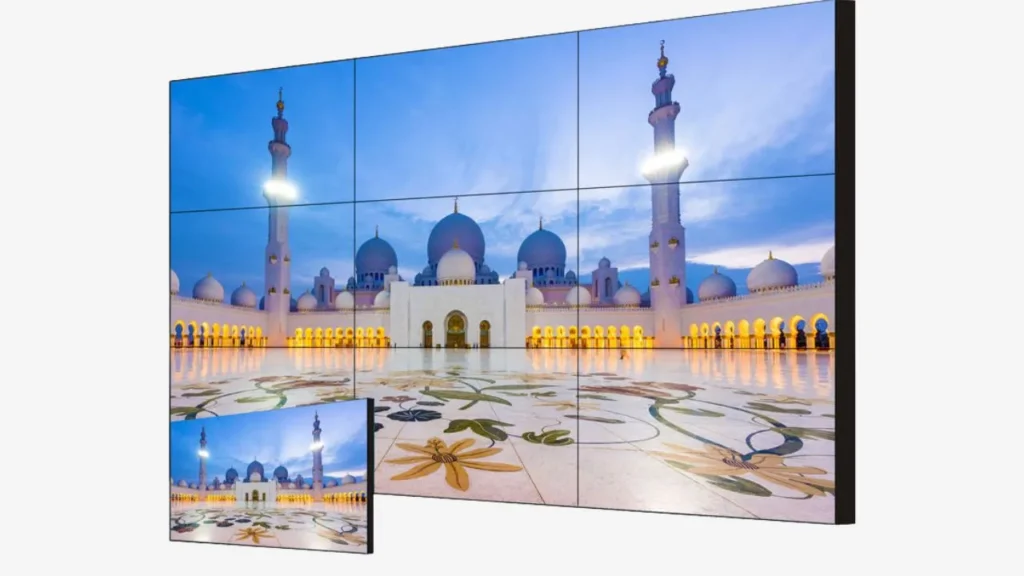
The resolution should also be selected based on the content you want to playback. If the video content has a low resolution, choosing UHD is a waste. If the content you want to display can reach a high definition of 1440p or 4k, QHD or UHD is the better option for showing content with high quality.
Bandwidth and Hardware Capabilities
UHD and QHD screens need a high network bandwidth and graphics cards, and they may consume more power. If you don’t plan to prepare a sufficient Internet speed and graphics card, lag may occur when playing high-resolution content. Under these conditions, HD and FHD are more stable options; otherwise, you can choose QHD and UHD.
Based on Your Project Budget
Generally, UHD screens are the most expensive choice; QHD is a bit cheaper, while HD and FHD are the cheapest options. If your budget is limited, HD and FHD are more cost-effective choices; otherwise, if your budget is sufficient, you can choose a higher clarity according to your needs.
The Future Trend of LED Resolution
Currently, the highest resolution that can be achieved on the market is 8k resolution, which is UHD-2. At the same time, higher resolutions, like 12k and 16k, have been invented, and they may enter the market in the next few years. Lower resolutions will gradually be replaced by higher resolutions.
In the near future, there will also be various emerging technologies integrated with LED 기술, such as VR/AR technology and AI. The combination will definetely effectively enhance your visual experience.
자주 묻는 질문
Can the Clarity of the Screen be Improved After Integrating AI Algorithms?
The number of pixels determines physical resolution, and AI cannot always enhance it. But it can make low-resolution content appear clearer, cleaner, and even approach the effect of high resolution. It can complete the details of the image, reduce noise in the picture, and thus achieve the effect of raising the resolution.
Will HD Gradually Be Phased Out of the Market?
HD’s market share is gradually decreasing. However, in the short term, it will not be completely eliminated because the production cost of HD screens is cheap enough, and the bandwidth pressure is also small. If you want to customize small advertising screens, the return on investment (ROI) of HD is still good.
Does a Higher Resolution Always Mean a Better Visual Experience?
Many factors can change your visual experience; resolution is just one of them. If the bandwidth, viewing distance, and screen size are all the same, and the original video resolution is high enough, a better resolution can indeed bring a better experience.
However, if these indices cannot be of high quality, or the original video has a very low resolution, that would be a different case.
최종 생각
HD and UHD are two distinct levels of clarity, and they each have their own advantages. If you have a sufficient budget and want to present more refined content, then you can choose UHD for your project. Conversely, HD or FHD can not only offer good value for money but also bring about good effects.
No matter what resolution of screen you want to customize, feel free to contact IvanLED. We are a professional manufacturer that can make all types of displays for you!