







What Is Pixel Pitch?
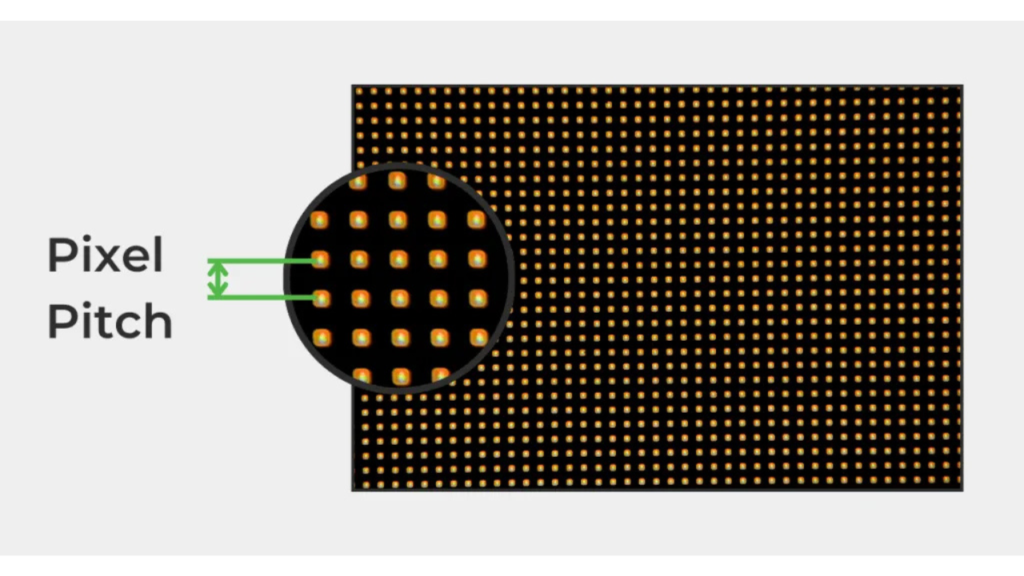
Pas de pixel is the spacing distance between LED pixels, and it is measured in millimeters.
How to choose the Right Pixel Pitch for your LED Screen
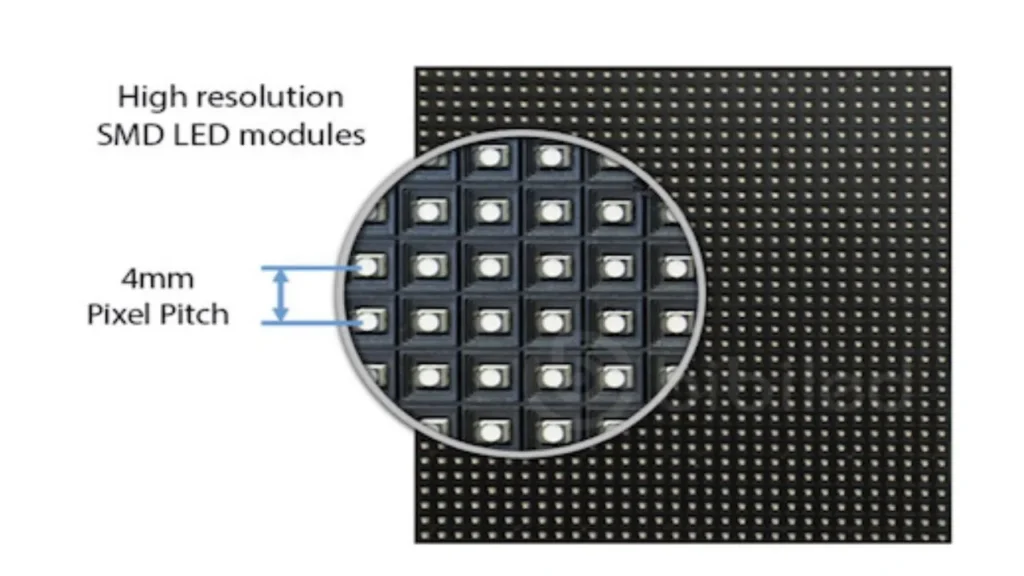
1. Viewing Distance
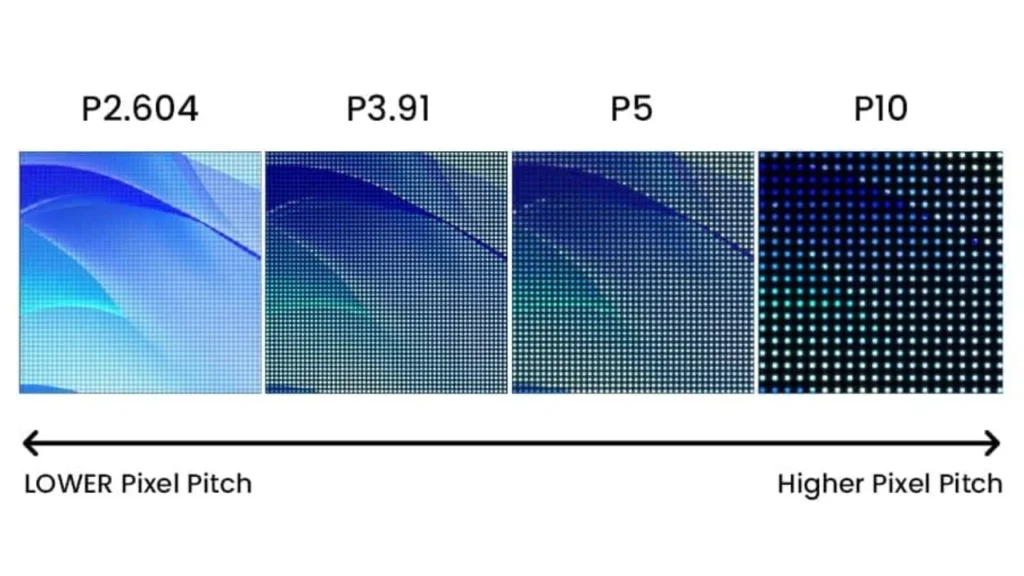
When selecting pixel pitch, viewing distance is more important than any other factor. Pixels are tiny light points which are used in an Écran LED to display images. Your eyes perceive those pixels differently as you change your viewing distance.
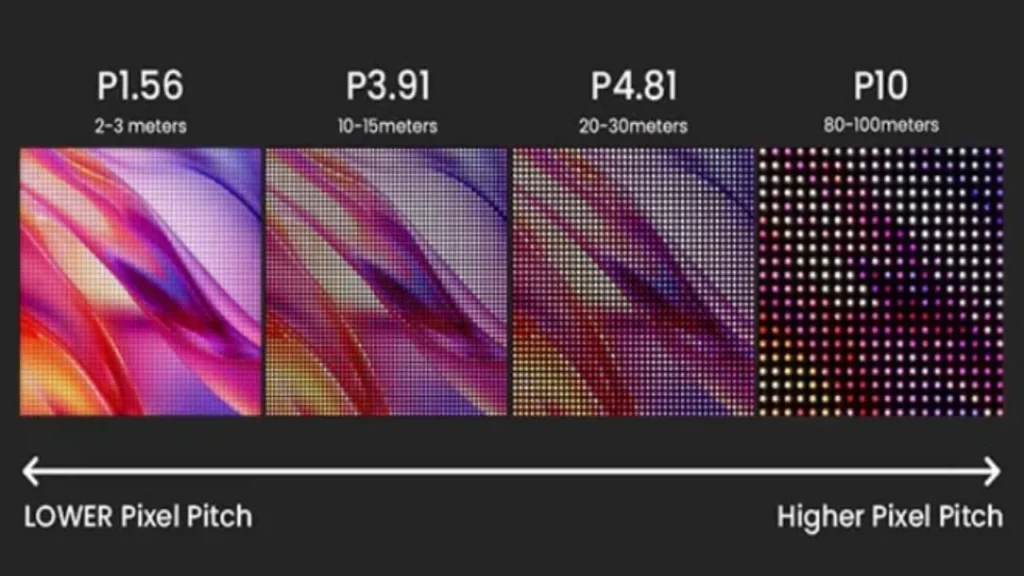
· Closer Viewing (1–3m): Small Pitches (P0.9–P2.5)
Close viewing refers to standing one to three meters in front of the screen. The human eye can easily see individual pixels when they are too far apart at this distance. Therefore, big spaces between pixels result in jagged text and uneven images.
However, when your display has pixels very close to one another the pitch also reduces. These close spacing eliminates any visible gaps and produce smooth images. The text becomes crisp and readable, and faces are natural rather than blocky.
· Medium Viewing (3–10m): Mid-Range Pitches (P2.5–P4)
Medium viewing distance ranges from three to ten meters. At this distance, the eyes can no longer see individual pixels. Rather, the pixels combine in a natural way to create complete and uniform images.
Mid-range pixel pitches are suitable for this viewing range. The spacing between pixels ensures smooth and clear images without using too many pixels. The texts are readable, the graphics are clear and the videos are natural in movement.
· Distant Viewing (10m+): Larger Pitches (P4+)
Distant viewing begins at ten meters and beyond. At this distance, the eye cannot differentiate the individual pixels. Rather, the viewers pay attention to brightness, color, and general size.
These distances are good with larger pixel pitches. The greater distance between the lights enables more powerful LEDs and this enhances brightness and visibility. Less attention is paid to fine details as the viewers observe the screen at a distance.
2. Screen Size & Resolution
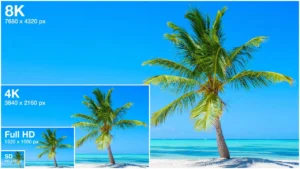
Screen size and resolution refer to the amount of content that an LED screen can display and the clarity of that content. Screen size is the actual size of the display, whereas resolution is determined by the number of pixels that can be placed in that space. This relationship is controlled by pixel pitch since the closer the pixels, the higher the resolution and the sharper the images.
For example, a bigger screen does not necessarily result in better image quality. On a big screen, pixels are too far apart, and therefore, images can only be seen clearly at a distance but become rough when viewed up close.
3. Content Type
Content type refers to what is displayed on the LED screen and how the viewers engage with it. Various content imposes various requirements on image quality. For instance, precision is needed in text and detailed visuals, whereas moving images are more dependent on color, brightness and motion. This difference aids in adjusting pixel pitch to actual viewing requirements.
· Text-Heavy / Detailed Content
Text-heavy content consists of written information, charts, tables, dashboards and fine graphics. These elements are based on clear edges and lines.
When there is a large distance between pixels, the letters become uneven and small details are lost. This complicates reading, particularly when it comes to reading from short or medium distances.
On the contrary, smaller pixel pitches ensure that pixels are close to each other, and this makes letters and numbers appear smooth and uniform.
· Video / Graphics / Simple Ads
Video-based content is less dependent on detail but majorly relies on motion, color, and contrast. For example, content like advertisements, animation, and large graphics use shapes and motion to convey a message instead of detailed texts. Due to this, the wider pixel spacing is effective when viewing from medium and long distances.
4. Environment & Budget
The environment in which an LED screen is used influences its performance and its maintenance costs. The pixel pitch is affected by lighting conditions, exposure to weather conditions, and the amount of space available. Budget then determines the extent to which these technical decisions can reach without compromising reliability or visual quality.
· Indoor
Indoor spaces have regulated light and stable conditions. Screens are protected from direct sunlight, rain or dust. Due to this, indoor displays do not require excessive brightness and thick protective casing.
· Outdoor
Outdoor settings present more challenges to LED screens. The light from the sun conflicts with the brightness of the display and weather brings heat, humidity, and dust. The conditions influence the performance of pixels and the overall ageing of your display.
· Budget
Budget influences all display choices. Smaller pixel displays are more expensive, costing around $1,500 and $3,500 per square meter since they require additional LEDs, and they are difficult to install. Conversely, bigger pitches screens are cheaper, costing $600-$1, 200 dollars since they occupy more space, using fewer pixels.
Pixel Pitch Selection (Quick Reference Guide)
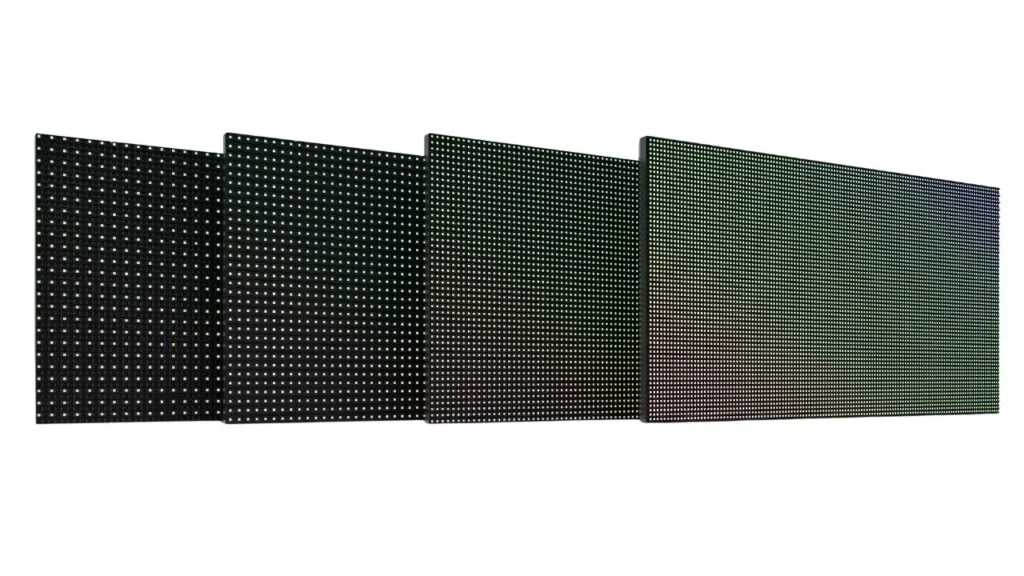
| Pas de pixel | Distance de visionnage | Screen size | Content type | Application | Coût |
| P0.9-p1.5 | 1-2m | Small to medium | Text-heavy, detailed | Control rooms, studios, premium retail | Very high |
| P1.8-P2.5 | 2-4m | Moyen | Mixed content | Meeting rooms, classrooms, lobbies | Haut |
| P3-P4 | 4-8m | Medium to large | Video and graphics | Auditoriums, worship halls, malls | Modéré |
| P5-P8 | 8-15m | Large | Video, simple ads | Outdoor signage, events | Faible |
| P10+ | 15m+ | Very large | High-impact visuals | Billboards, stadiums | Très faible |
Foire aux questions
What happens if I choose a too large pixel pitch for close viewing?
When you stand near the screen, you will see the individual pixels. The texts appear jagged, the images are rough, and it becomes uncomfortable to read.
Can I use the same LED display for indoors and outdoors?
The same screen cannot be used both indoors and outdoors. Outdoor displays require high brightness and weather resistance mechanism, while indoor displays require low brightness and smaller pixels pitches to produce clear text and detailed images.
How do I balance resolution needs with budget limits?
Resolution will depend on the distance between the audience and the screen. Smaller pixels than required add to the cost, without improving clarity. You should match pitch and distance to provide clear images at affordable costs.
Partner with IvanLED for all your LED Screens from China
Whether you are in the LED rental or LED advertising business, IvanLED offers a wide range of display options. All our LED displays are 100% custom-made to meet your unique application requirements.
These displays come in different configurations, and sizes. Whether you want modular or curved LED displays, IvanLED is a trusted partner in China – Request for our product catalogue now.