What is Refresh Rate?
 Frecuencia de actualización
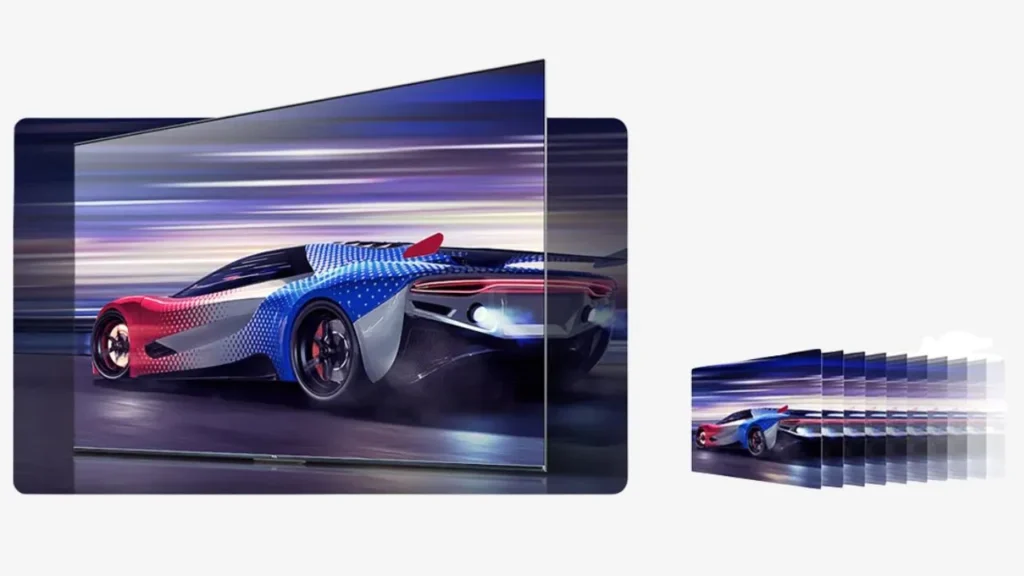
 refers to the number of times a display screen updates its content per second, measured in Hertz. The higher the value, the smoother the video you will find. Common refresh rates include 30Hz, 60Hz, 120Hz, 144Hz, and even higher, and 60Hz and 120Hz are the choices for most projects nowadays.In some cases, to ensure refresh rate stability, screens are also equipped with VRR, which is a variable refresh rate function that dynamically adjusts the frame rate to ensure smooth playback.
What is Frame Rate?
Frame rate refers to the number of static images contained in video and game content per second, and its value is determined by the content source, and it is usually measured in fps. Common standards for frame rates include 24fps for movies, 30fps for TVS, 60fps for games or sports, and some high-end games or videos at 120fps or above.The screen display is the smoothest when the refresh rate is an integer multiple of the frame rate. For instance, when playing a 60fps video on a 120Hz screen, each frame can be refreshed twice, which is stable and smooth.
Perception of Refresh Rate by the Human Eye
Some studies have pointed out that under conditions where both lighting and contrast are quite high, the human eye can distinguish a refresh rate as high as 500Hz. This means, in most cases, displaying a higher refresh rate can really make you feel a different sense of fluency.However, the smoothness you can feel does not increase linearly with the increase in the refresh rate. Strictly speaking, it is a curve where the increment is decreasing. When changing from 30Hz to 60Hz, you will notice a significant increase in the frame rate. However, when moving from 60Hz to 120Hz, this change will gradually become less obvious. A higher refresh rate is the same.This phenomenon fully conforms to the law of diminishing marginal returns. That is to say, although a higher refresh rate is more expensive, the smoothness it brings you may not be proportional.
Differences Between 60Hz and 120Hz
Motion Clarity of 60Hz and 120Hz
60Hz means that the display refreshes the screen 60 times per second, while 120Hz means 120 times. That is to say, at a 60Hz display, each frame will stay for approximately 16.7ms, while at a 120Hz display, each frame will stay for 8.3ms. The display time per frame at 120Hz is half that at 60Hz. Therefore, when using a 120Hz screen, you can more easily see the text and details in motion.
Visual Effect of 60Hz and 120Hz
When playing low dynamic range content, there is almost no visible difference between 60Hz and 120Hz. However, in medium and high-dynamic range content, 120Hz clearly has advantages in terms of smoothness and stability. Moreover, the 120Hz picture fluctuates faster and has a smaller amplitude, being closer to continuous light, so it will make you feel more comfortable.
Hardware Requirements of 60Hz and 120Hz
On the one hand, a higher refresh rate means a greater bandwidth is needed. The data transmission volume at 120Hz is approximately twice that at 60Hz, and a higher-specification interface is required.On the other hand, a high refresh rate also requires the configuration of more advanced anti-jitter, frame synchronization, and color processing functions, which demands a higher-performance CPU and a larger cache space.
Energy Consumption of 60Hz and 120Hz
Power consumption is determined by multiple factors, such as the driving mode and screen brightness. A higher refresh rate usually consumes more power, but not too much. Generally speaking, when playing dynamic content, a 120Hz screen consumes about 20% more power than a 60Hz screen.In addition, gaming monitors and some TVS are equipped with VRR, which can dynamically adjust the refresh rate, thereby reducing power consumption simultaneously.
Cost of screens of 60Hz and 120Hz
The improvement of refresh rate brings not only the need for more powerful control chips and driver ICs, but also for enhanced signal interfaces and optimized heat dissipation design. In terms of cost, the cost of a 120Hz LED module, system cost, and selling price will increase by approximately 20% or more.Moreover, due to the increased number of current switches, more heat will be generated, and the actual lifespan of the driver IC and power supply often decreases. In terms of maintenance costs, 120Hz screens are also higher than 60Hz ones.
Applicable Scenarios of 60Hz and 120Hz
The performance requirement of 60Hz is not high, and the power consumption is lower. It is more suitable for application scenarios such as static or low dynamic content, large screens, and long-distance viewing, such as
pantallas gigantes en aeropuertos,
Carteles LED, and building LED screens.
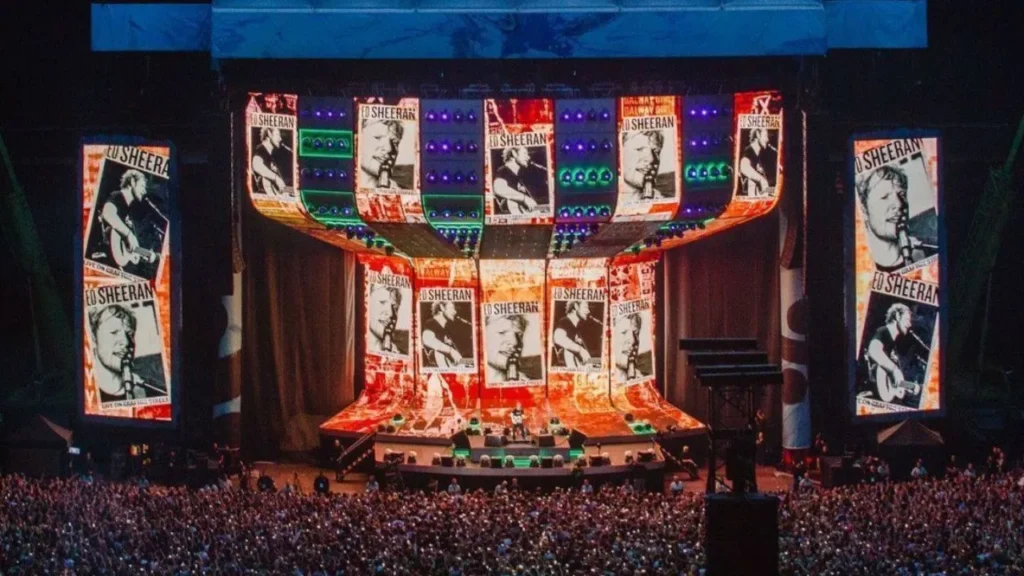
120Hz is often used for those display screens that require close and high dynamic range viewing, such as
stadium LED screens, concert LED screens, and cinema LED screens, which can bring higher comfort and return on investment.
How to Choose Between 60Hz and 120Hz for a Project?
When Should a 60Hz Screen be Procured for a Project?
- When the screen you purchase is used in scenarios such as enterprises and traffic information screens, where there is less dynamic content to be displayed, 60Hz is sufficient.
- When your budget is not sufficient, and the display screen is not used frequently, 60Hz is a more cost-effective choice.
When Should a 120Hz Screen be Procured for a Project?
- First of all, 120Hz requires high-end hardware support, such as an RTX 3060 GPU and an HDMI 2.1 interface. You need to ensure a sufficient budget.
- When you need to purchase display screens for professional content production or in the fields of e-sports and entertainment, such as e-sports event screens and cinema LED screens, it is best to choose 120Hz.
- If the content you want to display includes high frame rate videos at 60fps or above, 3D animations, real-time data, or involves touch interaction and other operations, 120Hz is a better choice.
The Development Trend of Refresh Rates
Although LED display technology is constantly advancing, this does not mean that newer technologies will definitely be popularized.For most meeting room screens, advertising screens, and other scenarios where the content is mostly static posters or regular videos, 60Hz is sufficient to meet the requirements and has a cost advantage. It may remain the most cost-effective choice for the next two decades.For scenarios that place greater emphasis on smoothness and interactivity, such as high-end meeting rooms and e-sports venues, a high refresh rate not only offers an advantage in visual experience but can also serve as a selling point for product differentiation. In this segment of the market, higher refresh rates will gradually replace 60Hz.
How to Ensure the Monitor Operates at a Real Refresh Rate Near Its Rated Value?
Beware of Fake High Refresh Rates
Some suppliers, especially TV and computer monitor manufacturers, often provide false refresh rates through concept confusion or other means, and these refresh rates are usually two or four times the actual refresh rates.To avoid being deceived, you can use professional instruments for on-site acceptance or work backward from the data provided by the manufacturer to calculate the actual refresh rate. For instance, if they promote that their 120Hz display screens seldom support the HDMI 2.0 interface, there is no doubt that they are lying.
Enhance the Capabilities of the Control System
You need to ensure that your hardware facilities are sufficient to support high frame rate playback, such as cables, GPUs, and integrated graphics cards. In addition, the control system also needs to have multi-frame caching and anti-frame loss mechanisms to ensure the stability of the picture.
Ensure the Stability of Signal Transmission
To achieve stable signal transmission, it is necessary to ensure a continuous, complete data stream with a low bit error rate. To achieve this, you need to choose a sufficiently redundant transmission bandwidth and a good anti-interference design, such as good grounding and avoiding parallel wiring of high-power devices.
Proper Screen Configuration
The characteristics of the display screen itself, including the chip refresh rate capability, scanning mode, LED response time, and VRR support, will also affect the actual refresh rate output.If you need a high refresh rate display, note that the screen configuration itself should be high. You can choose an LED module with a fast response and upgrade the firmware to optimize the refresh algorithm.
Optimize the Conditions of the External Environment
The external environment can also determine whether the screen can operate well, including factors such as heat dissipation conditions, power supply stability, and network bandwidth. Especially for large screens, they need to pay attention to a stable power supply and timely heat dissipation.
Preguntas frecuentes
Does Configuring VRR Definitely Enhance Screen Performance?
In most cases, VRR can indeed improve the performance in terms of visual experience. It can reduce the lag of the screen when the refresh rate fluctuates. However, when some applications are incompatible with VRR, negative optimizations may occur, such as screen flickering.
Will the Refresh Rate Decrease as the Years of Use Increase?
The refresh rate itself usually does not decrease with the years of use. However, the CPU’s ability to stabilize the driver refresh rate, the efficiency of the cooling system, and the response speed of the LED beads may decline due to component aging.
Are High Refresh Rate Screens More Prone to Malfunction?
If your configuration in terms of cables, graphics cards, and drivers is relatively high, then a high refresh rate will not make it more prone to failure.
Does High-Frequency Refreshing Help with Visual Fatigue?
Yes. Relevant scientific research experiments have shown that when the screen refresh rate is raised to 120Hz or above, the brain can generate more stable visual signals, thereby improving the viewing experience. Moreover, images with a frequency lower than 60Hz may also exacerbate eye fatigue.
Reflexiones finales
If you need to customize a high refresh rate LED display for any application,
IvanLED has the capability to meet your requirements. We can offer different pixel pitches, screen sizes, and brightness levels to meet your needs on various occasions. Also, our team can tailor design and installation plans for you, and we have strong after-sales support.If you have any further questions, feel free to contact us!













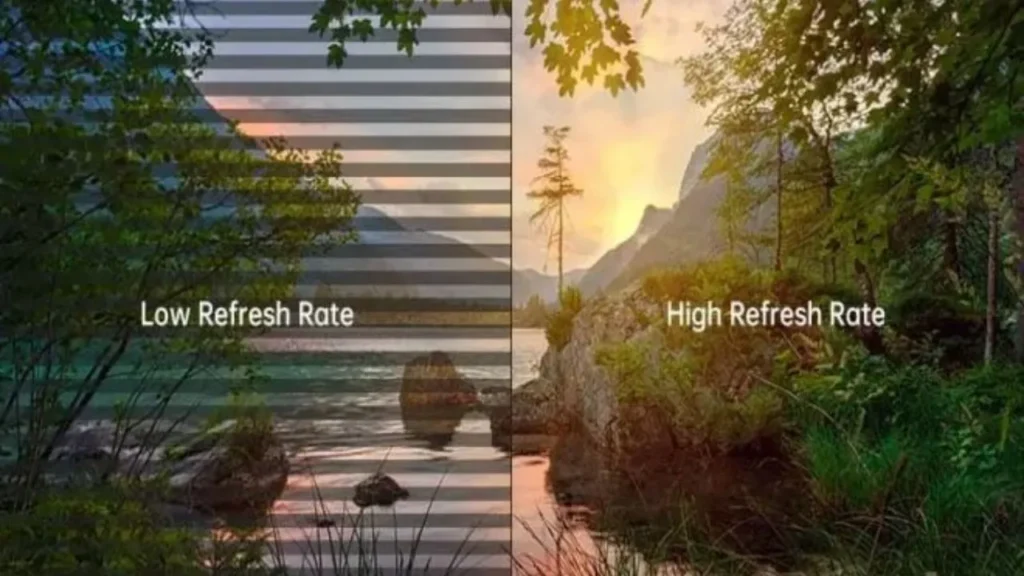 Frecuencia de actualización refers to the number of times a display screen updates its content per second, measured in Hertz. The higher the value, the smoother the video you will find. Common refresh rates include 30Hz, 60Hz, 120Hz, 144Hz, and even higher, and 60Hz and 120Hz are the choices for most projects nowadays.In some cases, to ensure refresh rate stability, screens are also equipped with VRR, which is a variable refresh rate function that dynamically adjusts the frame rate to ensure smooth playback.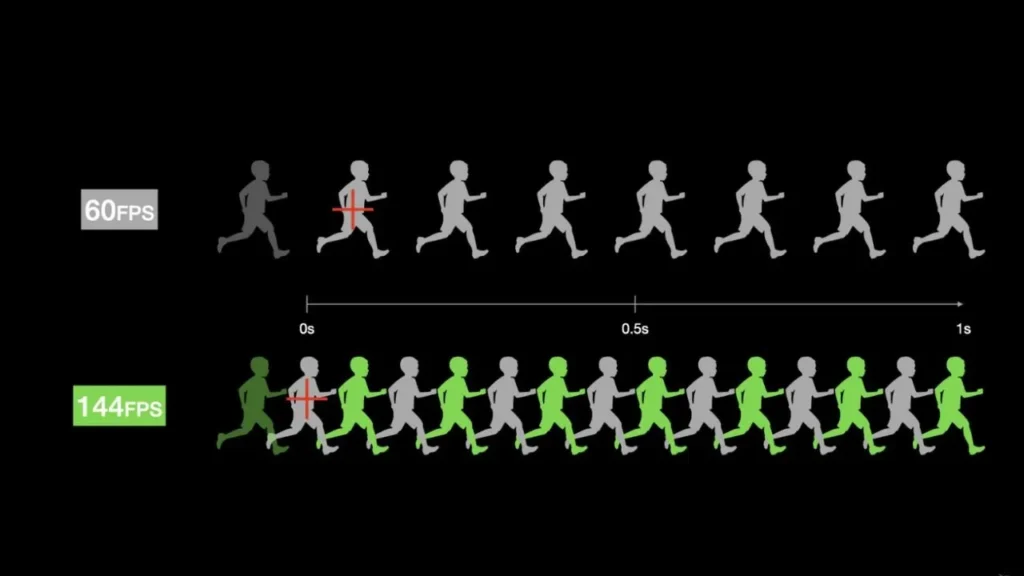
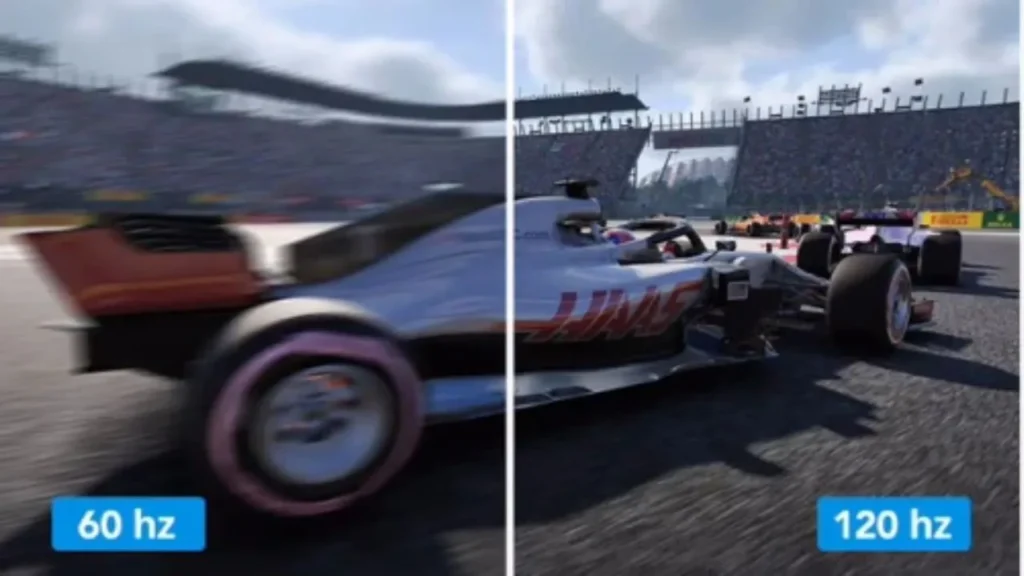 Power consumption is determined by multiple factors, such as the driving mode and screen brightness. A higher refresh rate usually consumes more power, but not too much. Generally speaking, when playing dynamic content, a 120Hz screen consumes about 20% more power than a 60Hz screen.In addition, gaming monitors and some TVS are equipped with VRR, which can dynamically adjust the refresh rate, thereby reducing power consumption simultaneously.
 120Hz is often used for those display screens that require close and high dynamic range viewing, such as stadium LED screens, concert LED screens, and cinema LED screens, which can bring higher comfort and return on investment.