








What is the 4:3 aspect Ratio?
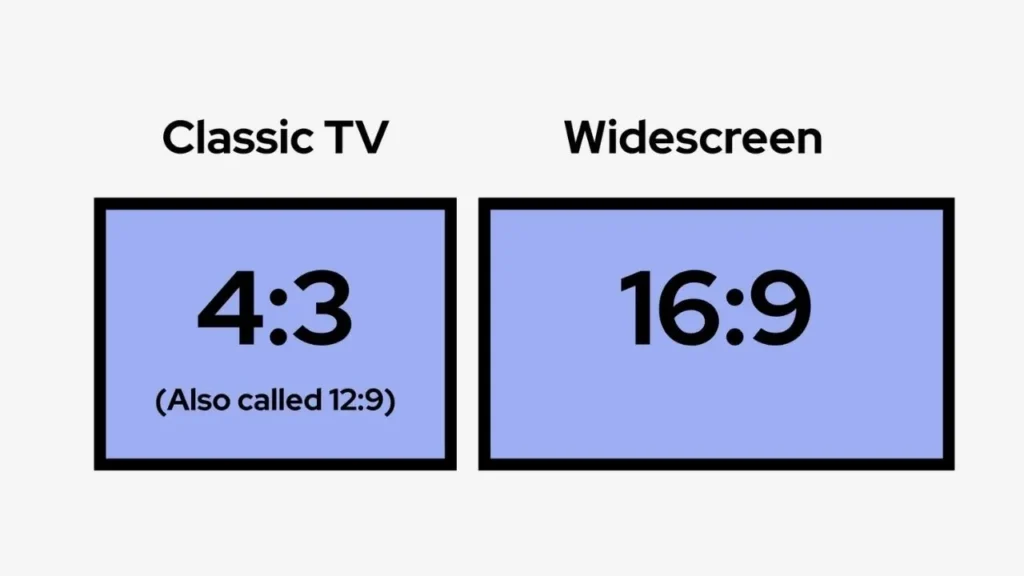
The 4:3 aspect ratio refers to the ratio of screen width to height is 4:3, which is 1:1.33. When compared with other aspect ratios, you will find that 4:3 is closer to a square. The 4:3 screens were usually used in early computer monitors and old televisions, and still exist in a few modern applications, like monitoring rooms, tablet computers, and control centers.
What is the 16:9 aspect Ratio?
16:9 aspect ratio means that the ratio of the screen width to height is 16:9, that is, the width is approximately 1.78 times the height. Compared with the 4:3 aspect ratio, 16:9 appears wider in vision. 16:9 is more widely used than 4:3; many video resources are displayed in the 16:9 format.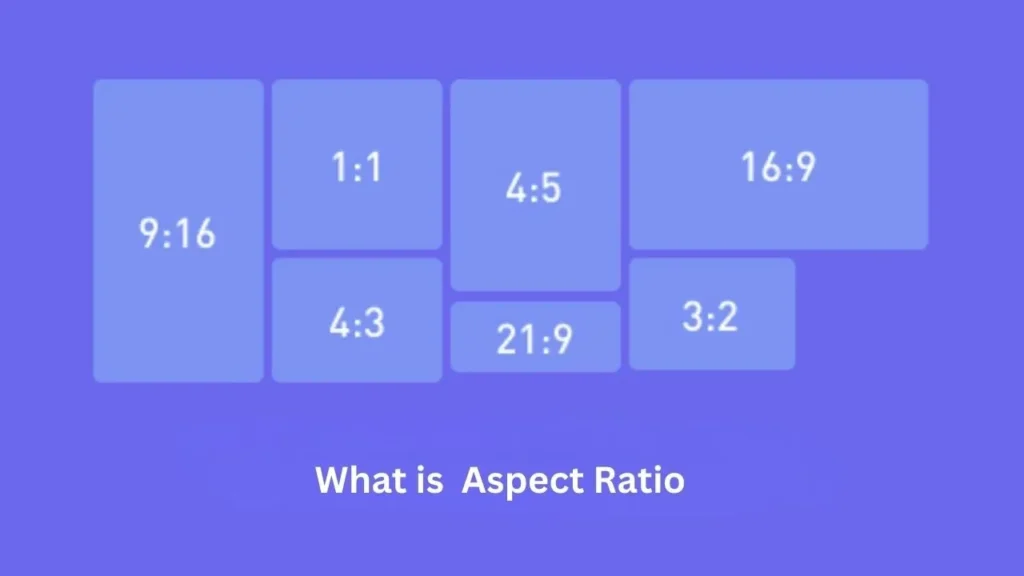
The Influence of Aspect Ratio on Visual Experience
In terms of entertainment, at the same height, a wider screen can better cover your field of vision. Hence, it can provide you with a stronger immersive experience for games and videos. While narrower screens, like 4:3 or 5:4, usually provide you with a limited immersion and weaker visual impact, which are unsuitable for entertainment use.
In terms of office work and scientific research applications, both wider screens and taller screens have their own advantages: a wider screen, like 16:9, can show multiple windows side by side, which can reduce the switching frequency and improve work efficiency; taller screens, like 16:10 and 4:3, can show more vertical content, and can reduce the frequency of scrolling up and down.
Differences Between 4:3 vs 16:9 Aspect Ratios
Visual Experience
In terms of the viewing effect of games and videos, 16:9 undoubtedly offers you a better experience. The 16:9 screen has a larger horizontal space, which not only brings more immersion but is also suitable for multitasking. Moreover,.
Richness of Content
Currently, most of the films, TV shows, PC games, and streaming videos use the native 16:9 aspect ratio. This leads to a 16:9 screen that will be perfectly adapted to the content in most cases without showing a wide black border.
The 4:3 aspect ratio was only adopted by some early film and television content. Nowadays, there is almost no video or game content presented in this ratio, and the richness of resources is very low.
Cost of Screens
Almost all televisions, monitors, and laptops are made in a 16:9 aspect ratio. Therefore, the production technology of 16:9 panels is more mature, the supply chain is more stable, and their price is usually lower than that of 4:3 screens.
Cenários de uso
The 16:9 aspect ratio is more widely used; it is always used on modern TV and computer screens. While 4:3 has a lower popularity, it is only used in some medical imaging systems, surveillance applications, and some old televisions.
Capacidade de realizar várias tarefas
Due to its wider field of view, the 16:9 aspect ratio has a significant advantage in multitasking writing. You can lay out several windows side by side horizontally for work collaboratively; if the screen is large enough and the CPU performance is sufficient, you can place even more windows.
Compatibilidade de conteúdo
In terms of compatibility, 4:3 performs worse than 16:9. The vast majority of current video and game content is based on the 16:9 standard, and it can be perfectly displayed on screens of the same aspect ratio. However, when these contents are played on a 4:3 screen, black borders and picture stretching may occur.
| Termos | 4:3 Aspect Ratio | Proporção de aspecto 16:9 |
| Visual Experience | Convenient for concentrating | Wide and more immersive |
| Richness of Content | Baixa | Alta |
| Cost of Screens | More expensive | Cheaper |
| Cenários de uso | Most modern TVs, monitors, and conference screens | A small number of surveillance systems and older TVs |
| Multitasking ability | Limited side-by-side | Excellent side-by-side |
| Compatibilidade de conteúdo | Inferior | Mais alto |
Common Resolution of 4:3 and 16:9 Aspect Ratios
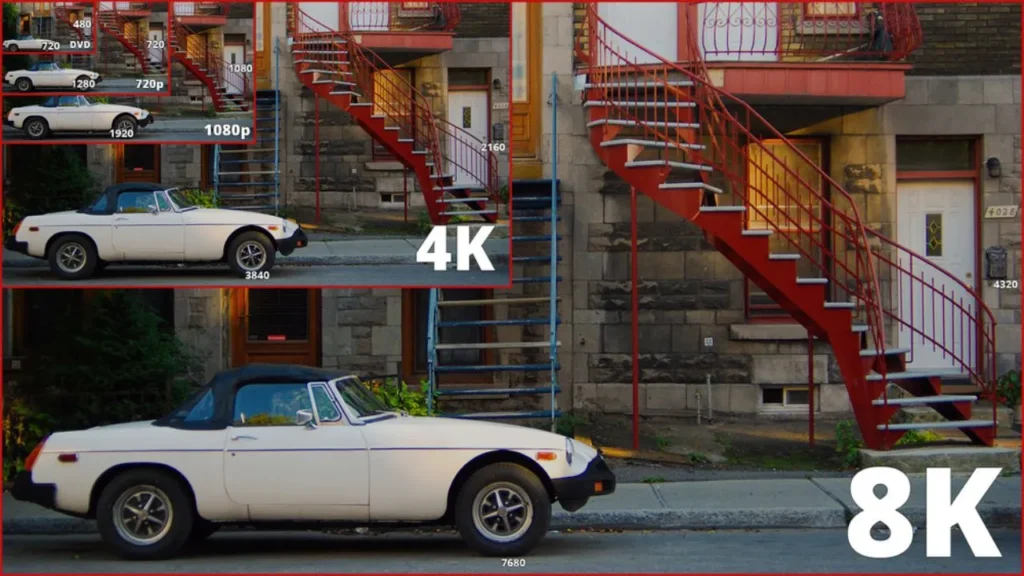
The 16:9 aspect ratio has a much wider range of resolutions, and its resolution technologies continue to advance, which has evolved from 480p to 1080p and even 4K. By contrast, due to limited applications, 4:3 displays generally have lower resolutions.
Common Resolution of 4:3 Aspect Ratio
| Resolution Name | Pixel Counts | Aplicativos |
| VGA | 640 × 480 | Early PCs and monitors |
| SVGA | 800 × 600 | Early Windows systems |
| XGA | 1024 × 768 | Early 2000s PCs and projectors |
| UXGA | 1600 × 1200 | Some mid-end 4:3 LCD monitors and surveillance systems |
| QXGA | 2048 × 1536 | High-end 4:3 displays and professional use |
Common Resolution of 16:9 Aspect Ratio
| Resolution Name | Pixel Counts | Aplicativos |
| HD or 720p | 1280 × 720 | Entry-level monitors and older laptops |
| FHD or 1080p | 1920 × 1080 | Most of the modern monitors and TVs |
| QHD or 1440p | 2560 × 1440 | Mid-to-high-end monitors |
| 4K Ultra HD | 3840 × 2160 | High-end TVs and cinema screens, professional design |
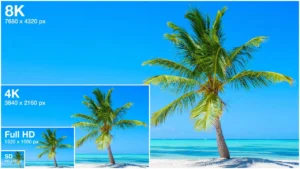
| 8K Ultra HD | 7680 × 4320 | Top-tier TVs and professional film production |
How to Choose the Appropriate Aspect Ratio for a Project?
First of all, confirm the aspect ratio of the content that you plan to play. If most of the content you want to display is streaming video, or you need a showcase with more impact and immersive experience, a 16:9 or wider aspect ratio is more suitable for you; If you want to display more documents, tables, or monitoring systems and other content that needs more vertical space, 4:3 might be an ideal choice.
There is no doubt that, if you are not sure what kind of content you will play, 16:9 is definitely a reliable option.
What will Happen When the Ratio of the Content to the Screen does not Match?
If the aspect ratio of the content you are playing does not match the screen, the following situations may occur:
- Letterboxing and Pillarboxing on the screen: The top, bottom, or sides of the screen will be filled with black borders. The greater the difference between the content and the screen’s aspect ratio, the wider the black border will be, and the picture will fail to fill the entire screen.
- The content may be cropped: To fill the screen, the system may crop the edges of the image. You will not see the details at the edges, and you might even miss subtitles when watching videos.
- The image may be stretched: To fit the screen’s aspect ratio, the system will stretch the original content. This will lead to the image becoming distorted, and your viewing experience will also be significantly affected.
All in all, whether there are black bars occur, or the content is cropped or stretched, your viewing experience might be affected, and it may even lead to your visual fatigue. To avoid this, it is best to choose the appropriate screen aspect ratio.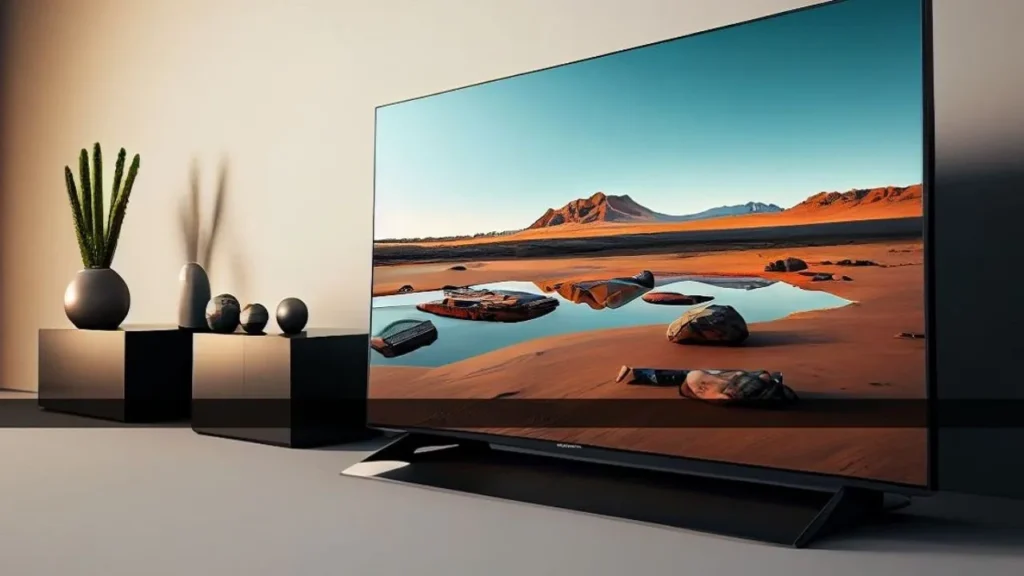
The Future Development Trend of the Aspect Ratio
Nowadays, the 16:9 aspect ratio has already produced a mature supply chain, and the price of 16:9 screens is low enough. Moreover, nearly all the video resources and office software support 16:9 by default. Therefore, in the long run, due to the abundance of video content, 16:9 will remain widely used, while the use of 4:3 will become less and less.
At the same time, wider screens will gradually enter the market, like 21:9, 32:9. They are typically used for creative design, games, and cinema displays. Also, with the rise of the short video sector, the use of vertical screens, like 9:16 screens, will increase.
Perguntas frequentes
Which Aspect Ratio is More likely to Cause Visual Fatigue, 4:3 or 16:9?
In most cases, 16:9 is more likely to cause your visual fatigue. Generally, when you are watching on a 16:9 screen, your horizontal field of view does indeed become wider. However, this requires your eyeballs to move left and right frequently. Moreover, a wider field of vision distracts your visual center, which causes your brain to be unable to focus and makes you feel more tired.
Is There Any Difference in Installation Difficulty Between 4:3 and 16:9?
Generally speaking, the installation difficulty is only related to the size of the screen. The difficulty of transporting and installing 4:3 and 16:9 screens of the same size is not much different, but 16:9 screens may occupy more horizontal space.
Which is More Likely to Depreciate in the Second-Hand Market, 4:3 or 16:9?
4:3 screens depreciate more easily. This is because the demand for 4:3 screens in the consumer electronics, office, and entertainment markets is lower than that of 16:9 screens, and their depreciation will be rapid. If you plan to purchase screens in bulk, 16:9 offers higher resale value.
Is There Any Compromise Solution Between 4:3 And 16:9?
Yes. 16:10 is a compromise choice that lies between these two aspect ratios. It can reduce the black bars when you are watching movies and TV shows. More than this, the 16:10 aspect ratio also provides you with more vertical space for browsing web pages and spreadsheets. Sometimes, 3:2 is also used by some laptops.
Can a Square Screen that is Closer to 1:1 Better Focus Users’ Attention?
Yes. Square screens do indeed make it easier to focus users’ attention. The closer the screen is to a square shape, the easier it is for you to focus your attention. In addition, the square screen can also reduce the frequency of your eyeballs moving up, down, left, and right, and lower the burden on your eyes.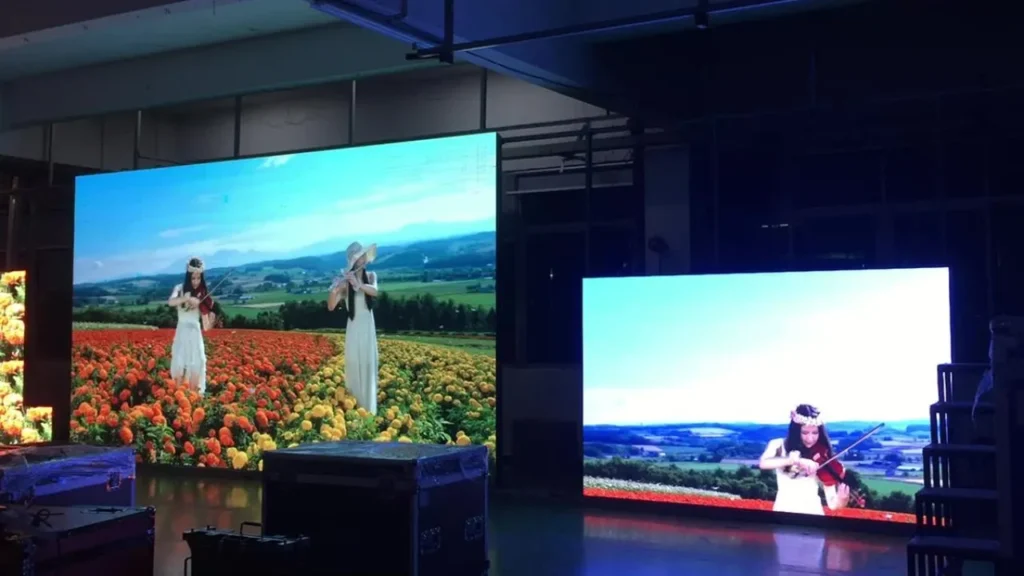
Considerações finais
If you want to customise an LED display with any aspect ratio, like 4:3, 16:9, or others, IvanLED is your ideal choice. We are an experienced LED display manufacturer and can provide LED or LCD screens of various sizes, resolutions, and usage scenarios for you.
IvanLED guarantees to deliver screens to you with the fastest speed and highest quality. If you have any needs, please feel free to contact us at any time!