











What is Required for LED Screen Calibration?
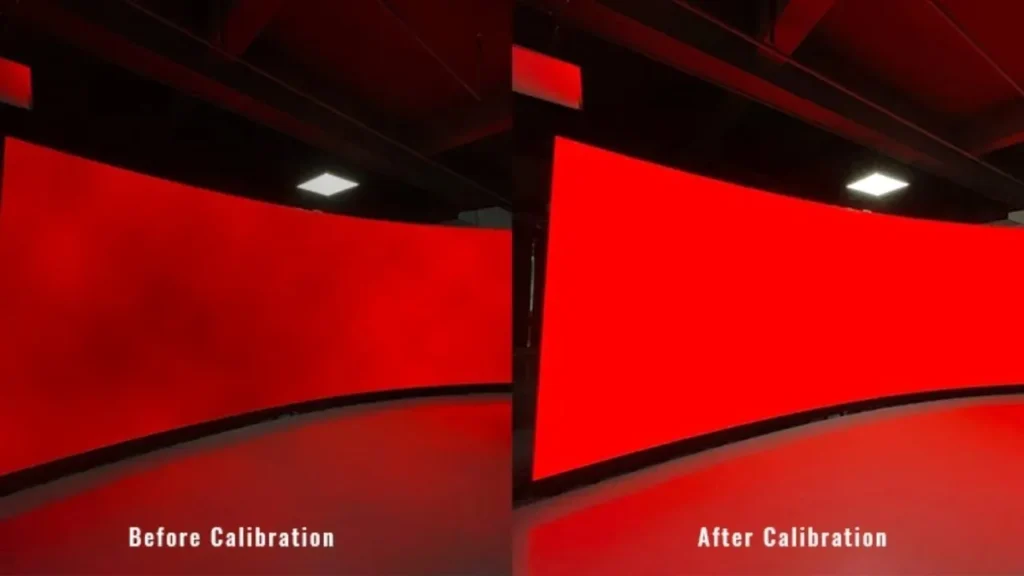
Controlling its Brightness and Luminance
Calibrating the brightness and luminance correctly makes the LED screens more visible ensuring that you don’t have to strain your eyes. Also, it is important to maintain the luminance uniformly for all commercial applications. This is to ensure that there are no dark areas, most especially in outdoor installations. When the level of brightness is okay, it helps in extending the lifespan of the screen and reducing the consumption of power.
Precisão de cores
It is very important to reproduce the color accurately to ensure the consistency of the brand and presenting the visual professionally. If it isn’t well adjusted, your LED screens may show shifts in color, which diminishes the quality of the image as well as how viewers perceive it.
Contrast and Adjustment of Gamma
The settings for the contrast as well as the gamma controls the depth of the image. With the right calibration, you are preserving the highlights that have been washed out, and ensuring smooth transitions of the tones. With this, you’ll achieve a better and realistic visual all through the lighting environments.
Types of LED Screen Calibration
Factory Calibration
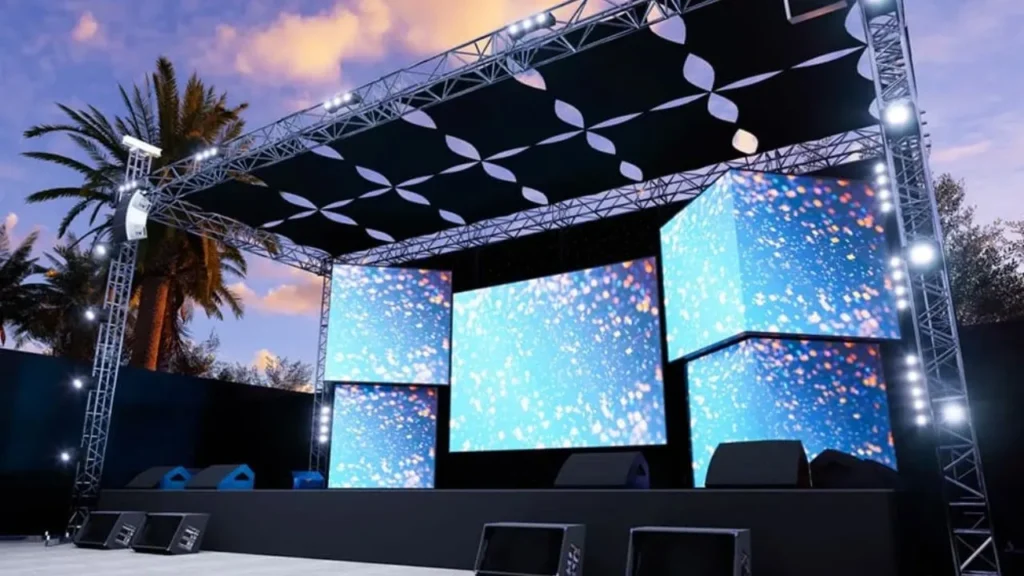
This type of calibration is necessary during manufacturing. It helps you to maintain consistent brightness and color display across your Módulos de LED. Also, Factory calibration offers consistent performance and a good starting point. However, some changes may occur due to aging components and transportation.
On-Site Calibration
On-site calibration always comes up after you have fine-tuned your LED screen based on its operating environment. This type of calibration makes up for necessary features like panel alignment and ambient lighting. On-site calibration improves visual performance and as such, it is mostly performed in commercial displays
Automatic vs Manual Calibration
Automatic calibration is suitable for large systems as it helps you regulate display parameters using software and sensors. Manual calibration, on the other hand, requires you to make necessary adjustments manually. Although this process takes more time, you can precisely adjust parameters for specialized displays.
Useful Tools and Software for LED Screen Calibration
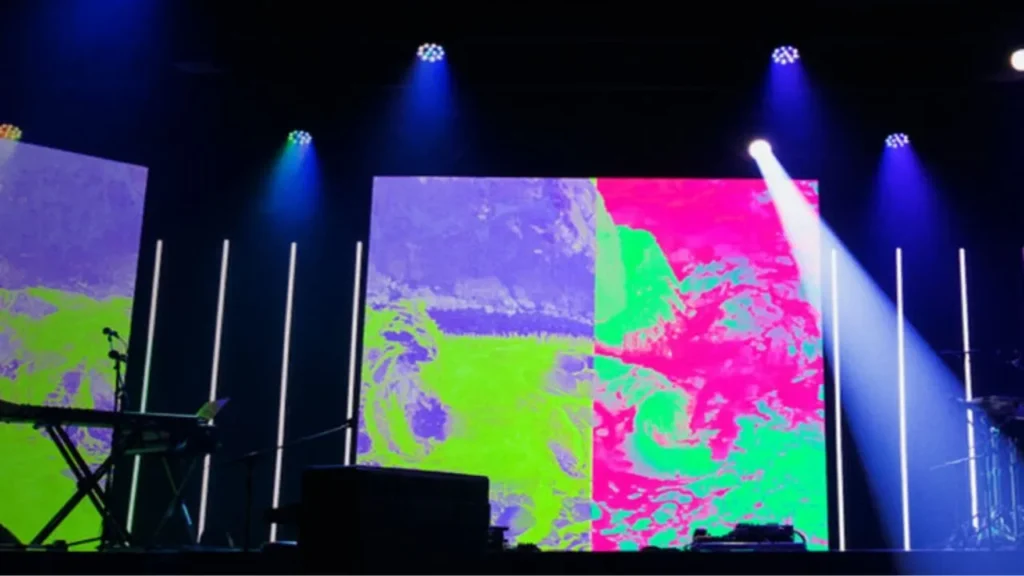
LED screen calibration requires the use of important tools like calibration cameras, spectroradiometers, and colorimeters. These tools contribute to a successful calibration.
Spectroradiometers and colorimeters
Spectroradiometers and colorimeters are some of the most common tools used in LED calibration process. Spectroradiometers help you to evaluate the full light spectrum of your Tela de LED. Colorimeters offer quick results and as such, they are suitable for routine calibration. These important tools help you maintain perfect white balance and ensure consistency across displays.
Calibration Cameras
Calibration cameras use the images they capture in real-time to detect any uniformity issues and inconsistencies. They are useful in applications where you can’t use manual measurement e.g large LED walls. These cameras check pixel-level data to make precise correction across the whole surface of your LED screen.
LED Calibration Software Systems
Calibration software helps you to adjust important features like gamma and brightness. These software systems offer remote calibration and data logging to maintain consistent and efficient recalibration in commercial LED screens.
Process Involved in LED Screen Calibration
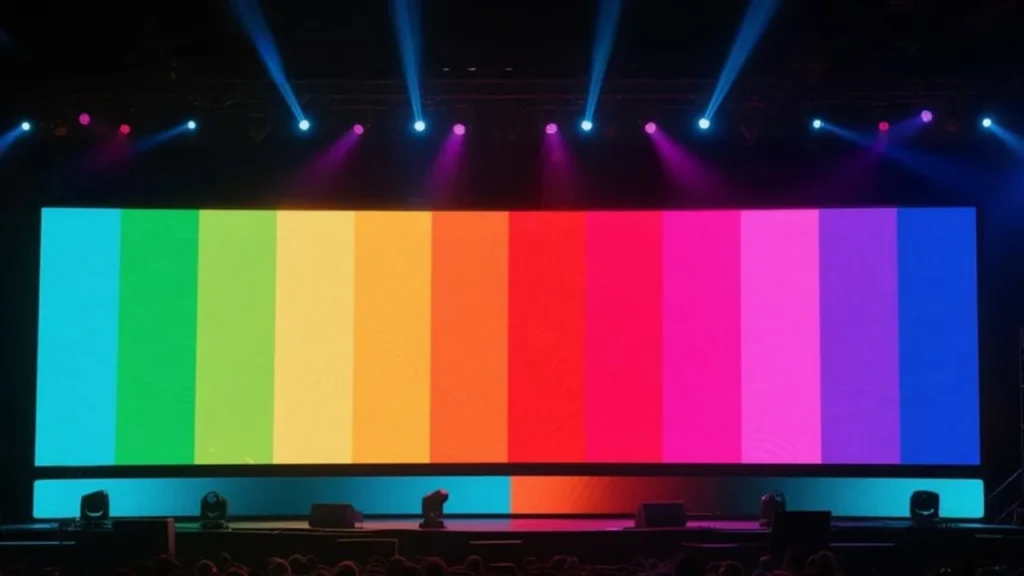
Pre-Calibration Inspection
The entire process begins with proper pre-calibration inspection. This ensures that both technically and physically, your display is set and can be adjusted. Technicians check for modules that are damaged, connections that are loose, inconsistencies in signal, which could affect the accuracy in calibration.
Furthermore, some environmental factors are also checked like angle of installation, distance of viewing, etc. Checking and finding solutions to these problems beforehand prevents you from reading wrongly and ensure that your efforts for calibration deliver positive results.
Collecting and Analyzing the Data
Collecting and analyzing the data deals with making use of spectroradiometers as well as colorimeters for collecting data on different features. With these measurements, it is possible to evaluate the performance of each LED module in a real-time operating environment.
After this, the calibration software assesses the data to detect any deviations from actual values like luminance variations. This stage determines precision and helps to decide whether to use manual or automatic calibration methods.
Adjustment and Validation
Here, the calibration software uses the analyzed data to correct any issue with the contrast, brightness, gamma, and color balance.
After making necessary corrections and adjustments, the next step is the validation tests. These tests help to verify if your screen meets the desired requirements. Also, there is a need to make visual checks and verify measurements to ensure long-term performance for both commercial and professional settings.
Common Issues that Occur During LED Screen Calibration
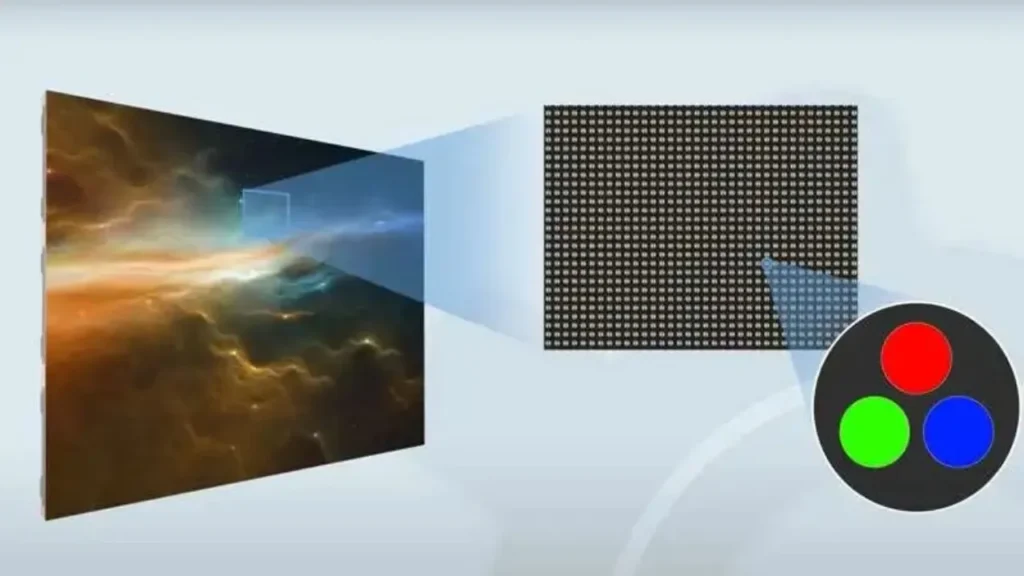
During the calibration process, you may likely experience some challenges that may affect the performance of your screen. Therefore, it is important you identify these issues and how to deal with them.
Aging LEDs and Color Drift
LED aging is a common problem most technicians face during calibration. LEDs lose their brightness and have color drift as time goes on. This may cause inconsistencies in their performance and display. For older modules, you may have dimmer color tones. This may make it difficult to maintain color balance and uniform brightness, especially in large screens. You can prevent this from happening by recalibrating your LED screen regularly.
Lighting Conditions in the Environment
Ambient lighting may affect the color display of LED screens. For instance, reflections or variations in daylight can affect contrast and color accuracy during calibration. This is even worse for outdoor installations since there is more exposure to unfavorable weather conditions.
Therefore, you must consider environmental conditions during calibration as this helps to make certain adjustments. This helps to ensure consistent performance across different lighting conditions.
Inconsistencies in modules and panels
There can be slight variations between panels and modules due to manufacturing tolerances. You can even experience patchy areas because of slight mismatch in color. You can minimize these variations with the help of calibration. However, if there are significant variations in hardware, you may need to completely replace modules for better results.
Benefits of Proper LED Screen Calibration
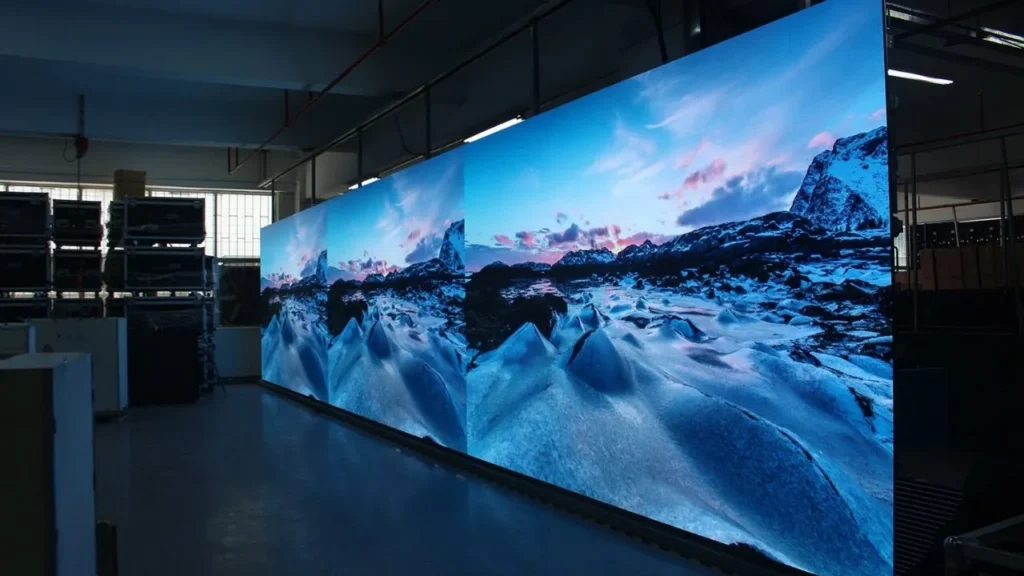
When you perform calibration properly, there are certain benefits it offers. These include;
Uniform Image Quality
Proper calibration offers perfect results like accurate colors, optimal contrast, and consistent brightness. These results are crucial in applications where perfect visuals reflect brand reputation and quality.
Also, calibration helps you to get rid of uneven whites and patchy brightness on your screens. With this, the visual display is consistent across every screen.
Better viewing experience
Perfect calibration delivers clearer and better visuals for your audiences. For instance, correct gamma settings, precise color display, and smooth gradients minimize visual stress and improve the impact of your content.
Calibrated screens offer brighter and better visuals that communicate messages clearer regardless of the lighting conditions in the operating environment.
Longer Lifespan
Calibration can also help to extend the lifespan of LED screens. Ensuring balanced brightness level and power output helps to minimize visual stress. Also, calibration reduces cost of maintenance and prevents frequent downtime. Proper calibration is one of the best ways to protect your investment.
Best Practices for Maintenance and Recalibration
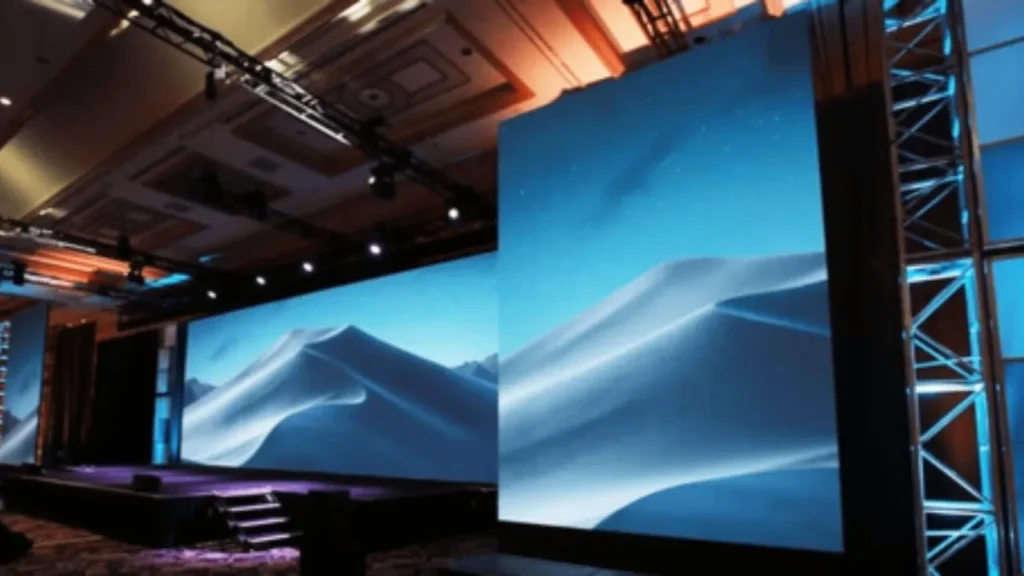
Recommended Calibration Frequency
It is important you perform calibration regularly to ensure your LED screen performs well. In most commercial settings, it is advisable you perform recalibration every three to six months. The frequency of recalibration usually depends on how often you use your LED screen and the condition of its operating environment. LED screens used in mission-critical settings may need more recalibration to maintain color accuracy and visual consistency over time.
Performance Monitoring
When you constantly monitor the performance of your LED screen, you will easily identify changes in color balance or brightness over time. This early detection helps to address underlying issues and prevent further ones. With the help of diagnostic tools and calibration software, you can detect potential issues, record trends, and plan proactive maintenance. In the long run, these actions prevent or minimize unexpected downtime.
When to Recalibrate or Upgrade Systems
You should recalibrate your LED screen immediately if you notice any color shifts, inconsistent brightness, or a decreased image quality.
If you notice there aren’t positive results after several recalibrations, it is time to upgrade your control systems or LED modules to meet required standards. You may also need to upgrade your calibration tools.
Final Thoughts: Partner with IvanLED
IvanLED is a reliable and reputable company with vast experience in calibration services. This company has a team of professional technicians who use advanced tools to ensure your LED screens deliver great performance.
As a company that prioritizes customers’ interest, IvanLED sees to all your calibration needs and ensures great visual impact. Partner with IvanLED today and enjoy premium calibration service and support.
Perguntas frequentes
How long does it take to complete LED screen calibration?
LED screen calibration process varies based on the method you are using, the size of your screen, and its resolution. This process may take one to several hours. For instance, large LED walls need more time due to data collection and validation process.
Do I need to calibrate small indoor LED displays?
Yes, you need to calibrate small LED displays to maintain uniform brightness and better image quality. You should frequently calibrate LED screens used in professional settings like control tools and offices.
Can I calibrate my LED screens without professional tools?
You might make basic adjustments without professional tools, however, you need specialized software and colorimeters for calibration. Failure to use proper tools can affect the result you get.
Does calibration affect power usage?
Yes, it does. Proper calibration optimizes the brightness of your LED display and its output, thereby reducing power usage. Excessive brightness in LED screens usually consume more power. Optimal brightness and balanced color display will reduce heat generation and minimize power usage.
Does the calibration process differ between fixed and rental LED screens?
Yes, it differs. You need to regularly calibrate rental LED screens because of repeated transportation and installation. However, fixed installations don’t require frequent calibration since they are in a stable operating environment.
Can I fix dead panels or hardware defects with calibration?
No, you can’t use calibration to fix dead pixels or hardware problems. Calibration can only adjust uniformity, color, and brightness. Such physical defects need total replacement or module repair for better performance.
What is the difference between LED calibration, LCD, or OLED calibration?
LED calibration is a more complicated process because you need to adjust modular panels and pixel-level. For OLED and LCD screens, you need panel-level calibration. This is why LED systems require more skills and time for calibration.
What certifications or standards are required for LED screen calibration?
The LED screen calibration process must adhere to industry standards like Rec. 709 & Rec.2020, D65 white point specifications, and ISO color management guidelines.