










The Luminous Principle of CFL
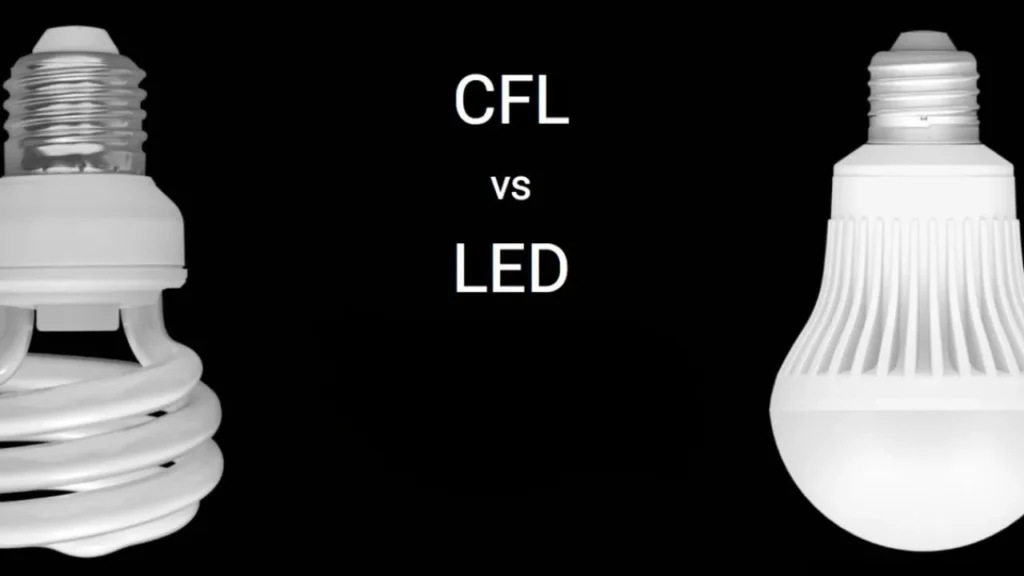
CFL is the abbreviation of Compact Fluorescent Lamp, which is a downsized version of a traditional fluorescent lamp and is built with an integrated ballast to form an energy-saving bulb. The working principle of a CFL is that the small amount of mercury vapor inside the bulb becomes excited and emits ultraviolet, which hits the phosphor coating inside the tube and is converted into visible light.
The Luminous Principle of LED
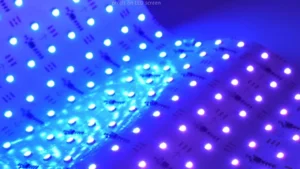
LED means Light Emitting Diode, which emits light through the semiconductor PN junction at its core. When powered electrons move from the N-type semiconductor to the P-type semiconductor, which contains holes, and release energy in the form of photons. This process is also called electroluminescence.
In addition, the color of LED light is determined by the energy of the photons. Different energies correspond to different wavelengths, which in turn correspond to different colors. For example, violet light has a wavelength range of 380–450 nm.
Evolution of Lighting Technology
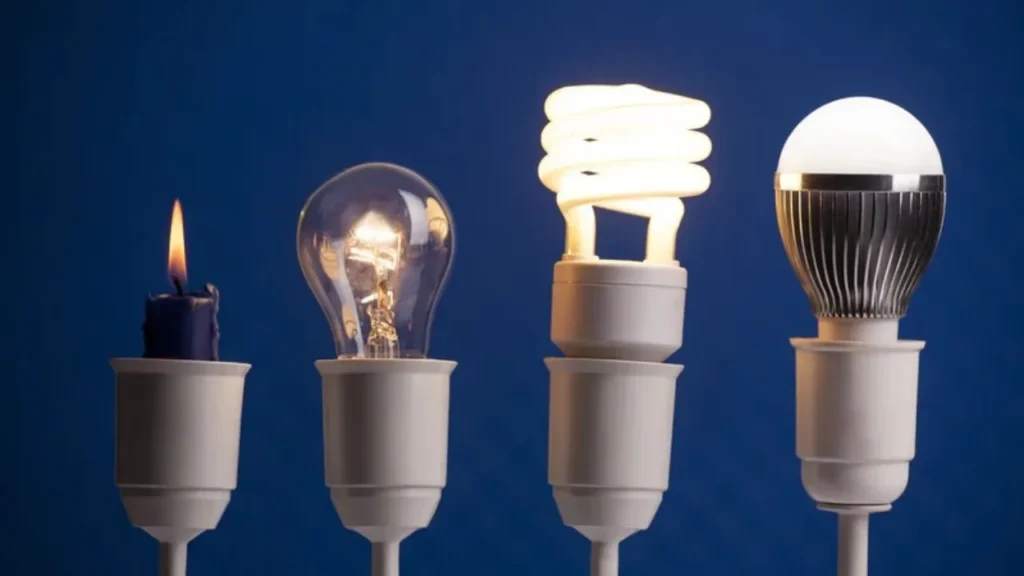
Apart from candles, the earliest stable light source was the incandescent lamp, which produces light by passing electricity through a tungsten filament. Then, in the early 20th century, halogen lamps and mercury lamps, which had longer lifespans and more stable illumination, gradually replaced incandescent lamps.
In the 1980s, linear fluorescent lamps and CFLs entered the market and captured a large share, thanks to their greater energy efficiency and more effective light output. Not long after, LED technology emerged, offering high energy efficiency, long lifespan, instant illumination, and mercury-free operation. Even today, LED technology remains an indispensable part of many industries.
In addition, solar-powered lighting has emerged as a new trend. It can provide electricity independently of the power grid and is often used for streetlights and lighting in remote areas.
Differences between CFL and LED
Kecerahan
A typical CFL bulb usually has a brightness of less than 1,600 lumens, which means its light output is limited. Typical LED bulbs for room lighting also have a brightness of around 1,000–2,000 lumens. However, some professional LEDs, such as stage lights, can exceed 10,000 lumens—a level that CFLs cannot reach.
Konsumsi Daya

A traditional incandescent bulb produces around 1,000 lumens of light during normal operation, consuming over 50 watts of power. CFLs consume less energy, using approximately 30 watts to produce about 1,600 lumens. LED technology is the most energy-efficient, typically consuming less than 20 watts while providing similar brightness.
Shape and Size
CFL bulbs typically have U-shaped or spiral fluorescent tubes, and due to the built-in ballast, they cannot be made very small. In contrast, LEDs are much more flexible based on their tiny chips and working principle, and allow for various shapes and sizes, such as mini bulbs, globes, downlights, panel lights, and linear lights.
Startup Speed
When you press the switch to turn on a CFL bulb, electrons pass through the ballast into the tube, exciting the mercury vapor, which in turn excites the phosphor to produce light. This process usually takes more than one second, and in the slowest cases, it can take 30 seconds or longer. In addition, CFLs cannot withstand rapid on-off switching in a short period, which can significantly shorten their lifespan.
However, if you press the switch of an LED bulb, you will notice that it lights up almost instantly. The response time of an LED is typically less than one microsecond, which is imperceptible to the human eye. Moreover, LED chips can handle rapid changes in current very well, and frequent switching has virtually no impact on their lifespan.
Lifespan
For CFLs, several factors can affect their lifespan, including the aging of mercury vapor and phosphor, frequent switching, and starting in low-temperature environments. Generally, the lifespan of a CFL is under 15,000 hours.
LED bulbs have among the longest lifespans, generally exceeding 25,000 hours, and some high-quality ones can maintain minimal light degradation even after 100,000 hours of use. Their lifespan is also more stable and is affected almost solely by the chip’s heat dissipation. Even under frequent switching or prolonged operation, their longevity remains virtually unaffected.
Content of Toxic Substances
CFL bulbs contain about a dozen milligrams of mercury. If the tube breaks, the released mercury vapor can be toxic. In addition, the electronic ballast may contain lead, cadmium, or brominated flame retardants, which can also be hazardous if leaked.
In contrast, LEDs are mainly composed of semiconductor chips and driver circuits, containing virtually no heavy metals, and pose no safety risk even if broken.
Spectral Continuity
Spectral continuity refers to the degree of continuity of a light source’s spectrum within the visible range, which is about 380–780 nm. The more continuous the spectrum, the higher the Color Rendering Index (CRI). A discontinuous spectrum may cause color deviations and eye fatigue.
The spectrum of a CFL lamp shows discrete peaks, with possible gaps in between, which can cause color reproduction to be somewhat inaccurate. The LED spectrum is also not perfectly continuous. However, it can be made more complete by adding RGB chips or improving the phosphor materials.
Harga
CFL and LED bulbs for everyday lighting usually cost about the same, around $10. However, in terms of long-term cost, LED bulbs last longer, provide more stable performance, and can even be more cost-effective than CFLs.
Environmental Friendliness
Mercury (Hg) is highly toxic to the nervous and immune systems of living organisms, can even be deadly, and once it seeps into the soil, it is very difficult to degrade. Therefore, after disposal, CFLs must be recycled; otherwise, they can pose hazards to people and animals nearby. In contrast, LEDs are energy-efficient, mercury-free, long-lasting, and much more environmentally friendly.
Why is LED Becoming Mainstream?
High Brightness and Luminous Efficacy
Among regular indoor light bulbs, LEDs are virtually the brightest. Moreover, thanks to their high brightness and low power consumption, LEDs also offer excellent luminous efficacy, generally exceeding 100 lm/W, whereas CFLs typically reach only about 50 lm/W. LEDs can also achieve directional lighting, making them suitable for applications such as car headlights, spotlights, and flashlights.
Stable Illumination Without Frequent Flickering
Most household power supplies use AC, which causes the brightness of a light to fluctuate along with changes in the current, resulting in flicker that can be noticeable to the human eye. More than this, changes in temperature and air pressure can also cause CFL bulbs to flicker. Frequent flickering can cause eye fatigue, reduced concentration, and even headaches.
Because the discharge process in CFLs follows the current fluctuations, they tend to flicker at a relatively high frequency. However, many high-quality LEDs use constant-current drivers, which keep the current relatively stable and therefore prevent noticeable flicker.
Long Lifespan and Low Failure Rate
Traditional incandescent bulbs have fragile tungsten filaments that break easily and result in a short lifespan. CFLs are also prone to failure. Once the glass tube cracks, mercury vapor leaks, the phosphor coating deteriorates, or the electronic ballast fails, any single issue can cause the lamp to become permanently unusable.
However, LEDs are primarily made of solid-state semiconductor materials that are not easily worn out. Even if the semiconductor ages, the bulb will not be completely scrapped, but its brightness will gradually decrease.
Various Applications of LED Bulbs
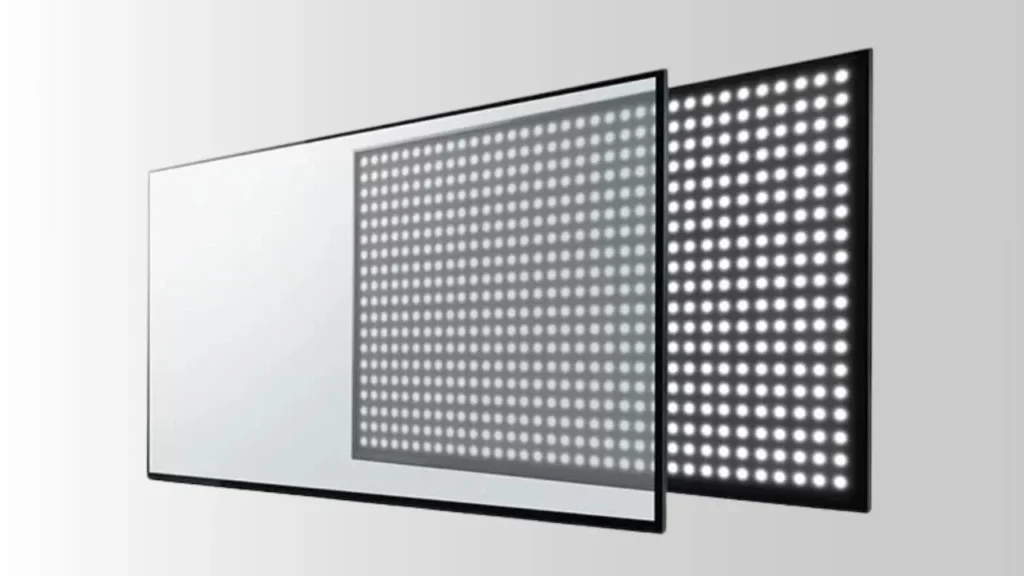
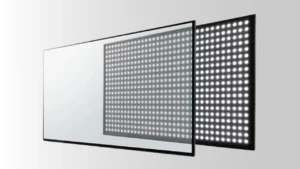
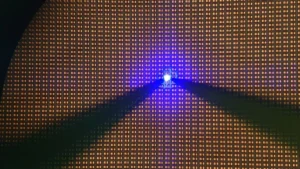
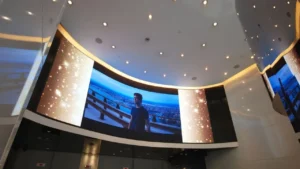
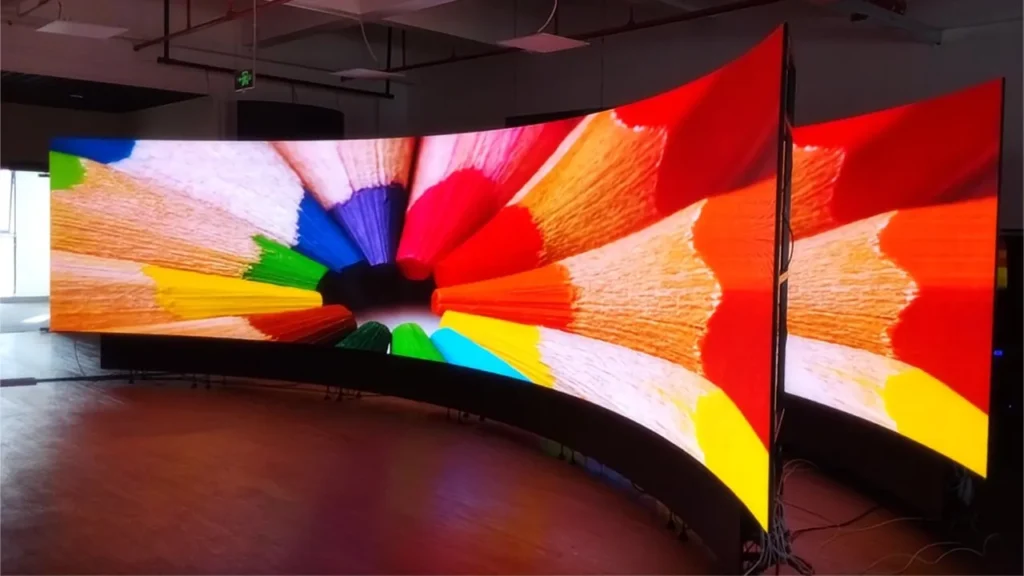
LED technology is continuously evolving and is no longer limited to everyday lighting applications. It has gradually expanded into a wide range of fields, including entertainment, medicine, aerospace, and scientific research. For example, by integrating LED bulbs onto a circuit board, they can be used to form an Layar LED that shows images and videos.
In the medical field, red light in the 630–660 nm range can be used for skin repair and anti-inflammatory treatments, while blue light at 415–450 nm is effective for sterilization. UV light can also be applied in the treatment of various skin diseases.
Pertanyaan yang Sering Diajukan
Do the LED and CFL require a heat dissipation design?
LEDs offer high luminous efficiency, but still around 60–70% of the electrical energy will be converted into heat, and LED chips are highly sensitive to temperature. Without proper thermal management, their lifespan will be significantly shortened just the same.
However, CFLs have relatively low luminous efficacy and are not very sensitive to temperature, so they generally only require some open space around them for ventilation during installation.
Should CFL bulbs be phased out gradually?
Yes. CFLs need to be replaced not only because of their low luminous efficiency, but also because the mercury they contain is harmful to humans, especially for users who are unaware of its risks.
Moreover, many countries are now also choosing to implement policies to ban CFL lamps. For example, the European Commission decided that, starting from 2023, the sale of most mercury-containing fluorescent lamps, including CFLs, would be prohibited across the entire European Union.
Can LED and CFL adjust the brightness of the light?
Yes. Both LEDs and CFLs can adjust their brightness to some extent. LEDs can adjust their brightness through PWM (Pulse Width Modulation) and by varying the current, allowing for smooth transitions in brightness. CFLs can be dimmed as well, but their brightness is restricted, and the transition is not as smooth as with LEDs.
IvanLED: Your Reliable Cooperator in LED Displays
IvanLED is a company specializing in LED manufacturing, with over ten years of experience in producing LED displays. If you are looking for a manufacturer to customize an LED display, regardless of its purpose or size, IvanLED is an ideal choice.
If you have any questions, feel free to contact us!