








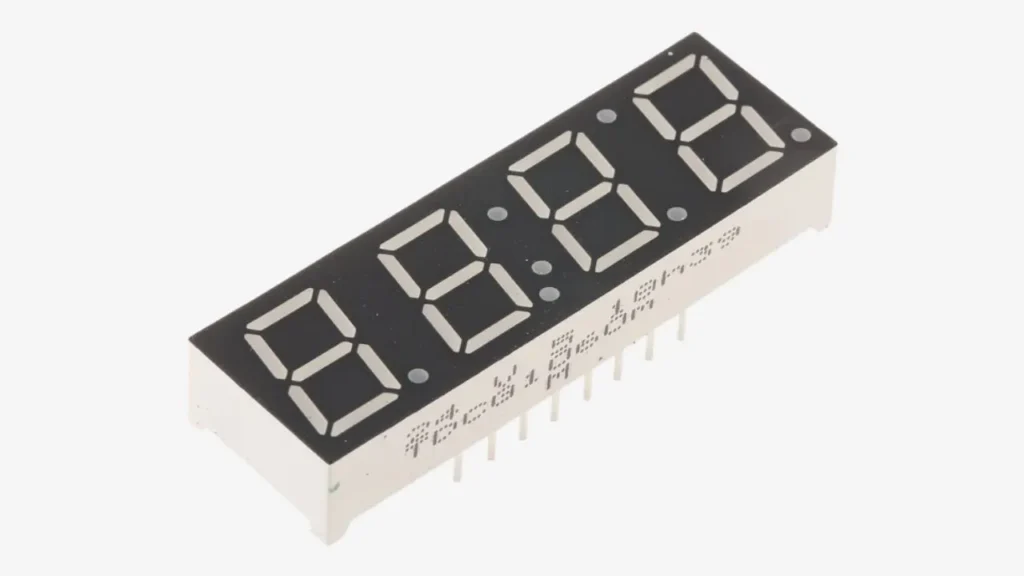
How Does a 7-Segment LED Display Work?
The composition structure of a 7-segment LED screen includes seven strip-shaped light-emitting segments and one decimal point. Each segment is a light-emitting diode. They are combined into a shape similar to the numeral 8. By lighting up different combinations of digital tubes, the screen can display shapes of numbers from 0 to 9 and some letters, like ‘E’, ‘C’, and ‘F’.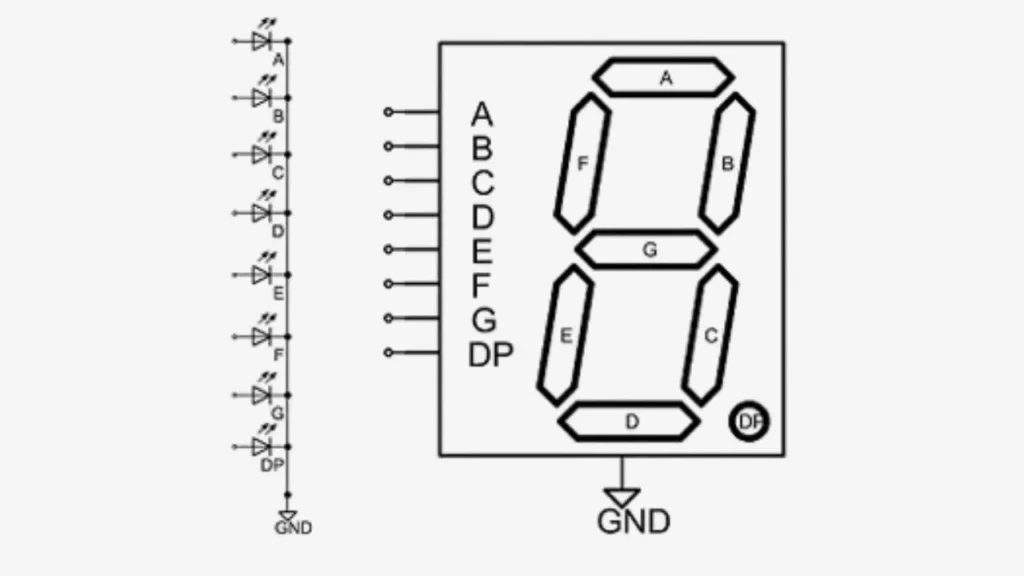
Based on Internal Connection Methods
Common cathode and common anode are two connection methods of the LED display’s internal structure. Common cathode means that all cathodes of the seven-segment display are connected together to form a common terminal, and connected to ground (GND). Its structure is always simpler, and its cost is always lower.
The connection mode of the common anode is the opposite of that of the common cathode. In the common anode, the anodes of the LED will be connected together and form a common terminal.
Generally speaking, if you already have a pre-determined hardware solution, the driving logic of the seven-segment display must match the overall system; if it doesn’t, the common-cathode solution is recommended. Compared with the common-anode solution, it offers advantages such as faster switching speed, lower on-resistance, a wider range of options, and lower cost.
Based on Usage Scenarios
The 7-segment LED displays can be used in several scenarios, such as counters, clocks, and electronic instruments. You can select the parameters as follows, according to different application scenarios:
- Color: Red lights often mean warnings and errors, and you can use them in industrial instruments and low-battery indications; white lights usually have a modern feel, and you can use them in automotive interiors and consumer electronics; green lights always mean normal operation, and you can use them for power-on indication.
- Size: A larger size allows you to see the screen clearly from a longer distance. You can use small-sized screens for thermostats and home appliances, and large-sized screens are more suitable for warehouse display boards and traffic information screens.
- IP rating: The typical indoor environments have almost no risk of dust or water ingress, and IP20 or IP30 is enough. For those scenarios that may be exposed to wind and rain, IP54 or IP65 is necessary.
- Electrical specifications: The operating voltage of the screen should be matched with your driving voltage. You need to choose the screen’s operating voltage and current based on the light color and working brightness. For example, a high-brightness screen needs a working current of more than 20mA.
- Brightness: The brightness of a 7-segment display mainly depends on the ambient light level. If you want to use it outdoors, you need to choose a higher brightness, such as more than 500 mcd. When the screen is only used indoors, higher brightness may make you feel glaring, so lower brightness is an ideal choice.
Advantages of 7-Segment LED Displays
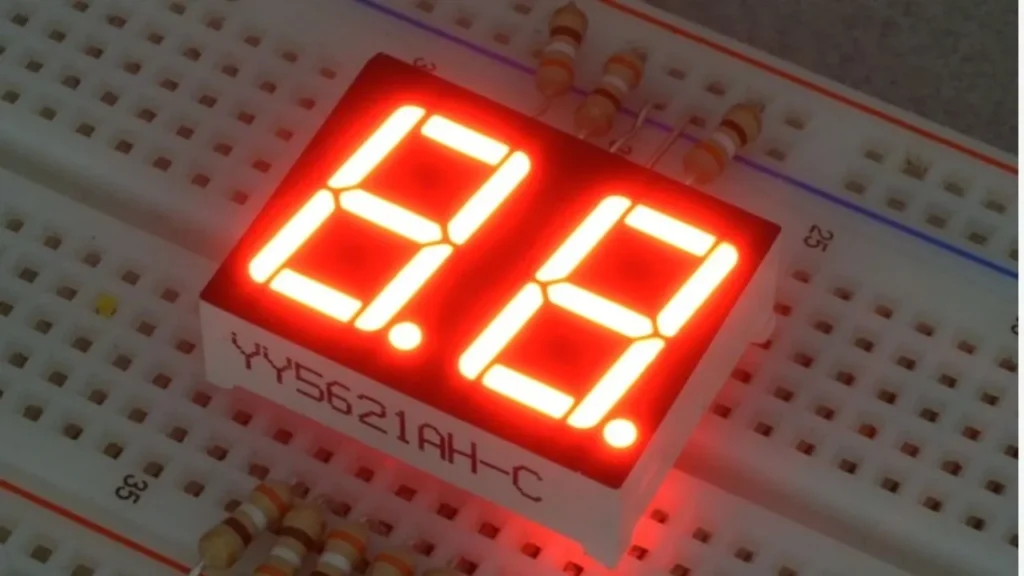
Extreme Low Cost
The number of the 7-segment LED displays’ light-emitting units is extremely small, while dot matrix screens require hundreds of them, and LED screens need tens of thousands. Fewer light-emitting units lead to lower raw material costs and integration costs, which makes the cost of 7-segment LED displays much cheaper.
Low Failure Rate
There is no doubt that the more components there are in the system, the more possible places for failure there will be. 7-segment LED Displays are not only simple in structure, but also have a relatively low operating current. This leads to their aging will be very slow, and their failure rate will also be lower than LED displays.
Intuitive Digital Display
7 Segment LED Displays only have a black background and glowing lights, and there are no extra elements. Moreover, the combination of the 7-segments can ingeniously cover the visual skeleton from 0 to 9, which enables you to quickly recognize the number it displays.
Easy to Drive and Maintain
The logic of the content displayed on a seven-segment digital tube screen is very simple. There are two encoding methods for it: BCD encoding and hexadecimal encoding, both are achieved by obtaining the corresponding 7-segment state vector and then logically lighting up or extinguishing each part.
The maintenance cost and frequency are also very low, because it has nearly no burden of software maintenance, and the failure of any part will not affect the work of other sections.
Fast Response Speed
On one hand, LED is a semiconductor light-emitting device; its response time typically ranges from nanoseconds to microseconds, and you can hardly see any delay. On the other hand, the amount of data that needs to be displayed is quite small and does not require any data decoding, which greatly reduces the response time.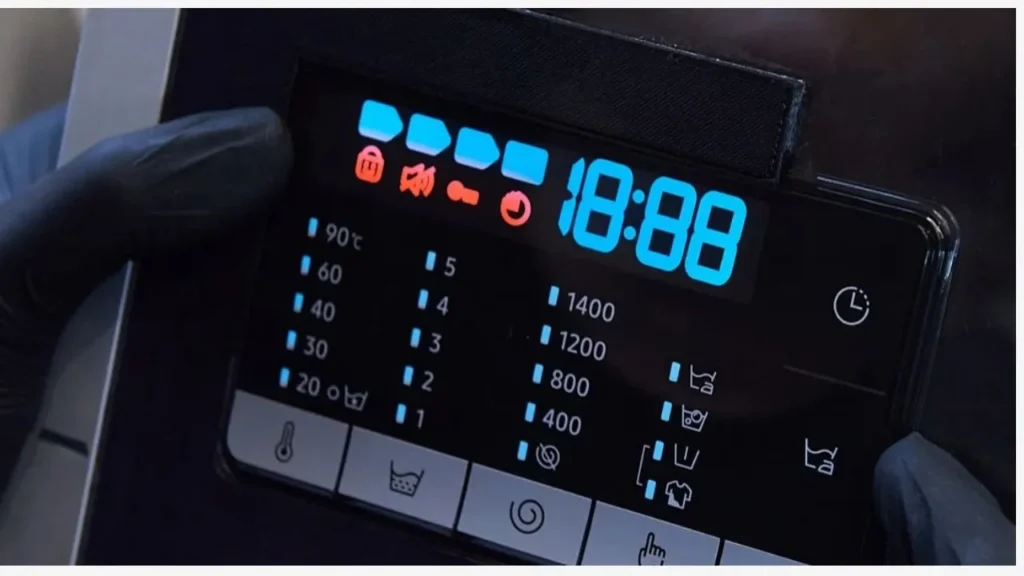
Wide Operating Temperature Range
Semiconductor LEDs can withstand extreme temperatures and operate within a range of -40℃ to +85℃ or even wider. Because there is no liquid crystal surface, 7 Segment LED displays can operate normally at extreme temperatures.
Limits of 7-Segment LED displays
Limited Display Content
Due to the restriction of the structure, Segment LED screens can only show ten numbers and a few letters. If you want to use them to show some images or more letters, you need to switch to a higher-end LCD or LED display. Also, they cannot show other language scripts, such as Chinese and Japanese.
Higher Power Consumption of High-Brightness Displays
When the screen needs to work under strong light, you need to use high-brightness LEDs. This leads to a higher current during operation, which is usually five times that of a common brightness tube, and its power consumption may also be five times higher. Compared to 7-segment displays, LCD or OLED screens, which also use LED diodes, are much more efficient.
How to Choose a 7-Segment LED Display for Your Project?
First, confirm the parameters you want. It includes:
- The number of digits you want to display, and whether you need to show letters.
- Indicators related to visual effects: Like brightness, screen size, color, and viewing angle.
- Package type and IP rating.
- Select an industrial or commercial grade based on its operating temperature and the lifespan you want.
Then, choose a reliable supplier, and perform integration testing on the samples. An experienced manufacturer can provide you with complete test data and high-quality products, while testing the samples can ensure the reliability in actual operation.
More Segmented Markets
Multi-Segment Displays
Besides 7-segment displays, there are also some more complex technologies: eight-segment, four-segment, sixteen-segment, and multi-segment displays. They can show more content, such as Greek letters and Cyrillic letters. However, although they can show more letters, they are not widely used and have been typically replaced by more flexible dot-matrix, LCD, and OLED screens.
Dot Matrix Display
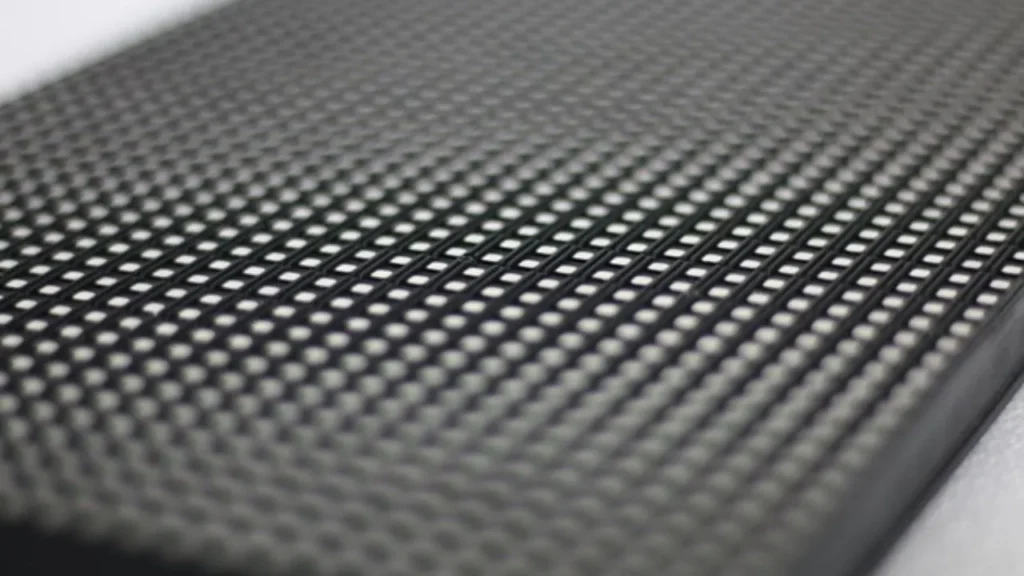
A Dot Matrix Display uses many small light-emitting points arranged in a matrix to achieve the display of numbers, letters, symbols, and even simple graphics. It is often used in calculators, information release screens, and other places.
Compared with 7-segment digital tube screens, dot matrix displays can show richer content, which has replaced most multi-segment screens.
Preguntas frecuentes
How Long is the General Lifespan of a 7-Segment Digital Tube?
En rated lifespan of LED screens is generally over 50,000 hours. However, the actual lifespan depends on various factors, such as the LED chip, operating current, heat dissipation conditions, and working environment.
Through this, you can estimate its lifespan based on the actual working conditions. For example, for every 10℃ increase in the operating temperature above the rated temperature, the lifespan of the LED will be reduced by half.
How to Ensure the Accuracy of the Content Displayed on a Seven-Segment Screen?
First of all, you should select the appropriate common cathode or common anode drive type, and it must match the drive circuit. Secondly, ensure that your driver is stable enough. You need to strictly program the timing and set the data to refresh the display periodically.
Also, you should enable the watchdog; it can prevent the display from freezing or showing unintended content.
Can a 7-Segment LED Display Achieve Full-Color Output?
Each segment in a 7-segment LED display can usually only emit light of one wavelength, and it cannot display multiple colors. That is, it often can only display monochrome numbers and letters. If you want to display full-color content, you can use dot matrix LED screens or OLED screens.
Can the Brightness of a 7-Segment LED Screen be Adjusted?
Yes. There are mainly two ways to adjust the brightness of a 7-segment LED Display: adjusting the current size and PWM dimming. Current dimming can more precisely adjust to the brightness you desire, and it won’t cause flicker. PWM dimming occasionally causes flicker, but it has a small impact on the lifespan of LEDs.
Reflexiones finales
7-segment LED screens can be widely used in various applications. When you need to customise one, you should choose its relevant parameters based on the usage scenarios, such as brightness, color, and operating current. In addition, if a 7-segment display is unable to cover the content you need to show, you need a dot-matrix display or an OLED screen to meet the requirements.
Moreover, if you want to customize any kind of LED, LCD, or OLED screen, welcome to contact IvanLED and get a reliable solution.